How to Prune Common mare's-tail?
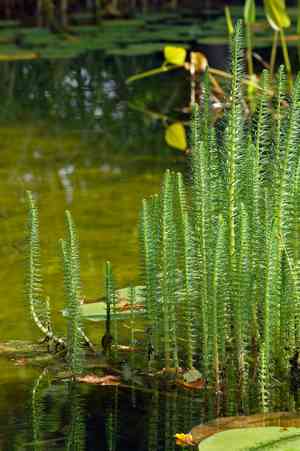
A resilient water-dwelling perennial, recognized for its emergent stalks that resemble horsetails. Essential trimming of common mare's-tail entails cutting back aged stems in early spring to encourage fresh development and preserve its fullness. Throughout summer and autumn, eliminate deceased or discolored leaves to uphold vitality and visual appeal. Pruning is vital for averting the decomposition of submerged sections, as this can negatively impact water purity. This practice cultivates a pristine pond setting, likely boosting the plant's well-being and its aesthetic charm.
What Are the Benefits of Pruning Common Mare's-tail?
What Are the Benefits of Pruning Common Mare's-tail?
Trimming common mare's-tail promotes robust development and helps preserve its desired form. Strategic cuts can revitalize common mare's-tail's growth by eliminating dead or crowded stems, ensuring it flourishes with a well-defined structure.
What Is the Best Time for Pruning Common Mare's-tail?
What Is the Best Time for Pruning Common Mare's-tail?
In Spring, pruning common mare's-tail allows for removal of any winter damage before new growth begins, making it easier for the plant to recover and direct its energy into fresh development. Early Summer is suitable for trimming common mare's-tail as it can sustain active growth and quickly recover from pruning stress, ensuring it maintains its shape and health. Pruning in Fall is optimal for common mare's-tail as the plant's growth rate slows, allowing for a trim to prepare it for winter dormancy without risking new growth that could be harmed by cold weather.
What Tools Do I Need to Prune Common Mare's-tail?
Hand Pruners
These are perfect for making clean cuts on the soft stems of common mare's-tail without harming the plant. They are suitable for removing dead or unwanted stems to encourage new growth.
Garden Scissors
Garden scissors can be utilized for the precise task of thinning out dense areas of common mare's-tail. They allow for accurate control and can easily navigate through the plant's structure.
Long-Handled Pruners
If common mare's-tail is cultivated in deeper water, long-handled pruners can reach stems that are submerged without requiring the gardener to get wet.
How to Prune Common Mare's-tail
Disinfect tools
Before beginning, sanitize all pruning tools using a solution of 1 part bleach to 9 parts water to prevent the spread of disease to or from common mare's-tail.
Remove diseased leaves
Carefully remove any diseased leaves from common mare's-tail using clean, sharp scissors or handheld pruners. Snip leaves close to the stem without damaging the healthy tissue.
Trim withered leaves
Trim away withered leaves to encourage healthy growth. Make cuts close to the base of the leaf, being cautious not to harm new buds or leaves.
Cut dead branches
Locate and cut any dead branches from common mare's-tail at the point where they meet healthy wood. Use sharp, clean pruning shears for a clean cut.
Prune diseased branches
Prune away diseased branches by cutting them back to healthy tissue or to the base of the plant, ensuring all diseased material is removed. Dispose of the infected material immediately to prevent contamination.
Common Pruning Mistakes with Common Mare's-tail
Over pruning
Removing too much foliage from common mare's-tail can shock the plant, leading to poor health and growth. It is essential to prune only what is necessary to maintain the shape and health of the plant.
Blunt tools
Using dull or unclean pruning tools can damage the stems of common mare's-tail, creating jagged cuts that can lead to disease and pest infestation.
Tearing stems
Pulling or tearing at the stems while pruning rather than cutting cleanly can result in damage to common mare's-tail's vascular system, hindering nutrient and water flow.
Neglecting dead material
Failing to remove dead or dying foliage from common mare's-tail can hinder new growth and promote disease.
Ignoring shape
Pruning common mare's-tail without considering its natural shape and growth habit can lead to an unsightly appearance and potentially harm the plant's health.
Common Pruning Tips for Common Mare's-tail
Sharp clean tools
Always use sharp, clean pruning shears or scissors to make clean cuts on common mare's-tail, which help prevent disease and support healthy regrowth.
Selective pruning
Be selective when pruning common mare's-tail by targetting only the overgrown, dead, or damaged parts to enhance its natural shape and improve light penetration.
Angular cuts
When pruning common mare's-tail, make diagonal cuts to avoid water accumulation on the cut surface, which can lead to rot.
Gentle handling
Handle common mare's-tail delicately during pruning to avoid damaging its stems, which can be relatively fragile.
Post pruning care
After pruning common mare's-tail, ensure that it receives proper care, including adequate water and nutrition, to support its recovery and new growth.



