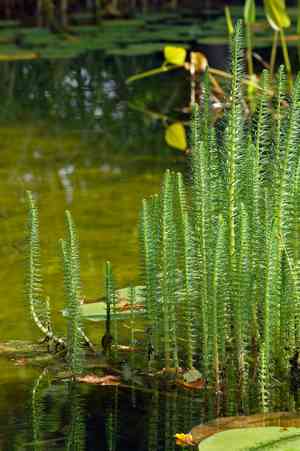
Common mare's-tail (Hippuris vulgaris)
Also known as: Mountain mare's-tail
The Common Reed (Phragmites australis) is a perennial water plant prevalent across Europe, Asia, and North America. It flourishes in shallow waters and mudflats. This plant, which can extend well above the water level, spreads through extensive underwater rhizomes. It is notably recognized for its significant methane emissions.
In This Article
Attributes of Common mare's-tail
Lifespan
Perennial
Plant Type
Herb
Plant Height
10 cm to 60 cm
Spread
50 cm
Leaf Color
Green
Flower Size
Tiny and inconspicuous
Flower Color
Green Brown
Images of Common mare's-tail
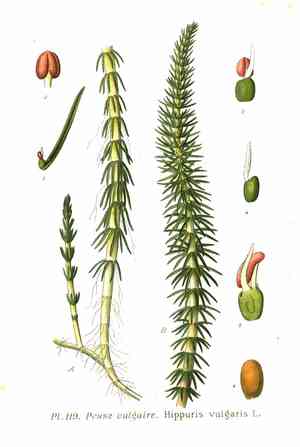
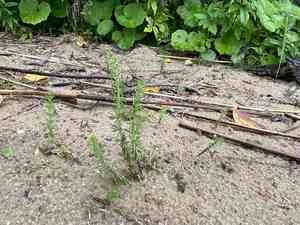
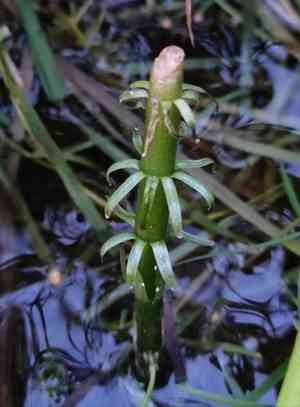
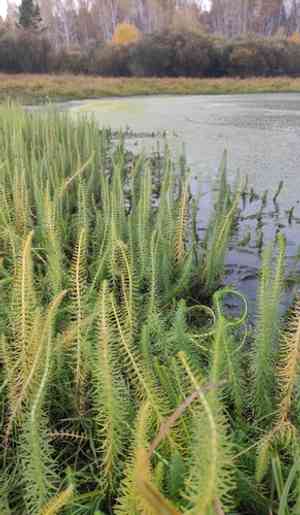
Quickly Identify Common mare's-tail
1
Rigid upright stems 6-12 inches tall
2
Whorls of slender, hair-like leaves creating a radial pattern
3
Inconspicuous small white flowers in summer
4
Thrives in full sun to part shade, cold resistant to USDA Zone 4
5
Easily propagates via divisions or stem cuttings, suited for aquatic environments
Scientific Classification of Common mare's-tail
Phylum
Vascular plants
Class
Dicotyledons
Order
Mints plantains olives and allies
Family
Plantain
Genus
Mare's tails
Species
Common mare's-tail
Planting and Growing of Common mare's-tail
Care Difficulty
Easy
Watering Schedule
Every 4 days
Sunlight Requirements
Partial sun
Sunshine Duration
6-8 hours
Ideal Temperature
60-75℉
Soil Type
Potting Mix, Peat Mix
Soil pH
6.5-7.5
Fertilizer Type
Balanced
Pruning Season
Spring, Summer
Pruning Area
Leaves, Branches
Pruning Frequency
2 times a year
Repotting Season
Spring
Pot Type
Plastic, Ceramic
 How to Water Common mare's-tail?
Hippuris vulgaris, also known as mare's-tail, thrives in aquatic environments which means it enjoys consistently moist conditions. Water it thoroughly to mimic its natural habitat, ensuring the soil remains consistently damp but not waterlogged. A single watering session should provide enough moisture to keep the soil from drying out completely.
What are the symptoms of an underwatered Common mare's-tail?
›
What should I do if my Common mare's-tail is not getting enough water?
›
What are the symptoms of an overwatered Common mare's-tail?
›
How to save an overwatered Common mare's-tail?
›
 What Are the Sunlight Requirements for Common mare's-tail?
Partial sun, full sun exposure, is ideal for Hippuris vulgaris, promoting optimal growth conditions. Achieving this balance ensures vigorous growth and enhances its natural resilience, contributing to healthy foliage development.
More About Sunlight Requirements Techniques→
What is the best lighting environment for Hippuris vulgaris?
›
How might one ensure adequate light exposure for Hippuris vulgaris?
›
What are the benefits of achieving ideal light conditions for Hippuris vulgaris?
›
 What Is the Ideal Temperature Range for Common mare's-tail?
The optimal temperature range for Hippuris vulgaris, commonly known as mare's tail, is between 60°F and 75°F. Temperatures within this range promote optimal growth and health. Mare's tail thrives well in these conditions, ensuring its lush green appearance and robust structure. Any fluctuations beyond this range might result in inhibited growth or stress symptoms in the plant.
 What Soil is Best for Common mare's-tail?
Hippuris vulgaris thrives in soil that retains moisture well, which is vital for maintaining its lush greenery. Ensuring moist soil mimics the plant's natural wetland habitats, preventing stress and promoting vigorous growth. Rich in organic matter, the soil provides essential nutrients needed for Hippuris vulgaris to flourish. High organic content enhances growth by supplying a steady stream of nutrients directly to the roots. While retaining moisture, the soil must also allow excess water to drain effectively, preventing root rot. This balance helps maintain healthy root systems and vigorous plant health.
 How to Fertilize Common mare's-tail?
For Hippuris vulgaris, it's important not to over-fertilize. Use a balanced water-soluble fertilizer in small quantities. Typically, a dilution of 1/2 teaspoon per gallon of water suffices. For slow-release granules, sprinkle a small handful around the base of the plants annually, as needed.
 How to Prune Common mare's-tail?
Begin by examining the plant for any dead or decayed foliage. Removing these parts first ensures that the plant can direct its energy towards healthy growth. Look for any stems that appear brown, black, or mushy. Hippuris vulgaris, or mare's-tail, naturally has a long, slender shape. Prune back any wayward or overly long stalks to maintain a tidy appearance. Cut back to a node or just above a leaf joint to promote fuller growth. This plant tends to produce numerous side shoots, which can become crowded. Thin out excess growth to improve air circulation and light penetration, which are crucial for the plant's health. After the main pruning tasks, give the plant a final once-over. Remove any small, leftover bits of foliage or debris to leave the plant looking its best. This also ensures there are no hiding spots for pests.
More About Pruning Techniques→
 How to Propagate Common mare's-tail plant?
1
Begin by soaking the seeds in water overnight to enhance germination rates. Prepare seed trays filled with a suitable potting mix, ensuring they are well-watered but not waterlogged. Spread the seeds over the surface, covering them with a thin layer of soil.
2
Select healthy parent plants and take cuttings of about 10-12 cm in length. Ensure that each cutting has several leaf nodes. Remove the lower leaves and dip the cut end in rooting hormone to encourage root development.
3
For division propagation, carefully remove the plant from its pot and gently shake off excess soil. Use a sharp knife or spade to split the root ball into smaller sections, ensuring that each section has roots attached. Replant these sections in prepared holes or pots immediately.
 How to Repot Common mare's-tail plant?
1
Hippuris vulgaris should be repotted when its roots begin to outgrow the current pot, indicated by roots emerging from drainage holes or visibly crowding the soil surface. Also, if water takes longer to drain, it's time to consider a new pot.
2
Select a new pot that is one size larger than its current home to provide room for root expansion. Ensure the pot has adequate drainage holes to prevent waterlogging, which could lead to root rot. The ideal choice would be a slightly wider pot to accommodate its unique growth pattern.
3
Hippuris vulgaris thrives best in a rich, loamy soil that mimics its natural aquatic habitat. This type of soil holds moisture well but also permits excess water to drain, thus creating a balanced environment for the plant to flourish.



