The Common mare's-tail Plant Advantage: Maximizing Home and Office Appeal and Wellness
1
Equisetum fluviatile aids in stopping soil degradation due to its robust root structure.
2
This flora assists aquatic fauna by offering shelter and sustenance.
3
Equisetum fluviatile is superb for organic water purification in ornamental pools.
What Makes Common mare's-tail Unique?
Ecological Contribution
Common mare's-tail plays a vital part in sustaining ecological equilibrium. Its capacity to flourish in damp areas makes it ideal for stabilizing soil in riverbank zones, preventing erosion and preserving water purity. The plant's thick root system anchors soil, lessening the effects of water flow and weather changes.
Visual Appeal and Design
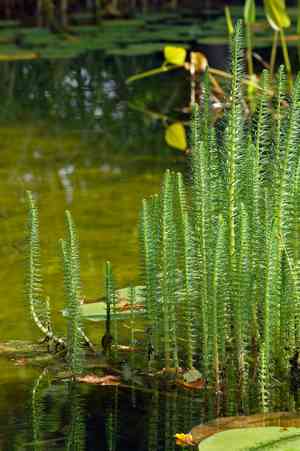
In garden design, Common mare's-tail offers a distinct visual charm with its upright, brush-like leaves. It creates a striking contrast when placed alongside low-growing aquatic plants, providing a vertical element that can be used to add depth and layers in pond and water garden arrangements.
How Does Common mare's-tail Benefit Aquatic Life?
Habitat Provision
Aquatic species greatly benefit from the habitat that Common mare's-tail offers. Its dense foliage and submerged roots provide excellent hiding spots for small fish and invertebrates, serving as a nursery for young aquatic organisms. This makes the plant invaluable for maintaining a healthy and balanced pond ecosystem.
Nutritional Source
Beyond offering shelter, Common mare's-tail acts as a food source for various aquatic creatures. Both its leaves and stems can be consumed by herbivorous species. Additionally, the plant hosts diverse microorganisms and insects which, in turn, become food for larger aquatic animals, thus contributing to the food web.
Can Common mare's-tail Enhance Water Quality?
Natural Purification
Common mare's-tail is highly effective in natural water purification. Its roots absorb nutrients directly from the water, which can help decrease the levels of harmful pollutants such as nitrate and phosphate. This nutrient absorption improves water clarity and reduces the likelihood of detrimental algal blooms, making it an excellent choice for pond health management.
Reducing Nutrient Overload
Eutrophication, the excessive enrichment of water with nutrients, often leads to abundant plant growth and oxygen depletion. By absorbing surplus nutrients, Common mare's-tail aids in mitigating the risk of eutrophication, thereby maintaining a balanced and healthy aquatic environment.
Is Common mare's-tail Simple to Cultivate and Maintain?
Cultivation Advice
Growing Common mare's-tail is relatively straightforward. It prefers full to partial sunlight and thrives in wetland soil conditions. It can be planted directly in the ground or in containers submerged in ponds. Consistent moisture is crucial, so ensure that the planting site remains continuously wet or submerged.
Upkeep Requirements
Once established, Common mare's-tail demands minimal care. Regular trimming of old and decaying foliage helps to encourage new growth and maintain the plant's vitality. If the plant becomes too dense, thinning it out will improve both its aesthetic appeal and ecological function.



