How to Prune Steppe spurge?
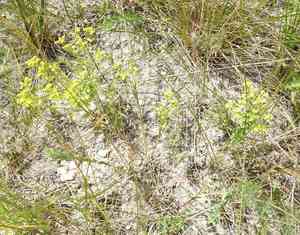
This enduring herb flourishes in arid, stony ground, identifiable by its compact, bushy clusters of blue-green foliage and yellow-green blossoms. Steppe spurge benefits from gentle trimming to sculpt and foster more abundant leaves. Perform pruning in spring when fresh shoots emerge to eliminate deceased stalks and contour the specimen. Minor summer trimming can stimulate a subsequent flowering and preserve the preferred outline. Refrain from severe cutting to avert strain. Trimming boosts plant vitality and upholds its inherent rounded mound configuration.
Advantages of Trimming Steppe Spurge
Advantages of Trimming Steppe Spurge
Trimming steppe spurge promotes more robust development by eliminating dead or diseased branches, enhancing air circulation. It also aids in preserving steppe spurge's desired form and dimensions, contributing to a well-kept garden aesthetic.
Optimal Period for Pruning Steppe Spurge
Optimal Period for Pruning Steppe Spurge
In Early Spring, steppe spurge is in its initial growth phase following winter dormancy, enabling shaping and management of the upcoming year's growth without impeding flowering. This timing precedes new growth, directing energy towards healing and producing fresh shoots. Late Summer pruning coincides with the post-flowering period, making it an ideal time to cut back spent blooms and manage the plant's size before it prepares for winter dormancy. This timing ensures energy reserves are not depleted during flowering and the plant can recover before the cold season.
Necessary Tools for Pruning Steppe Spurge
Bypass Hand Pruners
For precise cuts on steppe spurge, sharp bypass pruners are crucial. These pruners operate like scissors, with two curved blades passing each other, minimizing stem damage. They are suitable for cutting through steppe spurge's semi-woody stems without crushing them.
Pruning Gloves
Given that steppe spurge contains a milky sap that can irritate skin, wearing durable gloves to protect hands and forearms during pruning is vital. This will prevent any potential allergic reactions from the sap.
Pruning Saw
For older, larger steppe spurge specimens with thicker branches that hand pruners cannot manage, a pruning saw is recommended. This tool allows clean cuts on branches over one inch in diameter, maintaining plant health by preventing jagged cuts that can be entry points for disease.
Loppers
Loppers may be necessary for intermediate-sized steppe spurge stems, which are too thick for hand pruners but too thin for a saw. Loppers offer extra leverage and reach, simplifying and making the pruning process more efficient for such branches.
How to Prune Steppe Spurge
Disinfect tools
Before beginning, sanitize all pruning tools to prevent disease transmission to steppe spurge. Use a bleach or rubbing alcohol solution to thoroughly clean the blades.
Remove diseased leaves
Identify and carefully snip off any diseased leaves from steppe spurge, ensuring clean cuts to avoid tearing. Dispose of these leaves so they do not contaminate healthy plants.
Trim withered leaves
Locate and cut off any withered leaves from steppe spurge. Removing these will encourage new growth and improve air circulation within the plant.
Cut diseased stems
Inspect steppe spurge for stems showing disease symptoms. Using your disinfected tools, make clean cuts to remove these stems. Cut back to a healthy part of the stem, if possible, ensuring good plant structure.
Cleanup
After pruning, clear all debris from around steppe spurge to minimize disease risk. Collect and safely dispose of all removed plant material away from healthy plants.
Common Pruning Errors with Steppe Spurge
Overpruning
Removing too much growth at once can shock steppe spurge, potentially leading to reduced vigor or even death. Limit removal to no more than one-third of the total growth during a pruning session.
Blunt cutting tools
Using dull or unclean cutting tools can result in jagged cuts more susceptible to disease and pest infestation. Always use sharp, clean pruners for clean cuts.
Improper cut location
Cutting too close or too far from the stem can harm steppe spurge. Cuts should be made just above a leaf node or branching point to encourage healthy new growth.
Tearing stems
When pruning woody stems, avoid tearing or pulling, which can damage the bark and invite disease. Cut cleanly through the stem.
Ignoring plant form
Neglecting steppe spurge's natural shape can lead to an unattractive appearance and reduced flowering potential. Prune with the plant's natural habit in mind to maintain an aesthetically pleasing form.
General Pruning Advice for Steppe Spurge
Sanitizing tools
Clean your pruning tools with a solution of 1 part bleach to 9 parts water between cuts, especially when moving between different plants, to prevent disease spread.
Thinning out
Periodically thin out crowded growth from the center of steppe spurge to enhance air circulation and sunlight penetration, which can help prevent disease and promote healthy growth.
Target dead growth
Prioritize removing dead or dying stems and foliage, which can harbor pests and disease. This helps direct steppe spurge's energy to healthier parts.
Encouraging shape
When shaping steppe spurge, prune longer, unbranched stems by cutting back to a side shoot or leaf node. This promotes bushier growth and can enhance flowering.
Post-blooming trim
After steppe spurge has finished blooming, give it a light trim to remove spent flowers and encourage a tidy form. This can sometimes stimulate a second flush of blooms.



