How to Propagate Steppe spurge?
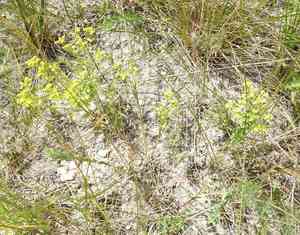
Euphorbia seguieriana, a robust and arid-resistant variety, flourishes when propagated through stem sections. For the best outcome, choose vigorous, non-blooming stalks during periods of active development. Sever a 4-6 inch piece, making certain the cut is precise and beneath a leaf joint. Detach the bottom foliage, immerse the severed tip in rooting compound, and embed it in a porous potting blend. Maintain consistent moisture in the substrate and offer ample, diffused illumination to foster root formation.
Optimal Time for Steppe Spurge Propagation
Propagation Method
Cutting
Propagation Period
Spring,Summer
Tools for Steppe Spurge Propagation
Sharp Pruning Shears
These are crucial for obtaining clean, precise cuttings from steppe spurge. Sharp blades minimize damage to both the parent plant and the new cuttings. A clean cut enhances the cutting's ability to root effectively, reducing disease risk.
Rooting Hormone
This hormone encourages root growth from steppe spurge cuttings. It boosts the success rate of root formation, helping the propagated plant establish itself faster in soil. It's especially beneficial for promoting robust root systems, vital for steppe spurge's survival and development.
Sterile Potting Mix
A sterile potting mix offers a disease-free environment for steppe spurge roots to develop. The mix should be light and drain well to suit steppe spurge's specific drainage needs, supporting healthy root growth without holding excess moisture that could cause root rot.
Propagation Tray
This tool aids in organizing and managing multiple cuttings within a controlled setting. It ensures each steppe spurge cutting has ample space and similar growing conditions, leading to consistent growth rates and successful propagation. Trays also simplify humidity maintenance around cuttings, a key factor for root development.
Misting Bottle
Regular misting helps maintain essential humidity around steppe spurge cuttings, preventing them from drying out before rooting. Controlled moisture levels are critical for successful rooting and initial growth. The fine mist avoids disturbing delicate cuttings.
How to Propagate Steppe Spurge?
Propagation Difficulty
Easy
Caring for Your Newly Propagated Steppe Spurge
Caring for Your Newly Propagated Steppe Spurge
After propagation, ensure steppe spurge's soil remains well-draining, allowing the top layer to dry between waterings. As steppe spurge is drought-tolerant, avoid overwatering. Position steppe spurge in full sun to partial shade. Once established, feed steppe spurge with a balanced liquid fertilizer monthly during the growing season. Watch for pests like spider mites or aphids, especially under stress. Minimal pruning is needed; just remove dead or damaged stems to maintain plant health and appearance.
Common Propagation Mistakes for Steppe Spurge
Overwatering
Excessive watering can cause root rot in steppe spurge, as its root system isn't adapted to high moisture. This can severely impede the plant's ability to establish and thrive.
Deep planting
Planting steppe spurge too deeply can stress the plant by restricting oxygen access to its roots, hindering healthy root development.
Ignoring soil composition
Using an unsuitable soil mixâespecially one that retains too much moistureâcan lead to waterlogging and reduce steppe spurge's survival rate.
Tips For Propagating Steppe Spurge
Well-draining soil
Utilize a well-draining soil mix to prevent water retention. A blend of sand, perlite, and organic matter provides the ideal balance for steppe spurge's growth.
Shallow planting
When propagating steppe spurge, ensure it is not planted too deeply. Keeping the planting depth shallow helps adequately expose the root zone to air and light, promoting better growth.
Moderate watering
Maintain a balanced watering schedule. Allow the soil to dry slightly between waterings to mimic steppe spurge's natural arid habitat conditions.



