How to Prune Diels's cotoneaster?
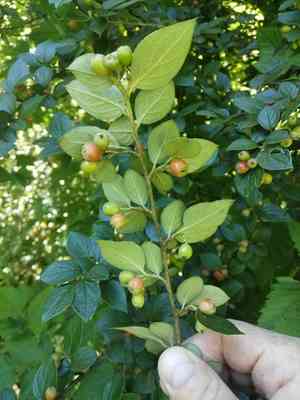
This perennial bush is recognized by its lustrous emerald foliage and groupings of rosy or ivory blossoms, succeeded by decorative drupes. To best care for diels's cotoneaster, perform trimming in the initial part of spring or the latter part of winter. At this time, eliminate any lifeless, ailing, or intersecting limbs to foster robust development and proper air movement. Reducing the number of older stalks can revitalize the specimen, while shaping can preserve its aesthetic structure. Trimming not only improves diels's cotoneaster's look but also stimulates abundant blooming and berry production.
Advantages of Trimming Diels's Cotoneaster
Advantages of Trimming Diels's Cotoneaster
Trimming diels's cotoneaster promotes robust development by eliminating lifeless or weak branches, fostering a more robust plant structure. It also aids in preserving the desired form for visual appeal and garden consistency.
Optimal Period for Pruning Diels's Cotoneaster
Optimal Period for Pruning Diels's Cotoneaster
Late winter and early spring are ideal for pruning diels's cotoneaster while the plant is still dormant. This timing prevents undue stress and minimizes the risk of winter damage to freshly pruned areas. Pruning before new spring growth supports the plant's natural cycle, encouraging healthy new branches and foliage. It also allows for effective removal of dead or diseased wood before the plant expends energy on leaves and flowers, and avoids cutting off buds that will become this year's blooms. These seasons are best as they align with the plant's tendency to flower on old wood, ensuring that blooming will not be affected if pruning occurs before the new year's growth begins.
Essential Tools for Pruning Diels's Cotoneaster
Hand Pruners
Hand pruners, also known as secateurs, are perfect for cutting smaller stems and branches of diels's cotoneaster, typically less than 0.5 inches in diameter. Opt for bypass pruners, which operate with a scissor-like motion, to achieve clean cuts that encourage healthy regrowth.
Loppers
For branches that are somewhat thicker, usually up to 1.5 inches in diameter, loppers are the appropriate tool. They offer increased leverage and reach for cutting through sturdier branches of diels's cotoneaster without harming the plant or the gardener.
Pruning Saws
If diels's cotoneaster has matured and developed thick branches exceeding 1.5 inches in diameter, a pruning saw becomes essential. A fine-toothed pruning saw is excellent for making precise cuts without damaging the surrounding wood.
Hedge Shears
When shaping diels's cotoneaster into hedges or for formal designs, hedge shears are beneficial. This tool can assist in creating a uniform appearance, especially during the plant's active growth phase.
Pole Pruners
To reach higher sections of diels's cotoneaster without using a ladder, pole pruners can be safely utilized. They are useful when the plant is tall and requires trimming from the ground.
How to Trim Diels's Cotoneaster
Inspect
Examine diels's cotoneaster for specific parts to trim: diseased leaves, withered leaves, dead branches, and diseased branches. Wear gloves and use clean, sharp pruning tools to prevent infection.
Sanitize
Disinfect cutting tools with alcohol or a bleach solution before and after pruning diels's cotoneaster to prevent the spread of disease.
Prune diseased and dead
Remove diseased and dead branches by cutting at a healthy part of the branch to promote healing. Trim off diseased and withered leaves close to the base without damaging healthy ones.
Thinning
For diseased branches that are closely packed, thin them out to improve air circulation, which helps in reducing future disease outbreaks in diels's cotoneaster. Be selective and maintain the natural shape.
Dispose
Collect and dispose of all removed diseased leaves and branches properly to prevent any spread of disease in diels's cotoneaster. Do not compost as this might not destroy pathogens.
Common Pruning Errors with Diels's Cotoneaster
Overpruning
Removing too many of diels's cotoneaster's branches at once can stress the plant, leading to poor growth or reduced flowering.
Improper cuts
Cutting too close to the trunk or leaving large stubs can result in wounds that don't heal properly, making diels's cotoneaster susceptible to pests and diseases.
Neglecting deadwood
Failing to remove dead or diseased wood can impede diels's cotoneaster's overall health and appearance.
Shaping without purpose
Pruning diels's cotoneaster into unnatural shapes without understanding its growth pattern can compromise its structural integrity and aesthetic.
Ignoring the plant's natural form
Attempting to impose an unsuitable form on diels's cotoneaster can result in unattractive growth and diminish its inherent beauty.
General Pruning Advice for Diels's Cotoneaster
Selective thinning
Focus on removing specific branches to enhance air circulation and light penetration, which encourages healthy growth in diels's cotoneaster.
Maintain natural habit
Diels's cotoneaster benefits from pruning that preserves its natural shape. Aim to enhance its form rather than alter it.
Clean cuts
Use sharp, clean tools to make cuts at a 45-degree angle about 1/4 inch above a bud that faces the outside of the plant. This helps diels's cotoneaster to heal quickly and grow in the desired direction.
Regular maintenance
Periodically inspect diels's cotoneaster for dead, damaged, or crossing branches and remove them promptly to maintain its health and appearance.
Rejuvenation pruning
For older diels's cotoneaster specimens, consider more extensive pruning to revitalize the plant and stimulate new growth. This involves cutting back a portion of the older stems to ground level.



