How to Prune Mountain sandwort?
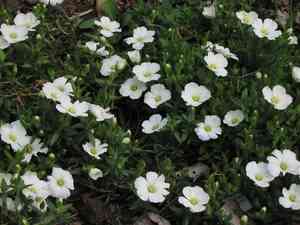
A compact, perennial evergreen distinguished by its abundant leaves and stellate blossoms, mountain sandwort flourishes in adequately drained earth. Trim to preserve its form and stimulate more robust development by removing any faded flowers or elongated stalks. Although mountain sandwort withstands trimming throughout the year, the most effective time for this is after blooming to prevent the removal of forthcoming flowers. Consistent trimming deters sparse growth and fosters energetic, dense development, thereby improving the plant's aesthetic value in stone gardens or as a ground covering.
Advantages of Trimming Mountain Sandwort
Advantages of Trimming Mountain Sandwort
Trimming mountain sandwort promotes abundant flowering, stimulates vigorous development, and preserves a compact, appealing shape. This selective cutting ensures the plant's energy is directed to desired areas, improving overall health.
Optimal Time for Pruning Mountain Sandwort
Optimal Time for Pruning Mountain Sandwort
Pruning mountain sandwort from late winter to early spring is ideal as it's a dormant period for many perennials. This timing allows gardeners to shape the plant and remove dead or diseased foliage without disrupting its growth cycle. Moreover, this precedes the plant's spring growth spurt, ensuring cuts heal quickly with new growth. This also minimizes disease transmission, which can be higher in wetter seasons. Thus, trimming during this window aligns with mountain sandwort's health needs and natural flowering cycle, typically leading to a more robust bloom in late spring and summer.
Tools Required for Pruning Mountain Sandwort
Bypass Pruners
Perfect for making clean cuts on mountain sandwort's small stems without harming plant tissues. They are precise and easy to handle, crucial for maintaining mountain sandwort's delicate structure.
Small, Sharp Scissors
Useful for snipping off dead or yellowing leaves from mountain sandwort, especially in tight spots where precision is needed. Their small size allows for careful pruning without disturbing surrounding plant parts.
Gardening Gloves
Though not a cutting tool, gloves protect your hands when pruning mountain sandwort and offer a better grip on the tools used.
How to Prune Mountain Sandwort
Sanitize Tools
Disinfect all pruning tools to prevent disease spread to mountain sandwort. Use a solution of 1 part bleach to 9 parts water or rubbing alcohol to thoroughly clean the blades.
Diseased Portions
First, remove any diseased leaves and branches from mountain sandwort to help prevent infection spread. Cut these parts back to healthy tissue, ensuring clean cuts that don't tear the plant's flesh.
Dead Material
Prune away dead branches and withered leaves from mountain sandwort to encourage healthier growth and improve air circulation. Make cuts at a 45-degree angle close to the base or to the nearest set of living leaves.
Flower Removal
Deadhead, or cut off, spent flowers from mountain sandwort to encourage more blooming and maintain a tidy appearance. Snip them off just above the first set of full, healthy leaves below the faded flower.
Shape Plant
Finally, shape mountain sandwort by lightly trimming overgrown sections to maintain the desired form and size. Avoid heavy pruning, as this can stress mountain sandwort and reduce its vigor.
Common Pruning Errors with Mountain Sandwort
Excessive Pruning
Removing too much foliage from mountain sandwort can stress the plant, leading to poor growth and fewer blooms. It's crucial to prune conservatively and maintain the plant's natural form.
Incorrect Cut Placement
Cutting too far from a node or into old woody growth can hinder new growth on mountain sandwort. Pruning should be done just above leaf nodes to encourage healthy new shoots.
Using Dull Tools
Dull pruning tools can damage mountain sandwort stems, resulting in jagged cuts more prone to disease or pest infestation. Always use sharp, clean shears or scissors.
Neglecting Deadheading
Failing to remove spent flowers from mountain sandwort can prevent the plant from producing new blooms. Deadheading promotes further blooming and tidies up the plant's appearance.
Ignoring Plant Shape
Not considering mountain sandwort's natural mounding habit during pruning can result in an unnatural or uneven shape. It's important to follow the plant's contours when pruning to maintain its aesthetic form.
General Pruning Advice for Mountain Sandwort
Promoting Bushiness
Pinching back mountain sandwort tips can encourage the plant to become more bushy and full. Use your fingers or pruning shears to pinch just above a set of leaves.
Post-Bloom Trim
After mountain sandwort has finished flowering, a light trim can help rejuvenate it and may encourage a second flush of blooms in some conditions.
Removing Dead Material
Regularly removing dead or brown leaves and faded flowers from mountain sandwort will improve air circulation, reduce disease likelihood, and promote a healthier plant.
Shaping
Shape mountain sandwort by cutting back leggy stems to a side shoot or just above a node that points in the desired new growth direction, thus guiding the plant to fill out as wished.
Cleanliness
Always use sterilized pruning tools on mountain sandwort to prevent disease spread. Clean the blades with a disinfectant such as alcohol before and after use.



