How to Prune California spikenard?
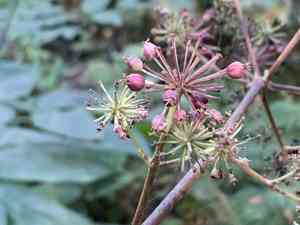
Distinguished by its expansive foliage and impressive height, california spikenard thrives with trimming to preserve its form and stimulate robust development. The optimal period for this activity is late winter or early spring, prior to the emergence of new shoots. Minor trimming to eliminate impaired or lifeless stalks can be performed in summer or autumn. Reducing the density of older stems enhances air movement, which is crucial for california spikenard's well-being, and fosters more abundant leaves. Trimming serves as a vital method for managing its dimensions and refining the plant's inherent structure.
What Are the Benefits of Pruning California Spikenard?
What Are the Benefits of Pruning California Spikenard?
Trimming california spikenard promotes flowering, stimulates robust development, and preserves its desired form. Precise cuts enhance plant vitality and appearance, ensuring california spikenard flourishes and effectively resists pests and diseases.
What Is the Best Time for Pruning California Spikenard?
What Is the Best Time for Pruning California Spikenard?
Pruning california spikenard from late winter to early spring is advantageous because the plant is dormant, minimizing stress and potential harm during this resting phase. This allows for the removal of any frost-damaged branches before new growth starts, fostering healthier development. Summer pruning, post-flowering, helps manage california spikenard's shape and size, improving air circulation and lowering disease risk. It's also an opportune time to eliminate weak or diseased growth, as the plant is actively growing and can recover quickly. Autumn pruning is generally avoided to prevent stimulating new growth that might not endure winter temperatures.
What Tools Do I Need to Prune California Spikenard?
Bypass Pruners
Perfect for making clean cuts on smaller stems of california spikenard without crushing plant tissue, aiding in better recovery.
Loppers
Useful for reaching into the denser foliage of california spikenard and for cutting thicker stems that bypass pruners cannot manage.
Pruning Saw
Essential for cutting through the thickest stems and branches of california spikenard, which can be several inches in diameter.
How to Prune California Spikenard
Clean tools
Before you begin trimming california spikenard, ensure all pruning tools are clean and sharp to prevent disease spread and make precise cuts.
Remove diseased
Carefully remove any diseased leaves from california spikenard by making a clean cut at the base of the affected leaf to prevent the disease from spreading to healthy parts of the plant.
Trim withered leaves
Trim off withered leaves from california spikenard by cutting them back to their point of origin, which will promote healthy new growth and improve air circulation around the plant.
Prune withered flowers
Cut back withered flowers on california spikenard to the nearest set of leaves or to the base of the flowering stem to encourage more blooms and maintain a neat plant appearance.
Dispose materials
Properly dispose of all removed materials such as diseased and withered leaves and flowers away from california spikenard, to prevent any diseases from lingering and potentially reinfecting the plant.
Common Pruning Mistakes with California Spikenard
Over pruning
Removing too much foliage from california spikenard at once can stress the plant and hinder its growth. It is advised to prune no more than one-third of the overall growth to maintain the plant's health.
Improper cut locations
Cutting in the wrong place can cause damage to california spikenard. Pruning cuts should be made just above leaf nodes and at a 45-degree angle to promote healing and prevent water accumulation that could lead to disease.
Using dull tools
Pruning california spikenard with dull tools can result in ragged cuts that are more susceptible to infections. Always use sharp, clean pruning shears to make clean cuts.
Pruning at active growth
While timing has been excluded, it's important to note that pruning california spikenard during its active growth phases without any reason can remove the parts of the plant that are essential for photosynthesis and growth.
Ignoring plant structure
Neglecting the natural form of california spikenard can lead to an aesthetically unpleasing shape. Pruning should aim to maintain the integrity of its natural structure.
Excessive hard pruning
Refrain from hard pruning without cause. California spikenard has a robust growth habit and may only need light pruning to maintain its shape and encourage healthy growth.
Common Pruning Tips for California Spikenard
Selective pruning
Focus on removing only the dead, damaged, or diseased branches from california spikenard, which encourages healthy growth and improves air circulation around the plant.
Maintain plant health
Prune california spikenard to promote its health by thinning out dense areas, which increases sunlight penetration and reduces the risk of fungal diseases.
Encourage flowering
Since flowering information is species-dependent, encourage blooming in california spikenard by selectively pruning old wood if flowers emerge on new growth, or by cutting back flowering stems after blooms fade if it blooms on old growth.
Formative pruning
For california spikenard, early formative pruning can help to establish a strong framework for the plant. Remove crossing branches and those that grow inward, focusing on shaping young plants while they are most adaptable.
Rejuvenation pruning
California spikenard may benefit from rejuvenation pruning every few years. Remove older stems at the base to promote new, vigorous, and more floriferous growth.
Cleaning tools
Clean pruning tools before and after tending to california spikenard to prevent the spread of disease. Disinfecting shears with a solution of bleach or alcohol can help maintain plant hygiene.



