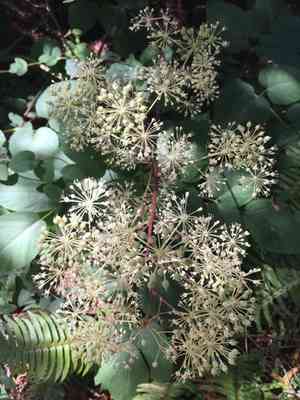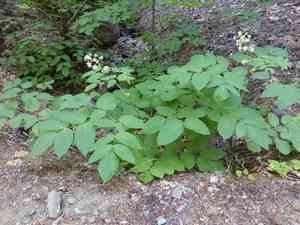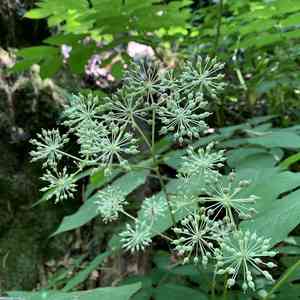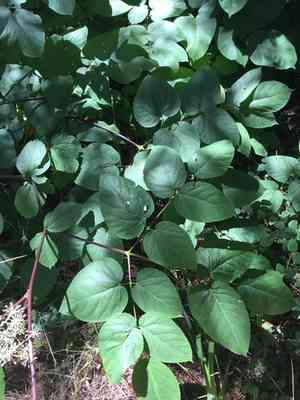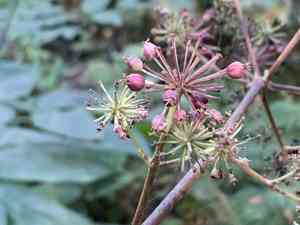
California spikenard(Aralia californica)

California spikenard (Aralia californica)

Also known as: Elk clover, California ginseng

California spikenard (Aralia californica), also known as elk clover, is a deciduous perennial native to the western United States. It typically reaches heights up to 8 feet (2.4 meters) and can spread equally wide.

Growth Characteristics:
- Leaves: Features large, pinnately compound leaves with toothed margins.
- Flowers: Blooms in summer with clusters of small, greenish-white flowers.
- Fruit: Produces dark purple to black berries in the fall that attract birds.

Preferred Growing Conditions:
- Light: Thrives in partial to full shade.
- Soil: Prefers moist, well-drained soils, often rich in organic matter.
- Water: Needs consistent moisture, especially in dry spells.
- Habitat: Commonly found along streambanks, forest understories, and canyon areas in its native range.

California spikenard is an excellent choice for naturalizing in shaded garden areas, providing valuable habitat and food for wildlife.

Attributes of California spikenard

Lifespan
Perennial
Plant Type
Herb
Plant Height
1.8 m to 3 m
Spread
1.8 m to 3 m
Leaf Color
Green
Flower Size
2.5 cm
Flower Color
White Green Yellow Purple

ForwardPlant - Identify plants with a snap

Identify and diagnose plants, get toxicity alerts, and explore safety guides for all types of fungi.

Try for Free

Images of California spikenard

California spikenard(Aralia californica)

Quickly Identify California spikenard

1
To identify Aralia californica, look for its large, alternate, compound leaves with toothed leaflets. The plant also has tall, erect stems that bear clusters of small, greenish-white flowers. Its fruit are berry-like drupes that turn purplish-black when ripe.

Scientific Classification of California spikenard

Phylum
Vascular plants
Class
Dicotyledons
Order
Apiales
Family
Ivy
Genus
Spikenards
Species
California spikenard

Planting and Growing of California spikenard

Care Difficulty
Easy
Watering Schedule
Every 2 days
Sunlight Requirements
Partial sun
Sunshine Duration
6-10 hours
Ideal Temperature
60-80℉
Soil Type
Potting Mix, Peat Mix
Soil pH
6.5-7.5
Fertilizer Type
Balanced
Pruning Season
Spring, Summer
Pruning Area
Branches, Leaves
Pruning Frequency
2 times a year
Repotting Season
Spring
Pot Type
Ceramic, Plastic

water icon How to Water California spikenard?

For Aralia californica, the key is to maintain moist, but not waterlogged soil. It's best to water until the topsoil is thoroughly damp but not so much that water pools at the base. A consistent watering of around 500 milliliters each session should suffice, depending on environmental factors like humidity.
What are the symptoms of an underwatered California spikenard? ›
What should I do if my California spikenard is not getting enough water? ›
What are the symptoms of an overwatered California spikenard? ›
How to save an overwatered California spikenard? ›

sunlight icon What Are the Sunlight Requirements for California spikenard?

Sunlight Requirements: Partial sun
Duration of light: 3 to 6 hours daily
Aralia californica flourishes in environments with partial sun to partial shade. Ideal conditions ensure robust growth and resilience. Adequate light supports active photosynthesis, promoting lush foliage and a thriving plant.
Does Aralia californica prefer morning or afternoon sun? ›
What is the best environment for its growth? ›
How can I optimize sunlight exposure for Aralia californica? ›
More About Sunlight Requirements Techniques→

temperature icon What Is the Ideal Temperature Range for California spikenard?

Ideal Temperature: 60 ~ 80℉
The ideal temperature range for Aralia californica is between 60°F and 80°F, as this range promotes optimal growth and development. Within this range, the plant can efficiently photosynthesize, process nutrients, and maintain healthy foliage. During these conditions, one can observe lush growth and vibrant coloring in the leaves.

soil icon What Soil is Best for California spikenard?

Soil type: Loam, Sandy loam
Soil PH: 6.5 ~ 7.5
Aralia californica thrives in well-drained soil that prevents waterlogging, which can lead to root rot. Well-drained soil ensures the roots receive adequate oxygen, promoting strong growth. This plant requires soil that retains moisture yet does not become soggy. Proper moisture retention keeps the plant hydrated, particularly during hot weather, ensuring lush, healthy foliage. Aralia californica benefits from rich, fertile soil full of organic matter. This nutrient-rich soil provides essential vitamins and minerals, leading to robust plant development and vibrant growth.

fertilize icon How to Fertilize California spikenard?

Fertilizer type: Balanced
For Aralia californica, a balanced, water-soluble fertilizer diluted to half strength should be sufficient. Use about one tablespoon per gallon of water. Over-fertilizing can harm the plant, so it's crucial to stick with this minimal approach.

prune icon How to Prune California spikenard?

Pruning Time: Spring, Autumn
If your Aralia californica is growing too tall, trim back the tallest branches to a main branch or bud. This encourages a bushier plant and prevents excessively tall growth, which can become unmanageable. Prune to maintain a desired shape by cutting back to a lateral bud or branch. Shaping helps in maintaining uniformity and aesthetic appeal, essential for garden design. Remove some of the older stems at the base if the plant becomes too dense. This thinning allows light and air to penetrate, promoting a healthier plant environment. More About Pruning Techniques→

propagate icon How to Propagate California spikenard plant?

Propagate Time: Spring, Late spring, Early spring
1
Choose robust and disease-free parents for taking cuttings or divisions. This increases the chances of successful propagation by starting with the healthiest genetic material.
2
Use a well-draining soil mix composed of equal parts peat moss and perlite. This mixture retains moisture while allowing excess water to escape, creating an ideal environment for root development.
3
Insert the prepared cuttings into the soil and water thoroughly. Ensure that the soil remains moist but not waterlogged, as too much water can cause rot and deter rooting.
More About Propagating Techniques→

repot icon How to Repot California spikenard plant?

Repotting frequency: Every two years
1
Aralia californica should be repotted when you see roots emerging from the drainage holes or when its growth seems stunted. The best time to recognize these signs is in early spring before the growing season begins. This ensures the plant has ample time to establish itself in the new pot during its most active phase.
2
Selecting the right pot for Aralia californica involves choosing one that is one size larger than the current pot, ensuring proper drainage with adequate holes. The benefits of using a slightly larger pot include more space for root expansion, which supports healthier, more vigorous growth and prevents root binding.
3
Opt for a rich, well-draining loam soil to repot Aralia californica. This type of soil will allow excess water to drain away while retaining the essential moisture needed for the plant. The rich nature of loam provides necessary nutrients, promoting growth and vitality.

ForwardPlant - Identify plants with a snap

Find the best spots for them to optimize their health, simply using your phone.

Try for Free