How to Propagate Baldwin's ironweed?
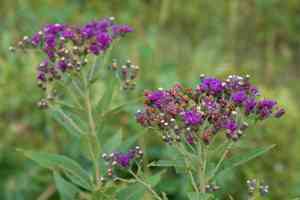
Baldwin's ironweed is most effectively propagated by planting seeds in the springtime. The process of propagation presents a moderate challenge, yet successful outcomes are indicated by the appearance of robust seedlings with vibrant leaves. It is crucial to ensure the soil remains damp and to provide sufficient distance between plants for their best development.
What Is the Best Time To Propagate Baldwin's Ironweed?
Propagation Type
Sowing
Propagation Season
Spring
What Tools Are Used in Baldwin's Ironweed Propagation?
Seed Trays
These shallow containers offer a controlled setting for planting baldwin's ironweed seeds. They assist in maintaining consistent moisture and temperature, crucial for successful germination. Their compact size allows for efficient use of space and resources during early plant growth.
Peat Pots
Peat pots are biodegradable containers suitable for starting baldwin's ironweed seeds. They minimize root disturbance during transplanting since the entire pot can be placed into the soil. This feature is especially beneficial for baldwin's ironweed's roots, which can be sensitive to disruption.
Soil Mix
A well-draining and nutrient-rich soil blend provides an ideal growth medium for baldwin's ironweed seeds. It supports root development and helps retain moisture without becoming waterlogged, which is vital for the plant's germination and initial growth stages.
Watering Can with a Fine Rose
Providing a gentle water flow, this tool is essential for keeping baldwin's ironweed's seedlings moist without displacing seeds or causing soil erosion. A fine rose attachment distributes water evenly and delicately, which is important for the survival of young plants.
Perlite
This soil additive improves aeration and drainage when mixed with the soil; it's crucial for baldwin's ironweed as it promotes healthy root development and prevents waterlogging, which could lead to root rot in the sensitive early stages of the plant's growth.
Labels and Markers
Proper labeling is important to track the progress and variety of baldwin's ironweed throughout the propagation process. It ensures that the right care is given to each plant and helps in monitoring germination and growth rates.
Heating Mats
Baldwin's ironweed seeds may benefit from consistent soil temperatures to encourage germination. Heating mats provide a steady heat source, which can be crucial in cooler environments or during the off-season when ambient temperatures are not ideal for seed starting.
How to Propagate Baldwin's Ironweed?
Propagation Type
Sowing
Difficulty Level
Easy
How to Care for Your Newly Propagated Baldwin's Ironweed?
How to Care for Your Newly Propagated Baldwin's Ironweed?
After propagation, baldwin's ironweed requires minimal upkeep. Provide baldwin's ironweed with regular watering, especially during dry spells, to encourage deep root growth. Fertilization is generally not needed, as baldwin's ironweed tolerates poor soils. As a tall native prairie plant, baldwin's ironweed may benefit from staking or support if in a particularly windy location. Remove spent flowers if desired to maintain aesthetics or prevent self-seeding. Divide plants every 3 to 4 years to rejuvenate and invigorate growth.
Common Mistakes to Avoid When Propagating Baldwin's Ironweed
Ignoring root division sizes
Dividing the roots of baldwin's ironweed too small can hinder their ability to establish themselves after transplanting, which may lead to a poor survival rate. Larger divisions tend to recover and grow more vigorously.
Overwatering after propagation
Excessive moisture around the roots of baldwin's ironweed after propagation can lead to root rot. Baldwin's ironweed prefers well-draining soil, and too much water can be detrimental to its health.
Planting at incorrect depth
If baldwin's ironweed is planted too deep, it risks stem rot and suffocation, whereas too shallow planting can prevent the roots from establishing properly, causing instability and moisture issues.
Neglecting to harden off
Failing to gradually acclimate baldwin's ironweed to outdoor conditions can cause shock, resulting in wilting or death due to sudden changes in temperature, light, and wind.
Using diseased or weak cuttings
Initiating propagation with cuttings that are diseased or weak can limit propagation success as these specimens may lack the vigor required to establish new growth.
Tips For Propagating Baldwin's Ironweed
Appropriate division
Ensure divisions of baldwin's ironweed's root clumps have at least one or two vigorous shoots and a substantial amount of root to encourage successful establishment.
Moderate watering
Provide baldwin's ironweed with consistent, moderate watering after propagation to maintain evenly moist soil that encourages root growth without causing waterlogging.
Optimal planting depth
Plant baldwin's ironweed divisions at the same depth they were previously growing to encourage proper root development and reduce stress on the plant.
Gradual acclimatization
Harden off baldwin's ironweed by slowly exposing it to outdoor conditions over the course of a week or two, which can help reduce transplant shock and improve its chances of thriving.
Healthy cuttings selection
Always select healthy, vigorous cuttings from baldwin's ironweed when attempting propagation to ensure the best chance of growth and survival.



