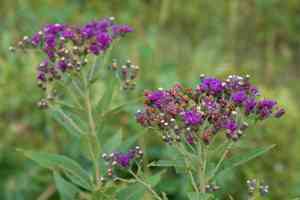
Baldwin's ironweed (Vernonia baldwinii)
Also known as: Western ironweed
For large meadows, consider planting Baldwin's ironweed (Vernonia baldwinii). This plant thrives in expansive spaces, forming extensive colonies. Its vibrant flowers bloom from early summer and last until the first frost.
In This Article
Attributes of Baldwin's ironweed
Lifespan
Perennial
Plant Type
Herb
Plant Height
1.2 m
Spread
60 cm to 1.2 m
Leaf Color
Green
Flower Size
2.5 cm
Flower Color
Purple Pink Red
Images of Baldwin's ironweed
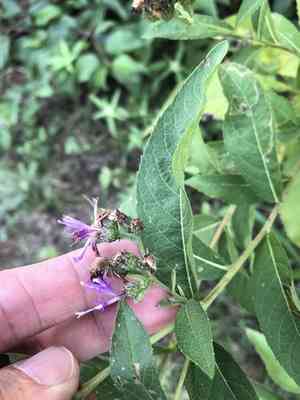
Quickly Identify Baldwin's ironweed
1
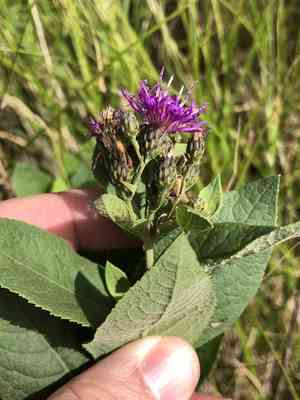
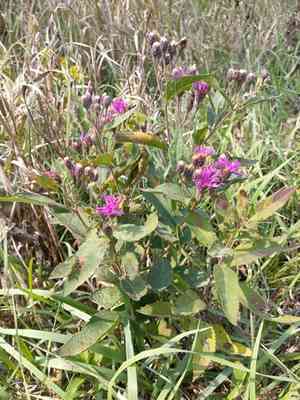
Look for tall, stiff stems that can reach anywhere from 1 to 2 meters in height. The leaves are lance-shaped, and the plant produces clusters of small, deep purple to lavender flowers typically in late summer and early fall.
Scientific Classification of Baldwin's ironweed
Phylum
Vascular plants
Class
Dicotyledons
Order
Asterales
Family
Daisy
Genus
Vernonia
Species
Baldwin's ironweed
Planting and Growing of Baldwin's ironweed
Care Difficulty
Easy
Watering Schedule
Every 3 days
Sunlight Requirements
Full sun
Sunshine Duration
4-8 hours
Ideal Temperature
60-75℉
Soil Type
Potting Mix, Peat Mix
Soil pH
6.5-7.5
Fertilizer Type
Balanced
Pruning Season
Spring, Summer
Pruning Area
Branches, Leaves
Pruning Frequency
2 times a year
Repotting Season
Spring
Pot Type
Plastic, Terracotta
 How to Water Baldwin's ironweed?
Vernonia baldwinii prefers to be watered thoroughly, ensuring the soil is consistently moist but not waterlogged. Water each time with approximately 500 milliliters to keep the soil damp yet not soggy, as overwatering may lead to root rot.
What are the symptoms of an underwatered Baldwin's ironweed?
›
What should I do if my Baldwin's ironweed is not getting enough water?
›
What are the symptoms of an overwatered Baldwin's ironweed?
›
How to save an overwatered Baldwin's ironweed?
›
 What Are the Sunlight Requirements for Baldwin's ironweed?
Vernonia baldwinii ideally flourishes in environments with full to partial sun exposure; this allows for lush foliage growth and vibrant blooms. Optimal light ensures energy levels conducive to growth.
More About Sunlight Requirements Techniques→
What are ideal lighting conditions for Vernonia baldwinii?
›
How can I achieve the ideal lighting for Vernonia baldwinii?
›
What are the benefits of ideal lighting for this plant?
›
 What Is the Ideal Temperature Range for Baldwin's ironweed?
Vernonia baldwinii thrives best in temperatures ranging from 60°F to 75°F. This range provides an optimal environment for photosynthesis and growth, ensuring the plant can actively develop. In a consistent warm setting, the plant efficiently uses resources, leading to healthy blooms.
 What Soil is Best for Baldwin's ironweed?
Vernonia baldwinii thrives in well-drained soils that prevent waterlogging. Adequate drainage ensures that the roots have access to oxygen and prevents root rot, thus promoting healthier growth. Rich, fertile soils full of organic matter support the nutrient demands of Vernonia baldwinii. This soil requirement ensures strong root development and robust foliage, enhancing the overall vitality of the plant. While well-drained soil is important, soil that efficiently retains moisture without becoming soggy aids in sustaining plant hydration during dry spells. This balance helps the plant maintain its lushness and solid growth.
 How to Fertilize Baldwin's ironweed?
Vernonia baldwinii has moderate fertilization needs. When using a liquid fertilizer, aim for a concentration of half the recommended strength on the product label. For slow-release granules, use roughly 50 grams per square meter. These amounts support healthy growth without overwhelming the plant with nutrients.
 How to Prune Baldwin's ironweed?
Begin by removing any brown or blackened stems as these are likely diseased. Cut these all the way back to the base to encourage new healthy growth. Trim back any errant stems that are marring the shape of the plant. Aim to create a symmetrical, bush-like appearance while ensuring enough sunlight can reach the center of the plant. To promote a fuller plant, make cuts just above a pair of leaves or leaf nodes. This encourages the plant to sprout new branches and create a denser appearance.
More About Pruning Techniques→
 How to Propagate Baldwin's ironweed plant?
1
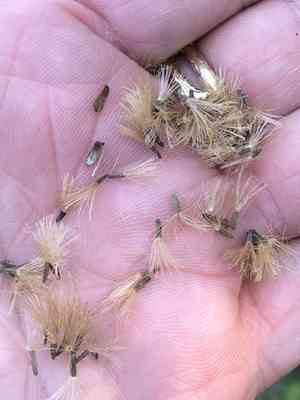
Scatter the seeds over well-draining soil in seed trays, cover lightly with soil, and maintain consistent moisture, ensuring they are not waterlogged, to encourage germination.
2
Select healthy stems for cuttings, approximately 4 to 6 inches long, and cut them with a clean sharp knife. Remove the lower leaves and dip the cut end in rooting hormone.
3
Insert cut ends of the prepared stems into moist, well-draining soil, and place them in a bright, warm area away from direct sunlight to encourage root development.
 How to Repot Baldwin's ironweed plant?
1
Vernonia baldwinii should be repotted when the roots begin to grow out through the drainage holes or the plant becomes top-heavy and tips over easily. Another sign is a decrease in growth or a lackluster appearance despite proper care. Ideally, repot during its active growing seasons, spring or summer, to minimize stress.
2
Opt for a pot that's one size larger than the current one when repotting Vernonia baldwinii. Ensure it has good drainage holes to prevent waterlogging, which can lead to root rot. A slightly heavier pot can provide stability, especially if the plant grows tall and tends to lean.
3
A well-draining, loamy soil mix is ideal for Vernonia baldwinii. This ensures that water flows through efficiently, preventing soil saturation while providing the necessary nutrients. A mix with some organic matter can enhance nutrient availability and improve soil structure over time.



