How to Propagate Purple clover?
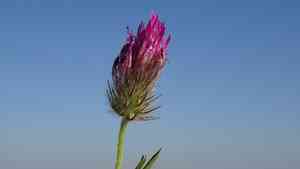
Purple clover flourishes optimally when reproduced through seeding. To achieve successful cultivation, a horticulturist ought to employ a growing medium that drains effectively, fortified with organic material to supply essential nourishment. A superficial scattering on the soil's surface enables the diminutive seeds of purple clover to acquire sufficient illumination for sprouting. Steady hydration and warmth will encourage germination, while avoiding excessive watering that could lead to seed decay. Careful handling of the fragile young plants guarantees strong establishment, preparing them for relocation once they have produced their initial true leaves.
Optimal Period for Purple Clover Propagation
Propagation Method
Seeding
Propagation Period
Spring
Tools for Purple Clover Propagation
Seed Trays
Seed trays are vital for planting purple clover seeds. They help arrange seeds uniformly and offer ample room for each seedling to develop without crowding. Their modular design allows for easy transplanting of seedlings, minimizing root disturbance, which is crucial for purple clover's delicate roots.
Peat Pots
Peat pots are very useful for purple clover because their biodegradable nature reduces root damage during transplanting. Growing purple clover in peat pots allows the entire pot to be placed directly into the ground, lessening transplant shock and encouraging stronger, quicker root growth.
Soil Mix
A premium, light, and well-draining soil mix is perfect for purple clover. The soil must hold moisture but also allow excess water to escape to prevent root rot. A mix enriched with compost or vermiculite is beneficial, providing essential nutrients and aeration for optimal seed sprouting and development.
Watering Can with a Fine Rose
This tool is essential for gently watering purple clover seeds without dislodging them. The fine rose attachment distributes water evenly, providing delicate seedlings with the necessary moisture to grow without being washed away or buried by strong water flow.
Labels and Markers
Labeling is critical when propagating various plant types like purple clover to monitor growth and identify varieties. Durable, weather-resistant labels and markers ensure plant details remain readable throughout the growth cycle.
Propagation Mat
A propagation mat helps maintain a consistent soil temperature, which is key for purple clover germination. Keeping the soil at a steady, warm temperature promotes faster and more uniform seed sprouting, especially useful in colder climates or seasons.
How to Propagate Purple Clover?
Propagation Difficulty
Simple
Caring for Newly Propagated Purple Clover
Caring for Newly Propagated Purple Clover
After successful propagation, ensure purple clover receives regular watering, particularly during dry spells, to support healthy development. Fertilization is generally not needed, but a light application of a balanced, slow-release fertilizer can be helpful in very poor soils. As a leguminous plant, purple clover will enrich the soil by fixing nitrogen, making it beneficial for intercropping with other species.
Common Mistakes to Avoid When Propagating Purple Clover
Overwatering
Excessive watering can cause root rot in purple clover, a condition where roots decay, hindering their ability to absorb nutrients and water effectively. This can impede growth or kill the plant.
Deep planting
Planting purple clover seeds too deep can prevent their germination and emergence. Purple clover seeds need light to sprout, and burying them too deeply can block the necessary light, delaying or stopping germination.
Ignoring soil drainage
Growing purple clover in poorly draining soil can lead to water accumulation around the roots. This creates an oxygen-deprived environment that harms root health and function, ultimately impacting overall plant vitality.
Tips For Propagating Purple Clover
Light exposure
Ensure purple clover seeds are sown on the soil surface or lightly covered. Purple clover seeds require adequate light for effective germination, so avoiding deep burial is crucial.
Moderate watering
Water purple clover moderately to keep the soil moist but not waterlogged. This balance is vital to prevent root diseases and provide an optimal environment for root development.
Soil preparation
Prepare a well-draining soil mix or select a planting site with good drainage. Enhancing soil with compost can improve its structure, nutrient content, and drainage capabilities, supporting healthier growth of purple clover.



