How to Propagate Bush clockvine?
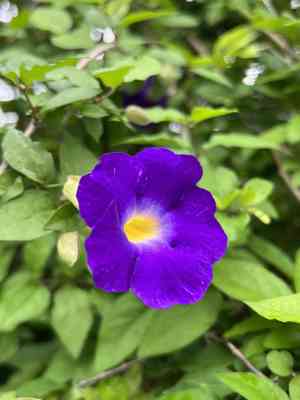
Thunbergia erecta, a tropical species, is prized for its aesthetic appeal, featuring attractive blossoms and abundant leaves. Effective propagation of this plant primarily relies on utilizing cuttings. Cultivators ought to select robust stem sections, making sure each segment possesses multiple nodes, and embed them in a potting substrate that drains efficiently. Applying a rooting stimulant can improve the likelihood of successful root formation. Sustaining elevated moisture levels around the cuttings with a plastic enclosure will aid in root growth. After rooting, the young plants need to be progressively accustomed to drier environments prior to outdoor transplantation.
Optimal Period for Bush Clockvine Propagation
Propagation Method
Cutting
Propagation Period
Spring,Summer
Tools Required for Bush Clockvine Propagation
Sharp Pruning Shears or Scissors
These implements are vital for achieving a clean, precise incision when harvesting stem cuttings from bush clockvine. A keen blade guarantees a smooth cut, minimizing harm to the parent plant, which aids in preventing infections and promotes rapid healing. A cleaner cut enhances the likelihood of successful rooting for the cuttings.
Rooting Hormone
Applying rooting hormone to the severed ends of bush clockvine cuttings assists in stimulating root development more efficiently and uniformly. Rooting hormones boost the probability of successful root formation, thereby improving the overall success rate of the propagation process. This is especially beneficial for hardwood or semi-hardwood cuttings that might otherwise take longer to root.
Sterile Potting Mix
Utilizing a sterile, well-draining potting medium offers an ideal environment for the rooting of bush clockvine cuttings. A mix devoid of pathogens ensures the health and vitality of the young plants as their roots develop. The soil's texture should permit good aeration while retaining adequate moisture to sustain the cuttings during their crucial initial growth phase.
Propagation Trays or Small Pots
These containers house the soil and bush clockvine cuttings during the rooting stage. It is imperative that they possess excellent drainage to avert waterlogging, which could lead to the decay of the cuttings. The ability to easily relocate these trays or pots allows for environmental adjustments (such as varying sunlight exposure) as required throughout the rooting process.
Plastic Covers or Mini Greenhouses
Establishing a humid atmosphere around the bush clockvine cuttings encourages successful rooting by minimizing water loss from the cuttings. These covers or mini greenhouses can be positioned over the propagation trays or pots to maintain appropriate humidity and temperature, which are crucial for fostering new root development.
How to Propagate Bush Clockvine?
Propagation Difficulty
Moderately Difficult
Post-Propagation Care for Your Bush Clockvine
Post-Propagation Care for Your Bush Clockvine
Once roots are established, gently remove the humidity cover and gradually acclimate bush clockvine to less humid conditions. Transplant the now rooted cutting into a larger container or a suitable garden spot, ensuring it receives partial to full sunlight, as bush clockvine thrives best under these conditions. Consistent watering and monthly fertilization with a balanced, water-soluble fertilizer will support robust growth. Monitor for pests and diseases and treat as necessary to maintain a thriving bush clockvine.
Common Errors to Avoid When Propagating Bush Clockvine
Excessive watering of cuttings
Placing bush clockvine cuttings in overly damp soil can lead to rot before roots have a chance to form. Roots require not only water but also oxygen, and too much water can create an anaerobic environment detrimental to root growth.
Using unsterilized tools
Cutting bush clockvine with contaminated implements can introduce diseases into the freshly wounded plant tissue. This invites fungal and bacterial proliferation which can compromise the cuttingsâ ability to develop roots.
Neglecting to prune the parent plant
Failing to prune bush clockvine before taking cuttings can result in weaker cuttings because the plant has not been encouraged to produce new, healthy growth from which to harvest propagation material.
Ignoring the presence of nodes
Cuttings taken without including a node, where leaves and roots naturally emerge, may not root at all. This oversight can leave gardeners with a cutting that is unable to generate the necessary growth for successful propagation.
Advice for Propagating Bush Clockvine
Choosing healthy stems
Select vigorous and healthy stems for cuttings as they possess a higher rooting potential, ensuring a better chance for bush clockvine to propagate successfully.
Utilizing rooting hormone
Applying rooting hormone to the cut end of bush clockvine can stimulate root growth and significantly enhance the chances of successful propagation.
Providing bright indirect illumination
Keep bush clockvine cuttings in bright, indirect light which supplies the energy needed for growth without causing the stress of direct sunlight.
Monitoring soil moisture levels
Maintain a consistent moisture level in the soil where bush clockvine cuttings are planted to support root development without causing rot. Balance is crucial; the soil should be moist, not waterlogged.



