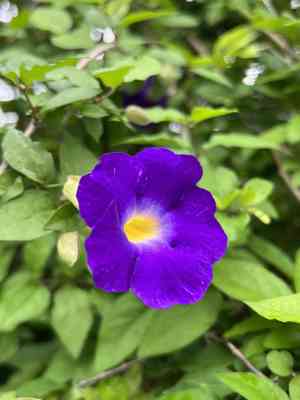
Bush clockvine (Thunbergia erecta)
Also known as: Potato bush
Consider the Clematis, a versatile climbing plant that produces striking dark blue or purple flowers during the summer and autumn months. This plant is perfect for enhancing hedges, borders, and walls with its vibrant blooms. While typically a climber, it can also be trained to grow in various forms to suit your gardening needs.
In This Article
Attributes of Bush clockvine
Lifespan
Perennial
Plant Type
Vine, Shrub
Plant Height
2.5 m
Spread
1.5 m to 2.5 m
Leaf Color
Green
Flower Size
2.5 cm to 5 cm
Flower Color
Purple Blue
Images of Bush clockvine
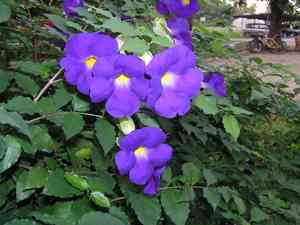
Quickly Identify Bush clockvine
1
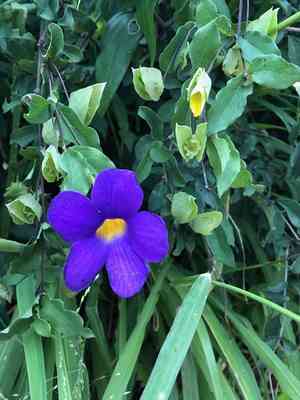
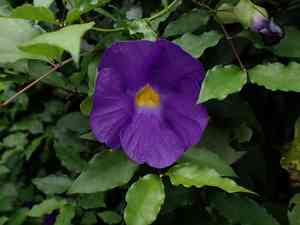
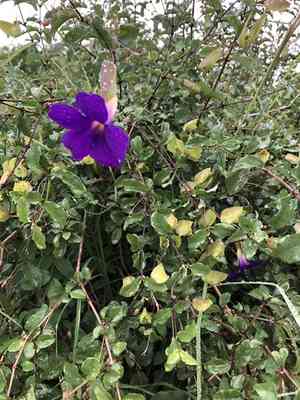
To identify Thunbergia erecta, look for its vibrant blue or violet tubular flowers with a characteristic yellow center. The leaves are glossy, ovate, and dark green. The plant typically grows upright and can reach moderate heights.
Scientific Classification of Bush clockvine
Phylum
Vascular plants
Class
Dicotyledons
Order
Lamiales
Family
Acanthus
Genus
Thunbergias
Species
Bush clockvine
Planting and Growing of Bush clockvine
Care Difficulty
Easy
Watering Schedule
Every 3 days
Sunlight Requirements
Partial sun
Sunshine Duration
4-8 hours
Ideal Temperature
68-77℉
Soil Type
Potting Mix, Peat Mix
Soil pH
6.5-7.5
Fertilizer Type
Balanced
Pruning Season
Spring, Summer
Pruning Area
Branches, Leaves
Pruning Frequency
Once a year
Repotting Season
Spring
Pot Type
Plastic, Ceramic
 How to Water Bush clockvine?
When watering Thunbergia erecta, aim for about 500 ml of water per session. This amount ensures that the soil is evenly moist but not waterlogged. It's crucial to only water until you see a slight trickle from the drainage holes, indicating the soil is adequately saturated without being overly wet.
What are the symptoms of an underwatered Bush clockvine?
›
What should I do if my Bush clockvine is not getting enough water?
›
What are the symptoms of an overwatered Bush clockvine?
›
How to save an overwatered Bush clockvine?
›
 What Are the Sunlight Requirements for Bush clockvine?
Providing partial sun exposure ensures robust growth and vibrant blooms. This balanced light condition supports photosynthesis and prevents stress caused by fluctuating extremes.
More About Sunlight Requirements Techniques→
Optimal Location
›
Sunlight Timing
›
Adjusting for Light
›
 What Is the Ideal Temperature Range for Bush clockvine?
For optimal growth, Thunbergia erecta thrives best between 68°F to 77°F. This temperature range supports healthy development and flowering, providing warmth without causing heat stress.
 What Soil is Best for Bush clockvine?
Thunbergia erecta thrives best in well-draining soils to prevent waterlogging, which can lead to root rot. Sandy soil or loamy soil is ideal as it provides adequate drainage, ensuring that the roots have a healthy environment to grow, promoting vigorous plant development. Moderately fertile soils supply enough nutrients to support the growth of Thunbergia erecta without causing nutrient burns from excessive fertilizers. Loamy soil enriched with organic matter ensures a steady flow of essential nutrients, boosting plant growth and health. Keeping the pH level between 6.5 and 7.5 is crucial for Thunbergia erecta to facilitate optimal nutrient absorption from the soil. Naturally balanced soil in this range avoids nutrient lockout and ensures the plant can access necessary elements for its development.
 How to Fertilize Bush clockvine?
For Thunbergia erecta, it is important to use a balanced fertilizer with equal parts of nitrogen, phosphorus, and potassium. Typically, a diluted solution of liquid fertilizer should be enough. When applying slow-release granules, a handful spread evenly around the base of the plant is sufficient.
 How to Prune Bush clockvine?
Using sharp, clean pruning shears is essential to ensure smooth cuts and prevent damage to the plant. Dull tools can crush or injure the stems, leading to potential disease entry points. Always sterilize your tools before and after pruning to minimize the risk of transferring pathogens. Inspect the Thunbergia erecta for any dead or damaged stems or leaves. Removing these not only improves the aesthetic appeal of the plant but also reduces the likelihood of pest infestations and diseases. Cut these tissues back to a healthy and robust section of the plant.
More About Pruning Techniques→
 How to Propagate Bush clockvine plant?
1
Select healthy, green stems from the plant. Ensure each cutting is 4 to 6 inches long and has a few leaves. Cut just below a node to maximize rooting potential.
2
Remove any leaves from the lower part of the cutting. Dip the cut end into rooting hormone to promote root growth and prevent rot.
3
Insert the cutting into a pot filled with well-draining potting mix. Ensure the cuttings are stable and water thoroughly to settle the soil around them.
 How to Repot Bush clockvine plant?
1
Thunbergia erecta shows signs of needing repotting when its roots start to grow through the drainage holes or when the soil dries out quickly after watering. The optimal time to repot is during the active growing seasons like spring and summer, as this helps reduce stress and promote quicker recovery.
2
Select a pot that is one size larger with sufficient drainage holes. This ensures good air circulation and prevents waterlogging, which is crucial for maintaining healthy root development. A pot that's too large can retain excess moisture, which may lead to root rot.
3
A well-draining potting mix with perlite or sand ensures excess water doesn't accumulate at the base. A mix that imitates its natural environment promotes optimal growth conditions, providing support, nutrition, and breathing space for the roots.
Learn More About Bush clockvine Diseases
Anthracnose
Bacterial Leaf Spot
Bacterial Wilt
Black Spot
Chemical Injury
Crown Gall
Damping-off
Downy Mildew
Drought Stress
Fusarium Wilt
Gray Mold
Leaf Curl
Leaf Spot
Mosaic
Nutrient Deficiency
Nutrient Toxicity
Powdery Mildew
Root Rot
Root-knot Nematode
Rusts
Sooty Mold
Spider Mites
Temperature Stress
Thrips Damage
White Mold



