How to Propagate Syringa persica?
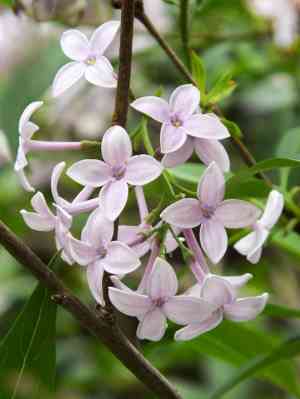
Persian lilac is reproduced via cuttings, a technique that ensures the retention of its favorable traits. For optimal results, cuttings ought to be harvested from robust, thriving stems and dipped in rooting compound prior to being set in a porous potting blend. Steady hydration and warmth are vital for root formation, though the substrate must not be oversaturated to avert decay. Supplying ample, diffused illumination is essential to stimulate development once the root system is established.
Optimal Time for Persian Lilac Propagation
Propagation Method
Cutting
Propagation Period
Autumn,Winter
Tools for Propagating Persian Lilac
Pruning Shears
Pruning shears are vital for making clean, precise cuts on persian lilac during the cutting propagation process. Sharp blades are essential to prevent tissue damage, which can increase infection risk and hinder rooting. Ergonomic non-slip handles are a key feature to look for, ensuring comfort and control during cutting.
Rooting Hormone
Rooting hormone powder or gel encourages root development from persian lilac cuttings, boosting the likelihood of successful propagation. The hormone stimulates root initiation, leading to faster and more uniform root growth. Apply sparingly to avoid excessive concentration, which can impede the process.
Sterilizing Agent
Sterilizing agents, such as isopropyl alcohol or bleach solution, are used to clean tools before and after taking persian lilac cuttings. This practice helps prevent disease spread and ensures the health and viability of cuttings. Clean tools create clean cuts, which heal more quickly and effectively.
Propagation Tray
A propagation tray offers a stable environment for persian lilac cuttings to root. Moisture control is crucial for successful rooting, and these trays typically feature adjustable vents that allow for humidity and temperature regulation, critical parameters in the early stages of cutting propagation.
Misting Bottle
A misting bottle is used to keep persian lilac cuttings hydrated without oversaturating the growing medium, which could lead to fungal issues. Misting helps maintain necessary humidity levels around the cuttings, particularly important for preserving tissue viability until roots develop.
How to Propagate Persian Lilac?
Propagation Difficulty
Moderately Difficult
Caring for Your Newly Propagated Persian Lilac
Caring for Your Newly Propagated Persian Lilac?
Once roots are established and new growth is visible, gradually acclimate persian lilac to less humid conditions by removing the plastic cover over several weeks. Transplant persian lilac to a larger container or directly into the garden in well-draining soil. Keep the soil moderately moist and provide persian lilac with partial to full sunlight. Regular pruning after flowering helps maintain a desirable shape and promotes vigorous growth for the next season.
Common Propagation Errors for Persian Lilac
Overwatering
Excessive watering can lead to root rot in persian lilac, which is detrimental as it hinders nutrient uptake, potentially causing the death of the propagated plants.
Inadequate lighting
Failure to provide persian lilac with sufficient light during propagation can result in weak, elongated growth, diminishing the plant's overall health and aesthetic appeal.
Using unsterilized tools
Cutting persian lilac with unsterilized tools can introduce pathogens, potentially causing infections that impede propagation success.
Tips For Propagating Persian Lilac
Use of semi-hardwood cuttings
For persian lilac, semi-hardwood cuttings taken from healthy, disease-free plants improve the chances of successful root development.
Maintain moisture balance
Keeping the soil consistently moist (but not waterlogged) is essential for the root formation of persian lilac. Monitoring and adjusting watering practices based on soil dampness is crucial.
Provide bright, indirect light
Ensuring persian lilac receives bright, indirect light supports vigorous growth without the stress caused by direct sunlight, which is crucial in the early stages of propagation.



