How to Propagate Candyleaf?
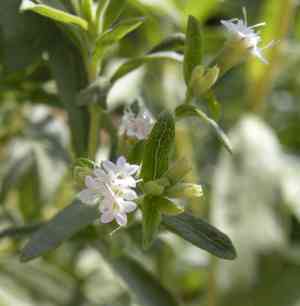
Reproduce candyleaf by planting seeds in the springtime, providing adequate warmth and moisture. This plant is relatively simple to propagate, with successful indicators being seed sprouting and the development of young plants. Prevent excessive watering and ensure it receives some sunlight.
Optimal Time for Candyleaf Propagation
Propagation Method
Seeding
Propagation Period
Spring
Tools for Candyleaf Propagation
Seed Tray
Seed trays offer a controlled setting for seed germination. Their compartments help maintain humidity and warmth, creating an ideal environment for candyleaf seeds to sprout. The cell size is appropriate for tiny seeds, allowing sufficient soil contact without deep burial, which is vital for light-dependent germinators like candyleaf.
Vermiculite or Perlite
These soil additives enhance drainage and aeration in the seed starting mix. They help prevent waterlogging, crucial for candyleaf, as excess moisture can cause seed rot. A blend with either vermiculite or perlite promotes root development and aids quicker seedling establishment post-germination.
Heating Mat
This device regulates soil temperature, providing consistent warmth that promotes germination. Candyleaf seeds benefit from stable temperatures, as fluctuations can hinder sprouting. A heating mat ensures the soil remains within the ideal temperature range for candyleaf.
Humidity Dome
It maintains high humidity levels around the seeds, which is advantageous for candyleaf's germination process. Adequate humidity keeps seeds moist without frequent watering, reducing the risk of mold or fungal growth in the seed tray.
Fine Mist Spray Bottle
Candyleaf seedlings are sensitive to over-watering, and a fine mist spray bottle allows for gentle irrigation. This provides necessary moisture without disturbing seeds or causing soil compaction, which can impede root development and emergence.
How to Propagate Candyleaf?
Propagation Method
Seeding
Difficulty Level
Easy
Caring for Newly Propagated Candyleaf
Caring for Newly Propagated Candyleaf
Post-propagation, candyleaf needs full sun to partial shade and prefers well-draining soil. Keep the soil consistently moist, but ensure it's not waterlogged to prevent root rot. Fertilize candyleaf occasionally with a balanced liquid fertilizer. As candyleaf grows, pinch back tips to encourage bushier growth. Protect candyleaf from temperatures below 50 degrees Fahrenheit, as it is cold-sensitive. During the growing season, monitor candyleaf for pests and diseases and address issues promptly.
Common Mistakes to Avoid When Propagating Candyleaf
Overwatering
Root rot is a frequent outcome, as candyleaf's roots require well-draining soil and are susceptible to rot in overly moist conditions.
Using large propagating containers
This can lead to excessive soil moisture retention, which is not ideal for candyleaf's root development.
Neglecting to prune
Without regular pruning, candyleaf might prioritize leggy growth over establishing a strong root system for proper propagation.
Ignoring soil ph
Incorrect soil acidity impacts root development and nutrient uptake, hindering candyleaf's propagation and health.
Over-fertilizing
While candyleaf needs nutrients for growth, too much fertilizer can harm delicate roots and affect plant health during the propagation phase.
Tips For Propagating Candyleaf
Root cutting in water
Promote root growth by placing candyleaf stem cuttings in water until roots appear, then transfer to soil.
Sterile equipment
Use sanitized cutting tools to prevent disease transmission to candyleaf during propagation.
Humidity control
Maintain appropriate humidity levels around candyleaf cuttings to ensure a favorable environment for root development without oversaturating the soil.
Well-draining soil
Utilize a soil mix that promotes good drainage to support candyleaf's root health during propagation.
Balanced fertilizer
Provide candyleaf with a balanced, light fertilizer suitable for young plants to support healthy growth without overwhelming the plant.



