How to Propagate Royal fern?
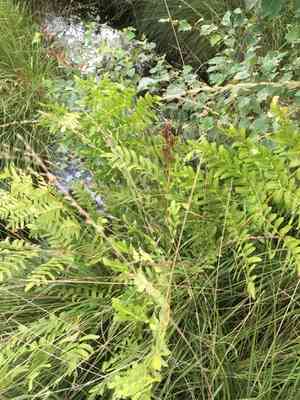
Osmunda regalis flourishes most effectively when reproduced via spores, diverging from standard seed propagation. Guarantee that spores are sown on a damp, adequately draining substrate, preferably within regulated temperature and moisture environments. This technique typically demands minimal upkeep but necessitates endurance, given that germination rates fluctuate and growth is usually gradual. To achieve peak propagation outcomes, sustain uniformity in ambient factors.
When Is the Optimal Period to Propagate Royal Fern?
Propagation Method
Sowing
Propagation Period
Spring
What Equipment Is Utilized in Royal Fern Propagation?
Seed trays
Seed trays are vital for initiating royal fern's propagation via sowing. These containers facilitate the even distribution and arrangement of spores (as royal fern reproduces through spores, not seeds). Their shallow depth and broad surface area guarantee that the spores receive an ideal mix of moisture and light, which are essential for germination.
Misting bottle
A misting bottle serves to gently irrigate the fern spores without disrupting them. Given the delicate nature of spores and the surface-level sowing technique employed for royal fern, it is imperative to sustain a steady humidity level. Misting delivers the requisite moisture in a controlled fashion, promoting the successful germination and growth of the spores.
Fine mesh sieve
This implement is beneficial during the initial sowing of royal fern's spores. A fine mesh sieve aids in uniformly dispersing the tiny spores across the substrate within the seed trays. This even dispersion is critical for consistent germination rates and helps avert clumping, which can lead to fungal problems or stunted growth in parts of the tray.
Humidity dome
Placing a humidity dome over the seed trays establishes a micro-climate with elevated humidity, which is advantageous for spore germination in royal fern. The dome assists in preserving a stable environment, shielding the spores from external conditions that could disrupt the moisture levels necessary for optimal growth.
Heat mat
A heat mat helps supply consistent bottom warmth, which is beneficial for the germination of many fern species, including royal fern. The gentle heat provided by the heat mat encourages quicker and more uniform spore germination by maintaining ideal soil temperature conditions, particularly important in colder climates or during cooler times of the year.
How to Propagate Royal Fern?
Propagation Difficulty
Easy
How to Nurture Your Newly Propagated Royal Fern?
How to Nurture Your Newly Propagated Royal Fern?
Post-transplantation, keep royal fern in a shaded or partially shaded spot where they are protected from direct sunlight. Water the plants regularly to maintain consistently moist, but not waterlogged, soil. If possible, ensure a high humidity environment, especially for indoor plants. As royal fern are slow-growers, minimal feeding is necessary; a light application of a balanced, liquid fertilizer during the growing season can be advantageous. Regularly check for pests and diseases, and address any issues promptly to ensure healthy development.
Common Errors to Avoid When Propagating Royal Fern
Insufficient moisture
Maintaining appropriate moisture levels is vital for royal fern's spore germination and root development. Too much or too little water can impede germination, leading to fungal growth or the drying out of spores.
Poor soil preparation
Royal fern requires a specific soil texture and pH to flourish. Using unsuitable soil or failing to prepare it correctly can hinder root establishment and nutrient absorption.
Ignoring humidity requirements
Royal fern naturally thrives in high humidity environments. Neglecting to provide adequate humidity can cause spores to fail to germinate or young plants to dehydrate.
Advice For Propagating Royal Fern
Moisture management
Provide consistent moisture but prevent waterlogging. Using a fine mist to gently water the area ensures that the spores or young ferns are not disturbed while maintaining an adequate moisture level.
Soil composition
Prepare a soil mixture rich in organic matter with good drainage. A blend of peat moss, loam, and perlite is recommended for optimal growth.
Maintain humidity
Enclose the propagation area with a plastic cover or utilize a humidity tray to maintain the necessary humidity levels around royal fern, mimicking its natural habitat.



