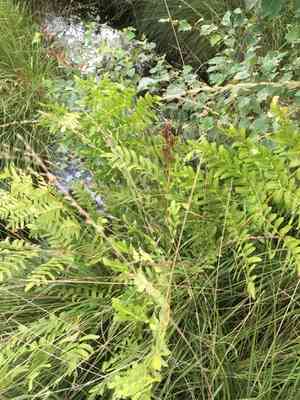
Royal fern (Osmunda regalis)
Also known as: Water fern, Osmund royal, Bog onion, Common flowering fern, Kidney fern, Royal osmund fern, European royal fern
Native to Europe, Asia, and Africa, the royal fern is a common fern growing along the streams and pools under the forest. There is fertile frond divergence in royal fern which makes it a "flowering" appearance. It is widely cultivated as an ornamental plant.
In This Article
Attributes of Royal fern
Lifespan
Perennial
Plant Type
Herb
Plant Height
60 cm to 1.6 m
Spread
30 cm to 40 cm
Leaf Color
Green Yellow Red Brown
Flower Size
N/A
Flower Color
Yellow Green Red Brown
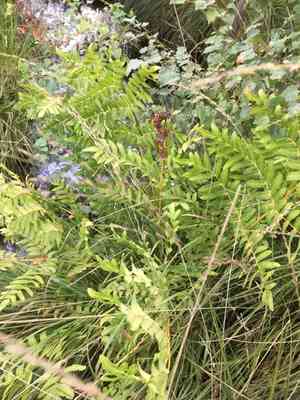
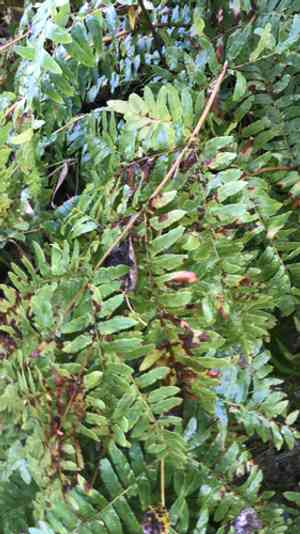
Images of Royal fern

Quickly Identify Royal fern
1
Statuesque clumps reaching 5-6 feet (1.5-1.8 meters) in height.
2
Large, well-spaced leaflets resembling pea family members.
3
Seasonal color transformation from verdant green to yellow and brown.
4
Distinctive brown, tassel-like spore clusters at frond tips.
5
Binnate leaves with locust tree leaf-like pinnae, measuring 1-2 feet (30-60 cm).
Scientific Classification of Royal fern
Phylum
Vascular plants
Class
Ferns
Order
Osmundales
Family
Royal fern
Genus
Osmunda
Species
Royal fern
Planting and Growing of Royal fern
Care Difficulty
Easy
Watering Schedule
Every 4 days
Sunlight Requirements
Partial sun
Sunshine Duration
4-8 hours
Ideal Temperature
60-75℉
Soil Type
Potting Mix, Peat Mix
Soil pH
5-6
Fertilizer Type
Balanced
Pruning Season
Spring, Summer
Pruning Area
Branches, Leaves
Pruning Frequency
2 times a year
Repotting Season
Spring
Pot Type
Plastic, Ceramic
 How to Water Royal fern?
Osmunda regalis requires watering until the soil is thoroughly moist but not waterlogged. Adequate soaking to a depth of several inches ensures the roots are properly hydrated, mimicking the plant’s natural wetland environment.
What are the symptoms of an underwatered Royal fern?
›
What should I do if my Royal fern is not getting enough water?
›
What are the symptoms of an overwatered Royal fern?
›
How to save an overwatered Royal fern?
›
 What Are the Sunlight Requirements for Royal fern?
Partial sun and full shade are ideal for Osmunda regalis. It helps maintain its lush and healthy fronds, ensuring a steady growth rate and a compact, attractive appearance.
More About Sunlight Requirements Techniques→
What is the best lighting condition for Osmunda regalis?
›
How can one achieve the ideal lighting for Osmunda regalis?
›
What benefits does ideal light exposure offer Osmunda regalis?
›
 What Is the Ideal Temperature Range for Royal fern?
The Royal Fern (Osmunda regalis) thrives in a temperature range of 60 to 75 degrees Fahrenheit. This range provides the optimal conditions for growth, ensuring that the plant can photosynthesize effectively while maintaining adequate humidity levels. In this environment, the fern exhibits lush, robust foliage, maximizing its ornamental value and biological functions.
 What Soil is Best for Royal fern?
Osmunda regalis thrives in soil that can retain moisture. The presence of enough water in the soil helps prevent dehydration and ensures that the plant's roots receive sufficient hydration, which is vital for its lush growth and development. This plant benefits greatly from soil rich in organic matter. A nutrient-rich environment supports vigorous root and frond development, providing the essential minerals necessary for robust photosynthesis and overall plant health. While moisture is crucial, the plant also requires soil that allows excess water to drain away. This characteristic helps prevent waterlogging, ensuring the roots receive oxygen and reducing the risk of root rot.
 How to Fertilize Royal fern?
Osmunda regalis prefers a moderate amount of fertilizer. Use a balanced liquid fertilizer diluted to half strength, applying 100 ml per plant. Avoid overloading; its roots are sensitive to excessive nutrients. For granular improvements once a year, 50 grams of slow-release fertilizer is ample.
 How to Prune Royal fern?
Start by identifying any senescent fronds that are no longer contributing to the plant's health. Use your shears to cut them close to the base without damaging the crown. Work your way outward, trimming to shape the plant naturally, enhancing both growth and appearance. If you want a denser plant, prune the Osmunda regalis lightly by cutting some of the newer growth. This will encourage the plant to send out new shoots, creating a fuller appearance over time.
More About Pruning Techniques→
 How to Propagate Royal fern plant?
1
Choose a mature Osmunda regalis that is healthy and vigorous, since this will increase the success rate of propagation. Look for plants with a robust root system and vibrant fronds.
2
Carefully dig up the plant with a garden spade, making sure to keep as much of the root system intact as possible. Avoid damaging the rhizomes, which are critical for new growth.
3
Use the pruning shears or a sharp knife to divide the root clump into sections. Ensure each section has a portion of roots and fronds attached, as this is critical for the plant’s survival and growth.
 How to Repot Royal fern plant?
1
Osmunda regalis, also known as the royal fern, should be repotted when its roots outgrow the container, visible through drainage holes, or the soil becomes compacted. Repotting during the right season helps avoid transplant shock and promotes healthy growth.
2
Selecting the right pot for Osmunda regalis is crucial. Opt for a pot that's 1-2 inches larger in diameter than the current one, with adequate drainage holes to prevent waterlogging. A slightly heavy pot will also ensure stability, supporting the fern's natural growth and preventing tipping.
3
Osmunda regalis thrives in well-draining, acidic soil, akin to its natural habitat. This type of soil ensures proper aeration while retaining necessary moisture. Adding organic matter like peat will further enhance its growing environment, promoting lush, vigorous growth.
Learn More About Royal fern Diseases
Anthracnose
Bacterial Leaf Spot
Bacterial Soft Rot
Chemical Injury
Crown Gall
Cyst Nematode
Damping-off
Downy Mildew
Drought Stress
Fusarium Wilt
Gray Mold
Leaf Spot
Mosaic
Nutrient Deficiency
Nutrient Toxicity
Powdery Mildew
Root Rot
Root-knot Nematode
Rusts
Sooty Mold
Spider Mites
Temperature Stress
Thrips Damage
White Mold



