How to Propagate Spotted medick?
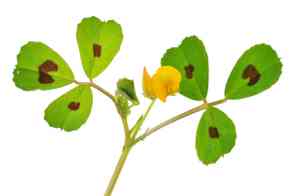
Medicago arabica, a leguminous ground-covering species, is recognized by its three-part leaves and yellow blossoms, frequently displaying a distinctive spotted design. Reproduction primarily occurs through seeding, involving the utilization of seeds commonly located inside the pod-like structures after flowering. Seeding ought to be carried out in soil that drains effectively and receives ample sunlight, guaranteeing direct seed-to-soil contact for enhanced sprouting success. Careful irrigation is crucial to keep the soil uniformly damp without leading to saturation, which could hinder seed sprouting and the development of young plants.
Optimal Time for Propagating Spotted Medick
Propagation Type
Sowing
Propagation Season
Spring
Tools for Spotted Medick Propagation
Seeds trays or flats
Seed trays or flats are vital for sowing spotted medick seeds. They offer an organized method to evenly distribute seeds and manage early growth. Using these trays allows for precise control over soil conditions and moisture, which is crucial for spotted medick germination. The divisions in trays also prevent overcrowding, boosting germination rates and initial growth.
Seedling heat mat
A seedling heat mat is especially useful for maintaining the perfect temperature for spotted medick seed germination. Keeping the soil consistently warm promotes faster and more uniform sprouting, which is essential for species like spotted medick that may be sensitive to temperature changes.
Fine mist spray bottle
Employing a fine mist spray bottle to water spotted medick seeds helps deliver gentle, even moisture. This watering technique prevents disruption to the small, newly sown seeds, ensuring they remain undisturbed in their growing medium. Adequate hydration is critical during the germination phase.
Peat pots
Peat pots are advantageous for growing spotted medick because they can be directly planted into the soil once seedlings are developed, minimizing root disturbance. This supports the delicate root system of spotted medick during transplanting, improving the chances of successful plant establishment and growth.
Labeling tags
Labeling tags are simple yet essential. They aid in identifying different plant species and varieties when sowing multiple types of seeds, such as those of spotted medick, in the same area or tray. Proper labeling prevents confusion and ensures appropriate care for each plant according to its specific requirements.
How to Propagate Spotted Medick?
Propagation Type
Easy
Caring for Newly Propagated Spotted Medick
How to Care for Your Newly Propagated Spotted Medick?
Spotted medick generally requires little upkeep once established. It needs full sun and consistent watering, particularly in dry conditions. As a legume, spotted medick can fix its own nitrogen, so avoid high-nitrogen fertilizers. Prune or mow old foliage in late winter to encourage new growth in spring.
Common Mistakes to Avoid When Propagating Spotted Medick
Overwatering
When propagating spotted medick, excessive watering can lead to root rot, hindering the plant's ability to absorb nutrients effectively, resulting in stunted growth or death.
Deep planting
Planting spotted medick seeds too deeply can prevent them from receiving sufficient light, which is vital for germination. This error often leads to a lower germination rate.
Ignoring pest management
Neglecting to manage pests during the early stages of spotted medick's growth can result in infestations that severely weaken or kill young plants.
Tips For Propagating Spotted Medick
Proper soil preparation
Using well-draining soil is essential for spotted medick's growth, as it prevents water from accumulating around the roots, reducing the risk of root rot.
Seed surface sowing
Since spotted medick needs light for germination, seeds should be sown on the soil surface and gently pressed down, rather than being covered with soil.
Regular monitoring
Keeping a close watch on moisture levels and regularly checking for pests helps ensure the healthy growth of spotted medick. Early detection of problems allows for timely intervention.



