How to Propagate Graham's nipple cactus?
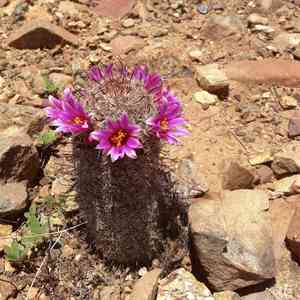
Hailing from the arid regions of the Southwest, graham's nipple cactus excels at reproduction via the effective dispersal of seeds. Cultivators frequently prefer this technique because of the plant's comparatively rapid sprouting when contrasted with other succulents. To multiply graham's nipple cactus, it is crucial to employ a porous cactus substrate and sustain uniform humidity without oversaturation. Supplying a warm and steady setting improves the likelihood of thriving seedling emergence. When the young plants are sufficiently sturdy, they can be gently relocated into separate containers to further their development.
What Is the Best Time To Propagate Graham's Nipple Cactus?
Propagation Type
Sowing
Propagation Season
Spring
What Tools Are Used in Graham's Nipple Cactus Propagation?
Sharp, sterile knife or scissors
These are crucial for making clean cuts when separating offsets from graham's nipple cactus. A precise cut minimizes infection risk and promotes a healthier propagation outcome.
Seed tray or small pots with drainage holes
These containers offer an appropriate environment for seeds or offsets to develop. Good drainage is vital as graham's nipple cactus's root systems are susceptible to waterlogging, which can cause root diseases.
Cactus soil mix or suitable growing medium
A specialized soil blend for cacti guarantees the correct balance of drainage and nutrients, essential for effective rooting and growth of graham's nipple cactus.
Sand or perlite
Incorporating sand or perlite into the soil improves its aeration and drainage, enhancing the root health of graham's nipple cactus during the critical germination and rooting phases.
Humidity dome or plastic wrap
This tool helps maintain adequate humidity around graham's nipple cactus during the initial propagation stages, especially when using seeds. This encourages better germination rates and initial growth stability.
Watering can with a fine nozzle
This ensures gentle watering that doesnât dislodge or harm small seeds or delicate new roots of graham's nipple cactus. Controlled watering prevents excess moisture, which is crucial to avoid fungal growth and root rot.
How to Propagate Graham's Nipple Cactus?
Propagation Type
Easy
How to Care for Your Newly Propagated Graham's Nipple Cactus?
How to Care for Your Newly Propagated Graham's Nipple Cactus?
Once graham's nipple cactus seedlings are established, transfer them to individual pots with cactus soil. Water only when the soil is dry, and provide ample sunlight. Be careful not to overwater and ensure good air circulation to prevent rot. As graham's nipple cactus is a desert cactus, it prefers warm temperatures and low humidity.
Common Mistakes to Avoid When Propagating Graham's Nipple Cactus
Overwatering
Excessive watering of graham's nipple cactus can lead to root rot, as this species is adapted to arid conditions. Too much moisture in the soil promotes fungal growth, which is harmful to the plant's roots.
Improper Soil Mix
Using a soil blend that retains too much moisture can be problematic for graham's nipple cactus due to its preference for well-drained soil. This could impede the plant's growth and trigger root diseases.
Using Dull Tools
Propagating graham's nipple cactus with dull or unsterilized tools can damage tissues, leading to an increased risk of infection and poor healing of the cut surface.
Ignoring Light Conditions
Graham's nipple cactus requires abundant sunlight to flourish. Propagating in areas with insufficient light can result in etiolated growth, where the plant stretches weakly in search of light.
Overhandling the Cuttings
Handling graham's nipple cactus cuttings too frequently can damage their delicate tissues, disrupting root formation and increasing the chance of disease.
Tips For Propagating Graham's Nipple Cactus
Correct Soil Composition
Use a sandy, well-draining cactus mix for graham's nipple cactus to ensure proper drainage and mimic its natural environment.
Allow Cuttings to Callous
Before planting, let graham's nipple cactus cuttings dry and form a callus for a few days, which reduces the risk of rot and disease.
Use Sharp, Clean Tools
Employ sharp and sterilized tools when taking cuttings to ensure a clean cut and reduce the risk of infections.
Indirect Sunlight for New Plants
Place newly propagated graham's nipple cactus in indirect sunlight to prevent scorching the young plants, which can be more sensitive to intense direct sunlight.
Minimal Watering
Water graham's nipple cactus sparingly, only when the soil is completely dry, to prevent root rot and reflect the dry conditions of graham's nipple cactus's natural desert habitat.



