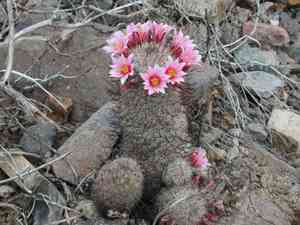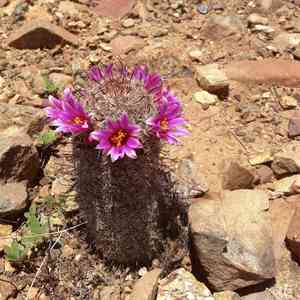
Graham's nipple cactus(Mammillaria grahamii)

Graham's nipple cactus (Mammillaria grahamii)

Also known as: Fishhook cactus, Graham's pincushion cactus

Graham's nipple cactus (Mammillaria grahamii) is a compact cactus, typically reaching heights of 3 to 5 inches. It is characterized by its dense covering of white radial spines, complemented by darker, hook-shaped central spines that protrude in various directions. This cactus blooms pink to purple flowers, usually forming a ring around the stem in late spring to early summer. Following the flowering period, it produces red, club-shaped fruits that ripen in the fall and winter, containing small black seeds. This species is commonly found in arid regions of the southwestern United States, including California and Texas, as well as in northern Mexico. It is well-suited to dry environments and requires minimal water, particularly during its dormant period in cooler months.

Attributes of Graham's nipple cactus

Lifespan
Perennial
Plant Type
Succulent
Plant Height
0 mm to 30 cm
Spread
5 cm
Leaf Color
N/A (Cacti do not have typical leaves)
Flower Size
2.5 cm to 5 cm
Flower Color
Pink

ForwardPlant - Identify plants with a snap

Identify and diagnose plants, get toxicity alerts, and explore safety guides for all types of fungi.

Try for Free

Images of Graham's nipple cactus

Graham's nipple cactus(Mammillaria grahamii)

Quickly Identify Graham's nipple cactus

1
Mammillaria grahamii can be identified by its small size, rounded shape, and dense spination, which often gives it a fuzzy appearance. Look for the distinctive ring of small blooms at the top during the flowering season.

Scientific Classification of Graham's nipple cactus

Phylum
Vascular plants
Class
Dicotyledons
Order
Caryophyllales
Family
Cactuses
Genus
Mammillaria
Species
Graham's nipple cactus

Planting and Growing of Graham's nipple cactus

Care Difficulty
Easy
Watering Schedule
Every 2 days
Sunlight Requirements
Full sun
Sunshine Duration
6-10 hours
Ideal Temperature
70-80℉
Soil Type
Potting Mix, Peat Mix
Soil pH
6.5-7.5
Fertilizer Type
Balanced
Pruning Season
Spring, Summer
Pruning Area
Branches, Leaves
Pruning Frequency
2 times a year
Repotting Season
Spring
Pot Type
Plastic, Ceramic

water icon How to Water Graham's nipple cactus?

Watering Mammillaria grahamii involves giving it just enough to wet the soil without causing waterlogging. Ideally, about 100 milliliters per session is sufficient, ensuring that water does not pool at the bottom of the pot. The goal is to mimic the cactus's natural desert conditions, where it receives sporadic rainfall and can dry out in-between watering.
What are the symptoms of an underwatered Graham's nipple cactus? ›
What should I do if my Graham's nipple cactus is not getting enough water? ›
What are the symptoms of an overwatered Graham's nipple cactus? ›
How to save an overwatered Graham's nipple cactus? ›

sunlight icon What Are the Sunlight Requirements for Graham's nipple cactus?

Sunlight Requirements: Full sun, Partial sun
Duration of light: 6 to 8 hours
Mammillaria grahamii prefers full sun, though partial sun can suffice. Ideal lighting helps maintain a compact form, promotes healthy blooming, and ensures overall well-being by allowing proper development.
Solution ›
Specific Actions ›
Achieved Benefits ›
More About Sunlight Requirements Techniques→

temperature icon What Is the Ideal Temperature Range for Graham's nipple cactus?

Ideal Temperature: 70 ~ 80℉
The ideal temperature range for growing Mammillaria grahamii lies between 70°F and 80°F. This range provides the warmth needed for optimal metabolic processes, ensuring the cactus is healthy and can thrive. These temperatures mimic the conditions of its natural habitat, promoting active growth and flowering.

soil icon What Soil is Best for Graham's nipple cactus?

Soil type: Sandy soil, Loam
Soil PH: 6.5 ~ 7.5
Mammillaria grahamii thrives in well-draining soil that prevents water from pooling around the roots. This is crucial as it helps avoid root rot, a common issue for cacti. Ensuring swift drainage allows the roots to breathe and maintains essential aeration, thus promoting healthier growth. While Mammillaria grahamii does not require rich soil, it benefits from a moderately fertile substrate. Adding a small amount of organic matter, such as compost, can enhance nutrient availability. This supports more robust growth and flowering without over-stressing the plant with excess nutrients. The cactus prefers soil with a grainy texture, similar to its natural desert environment. Incorporating sand or perlite can help mimic these conditions, providing stability and structure to the soil. This texture ensures the plant remains erect and roots properly, reducing the chances of toppling in windy conditions.

fertilize icon How to Fertilize Graham's nipple cactus?

Fertilizer type: Balanced
For Mammillaria grahamii, use a diluted liquid cactus fertilizer at half the recommended strength for liquid fertilizers. Avoid over-fertilizing as it can harm the plant, causing root burn and impacting overall health.

prune icon How to Prune Graham's nipple cactus?

Pruning Time: Spring, Summer
Before starting the pruning process, ensure that you have the right tools, such as sterilized sharp scissors or pruning shears. Choose a bright but indirect sunlight location to perform the task, ideally during a day when the temperature is moderate. This helps the plant recover swiftly from any cuts and avoid any infections. Carefully look for any discolored, dried, or damaged parts of the Mammillaria grahamii. These sections should be the primary focus for pruning, as removing them will promote healthier overall growth. It’s best to cut just above a healthy node to encourage new shoots.

propagate icon How to Propagate Graham's nipple cactus plant?

Propagate Time: Summer,Late spring,Early summer
1
Collect ripe seeds from the Mammillaria grahamii when the fruits are about to split. Clean them to remove any pulp residues to prevent mold and ensure a higher germination rate.
2
Use a well-draining cactus mix that can maintain slight moisture without water retention. Sterilize the mix by baking it in the oven to eliminate pathogens that might affect the young plants.
3
Take healthy cuttings from the plant using sterilized tools. Allow the cut surface to callous over for a few days before placing them in the soil to root, which helps prevent rot at the base.
More About Propagating Techniques→

repot icon How to Repot Graham's nipple cactus plant?

Repotting frequency: Every 2-3 years
1
Mammillaria grahamii should be repotted when you notice roots growing out of the drainage holes, or the plant appears stunted and overcrowded in its pot. Spring and summer are ideal times because the plant is actively growing and can recover more quickly from the repotting process.
2
Choose a pot slightly larger than the current one, ideally made of clay or terracotta. These materials allow for better air flow and water evaporation, preventing the roots from sitting in overly damp soil and minimizing the risk of root rot. Ensure the pot has adequate drainage holes to allow excess water to escape.
3
Select a well-draining cactus potting mix, which typically contains sand, perlite, and a small amount of organic matter. This mix mimics the arid conditions of its natural habitat, ensuring that the roots have ample air flow and reducing the risk of rot from waterlogged soil.

ForwardPlant - Identify plants with a snap

Find the best spots for them to optimize their health, simply using your phone.

Try for Free