How to Propagate Dwarf violet iris?
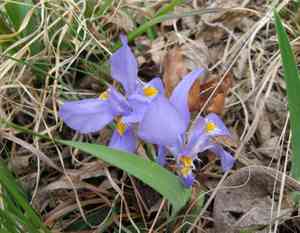
The dwarf violet iris flourishes when reproduced from its rhizomes. To achieve peak development, gently detach sound rhizomes during their inactive phase, making sure every piece possesses a minimum of one budding eye. Embed these segments in soil that drains effectively, fortified with organic material to foster vigorous expansion. A spot receiving ample sun to partial shade boosts their proliferation.
Optimal Time for Dwarf Violet Iris Propagation
Propagation Method
UseTheTubers
Propagation Period
Spring
Tools for Dwarf Violet Iris Propagation
Sharp Knife
A keen blade is vital for dividing dwarf violet iris tubers. It ensures clean cuts, minimizing tissue damage, which is key for preventing infection and promoting quick recovery and growth. The knife's sharpness must be maintained for precise cuts without crushing delicate plant parts.
Garden Spade
This implement is used for carefully excavating tubers without unduly disturbing the surrounding root system. A garden spade with a sharp edge aids in gently lifting tubers from the soil, reducing the risk of physical harm to both tubers and existing root structures.
Potting Mix
A premium, well-draining potting medium is essential for successful dwarf violet iris propagation. It offers the necessary support and nutrients for newly divided tubers to establish. The mix should be loose and fertile, encouraging good root development and aeration.
Rooting Hormone
While not mandatory, rooting hormone can significantly boost the success rate of dwarf violet iris tuber division. It promotes faster root growth, helping new plants establish more quickly and effectively. Rooting hormones are especially beneficial for plants that root slowly on their own.
Labels and Marker
Accurate labeling is crucial for tracking newly propagated plants, particularly when dealing with multiple species or varieties. Durable labels and a permanent marker help in noting important details like propagation date and specific cultivar names, aiding organized cultivation.
Watering Can with a Gentle Shower
A watering can equipped with a fine rose attachment provides a soft spray, essential for newly planted tubers. It ensures even watering without dislodging or harming young roots. Sufficient hydration is vital for the initial growth stages post-propagation.
How to Propagate Dwarf Violet Iris
Propagation Difficulty
Easy
Caring for Newly Propagated Dwarf Violet Iris
Caring for Newly Propagated Dwarf Violet Iris
Post-propagation, keep the soil around dwarf violet iris moist but avoid overwatering. Position the plant in an area with partial to full sun exposure for optimal development. Regularly inspect for pests and diseases, especially during warm, humid months. Fertilize with a balanced, slow-release fertilizer at the start of the growing season to support healthy growth and flowering.
Common Errors to Avoid When Propagating Dwarf Violet Iris
Overwatering
Watering dwarf violet iris too often is a frequent mistake, which can lead to root rot and fungal infections. This compromises the plant's overall health, making it less likely to establish successfully after propagation.
Neglecting humidity requirements
Failure to maintain adequate humidity during propagation can cause cuttings or roots of dwarf violet iris to dry out, reducing the chances of successful root development and thus impeding the propagation process.
Using overly dense soil
Employing a soil mix that is too compact or clayey can hinder drainage and restrict root growth of dwarf violet iris. Poor soil conditions can lead to oxygen depletion and increased susceptibility to root diseases.
Tips For Propagating Dwarf Violet Iris
Proper soil preparation
Prepare a well-draining soil mix suitable for dwarf violet iris, comprising loam and sand or a commercial potting mix. This ensures good aeration and drainage, facilitating healthy root growth.
Appropriate watering
Water dwarf violet iris deeply but infrequently, allowing the soil to dry out slightly between watering sessions. This balance ensures roots have access to moisture without becoming waterlogged.
Humidity control
Maintaining a humid environment around dwarf violet iris during propagation will help prevent plant tissues from drying out, which is crucial for encouraging root generation and growth. Use a humidity dome or mist regularly to maintain adequate humidity levels.



