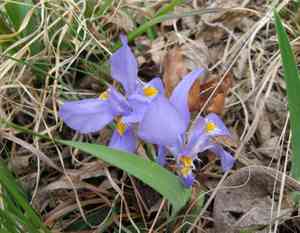
Dwarf violet iris (Iris verna)
Also known as: Dwarf Violet Iris, Spring Iris
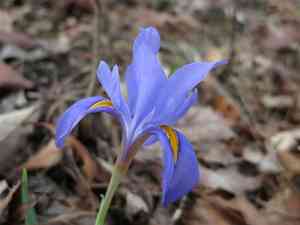
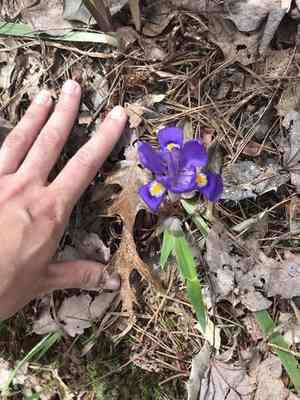
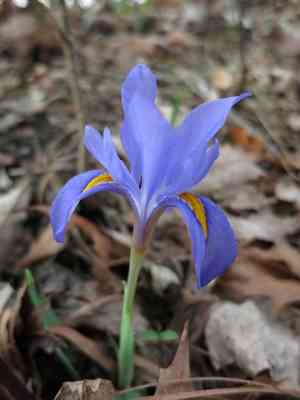
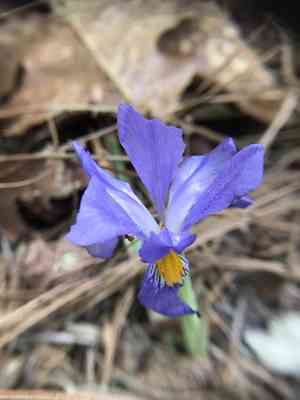
Iris verna is a small, herbaceous perennial that spreads through deeply-buried rhizomes, forming colonies. It typically blooms in spring with light to deep blue or violet flowers, occasionally showing rare white forms. The sepals feature a distinctive golden yellow signal. Iris verna can be differentiated from the similar Iris cristata by its taller stems, grass-like leaves that often surpass the height of the flower stems, and its preference for sandy, acidic soils in pine forests. Conversely, Iris cristata has shorter stems, broader leaves, generally lighter blue flowers, and thrives in rich, moist soils of deciduous woodlands.
In This Article
Attributes of Dwarf violet iris
Lifespan
Perennial
Plant Type
Herb
Plant Height
0 mm to 30 cm
Spread
30 cm
Leaf Color
Green Red Purple Lavender
Flower Size
1 to 2 inches (2.5 to 5 cm)
Flower Color
White Purple Blue Brown Lavender
Images of Dwarf violet iris
Quickly Identify Dwarf violet iris
1
Distinctive fragrance from early spring blossoms
2
Lack of crested ridges on sepals of flowers
3
Prominent golden yellow signal on flowers
4
3-angled capsule fruit with pronounced ridges
5
Sword-shaped leaves with reddish-purple base
Scientific Classification of Dwarf violet iris
Phylum
Vascular plants
Class
Monocotyledons
Order
Asparagales
Family
Iris
Genus
Irises
Species
Dwarf violet iris
Planting and Growing of Dwarf violet iris
Care Difficulty
Easy
Watering Schedule
Every 2 days
Sunlight Requirements
Partial sun
Sunshine Duration
6-10 hours
Ideal Temperature
60-75℉
Soil Type
Potting Mix, Peat Mix
Soil pH
6.5-7.5
Fertilizer Type
Balanced
Pruning Season
Spring, Summer
Pruning Area
Branches, Leaves
Pruning Frequency
2 times a year
Repotting Season
Spring
Pot Type
Ceramic, Plastic
 How to Water Dwarf violet iris?
For Iris verna, it's crucial to water so that the soil remains consistently moist but never waterlogged. Aim for around 500 ml of water each time, ensuring uniform distribution. This amount ensures the roots remain adequately moist but not drowning. The key is enough water to reach the root depth but allowing the surface to dry slightly between watering.
What are the symptoms of an underwatered Dwarf violet iris?
›
What should I do if my Dwarf violet iris is not getting enough water?
›
What are the symptoms of an overwatered Dwarf violet iris?
›
How to save an overwatered Dwarf violet iris?
›
 What Are the Sunlight Requirements for Dwarf violet iris?
Partial sun is ideal for Iris verna. This light range supports optimal photosynthesis and blooming, promoting lush foliage and vibrant flowers, thus enhancing the plant's overall health.
What is the ideal lighting for Iris verna?
›
How can I ensure Iris verna gets ideal light?
›
What happens if Iris verna gets ideal lighting?
›
 What Is the Ideal Temperature Range for Dwarf violet iris?
The ideal temperature range for growing Iris verna is between 60°F and 75°F. Within this range, the plant thrives best, showing optimal growth and flowering. This specific temperature band helps maintain the physiological processes such as photosynthesis and respiration necessary for the plant's health and vibrancy. A stable temperature within this range supports root development and nutrient uptake, which are crucial for robust growth.
 What Soil is Best for Dwarf violet iris?
Iris verna flourishes in well-draining soil, preventing water retention that could lead to root rot. This characteristic is vital for maintaining healthy root systems and promoting vigorous growth, ensuring the plant receives the necessary nutrients without the risk of drowning. Rich, organic matter within the soil benefits Iris verna by providing a steady supply of essential nutrients. This aids in robust flower and foliage development, enhancing the plant's natural beauty and health. The soil's moisture level should be balanced—neither too dry nor overly wet. This equilibrium supports consistent growth and vibrant blooms, ensuring the plant receives adequate hydration without waterlogging.
 How to Fertilize Dwarf violet iris?
For Iris verna, moderate fertilization is crucial. In spring, apply a balanced liquid fertilizer with an N-P-K ratio of 10-10-10 mixed at half strength. This ensures the plant receives essential nutrients without risk of over-fertilization.
 How to Prune Dwarf violet iris?
Begin by cutting back the flower stems to the base of the plant as soon as the blooms have faded. This step prevents seed formation, encouraging the plant to focus its energy on producing bulbs. Carefully remove any leaves that are yellowing, diseased, or dead. These parts can harbor pests or fungi that could spread to healthy sections of the plant. In the autumn, prune back foliage to about an inch above the ground before the winter chill sets in. This helps protect the plant and prepares it for dormant months.
More About Pruning Techniques→
 How to Propagate Dwarf violet iris plant?
1
Collect ripe seeds from a mature Iris verna plant. Prepare a seed tray with well-draining soil and sow the seeds on the surface, pressing them lightly. Ensure they have adequate light and moisture for successful germination.
2
During early spring, carefully dig up the rhizomes of the parent plant with a garden fork. Separate the rhizomes by hand, ensuring each division has roots and a section of foliage attached. Replant immediately to promote establishment.
3
After planting seeds or divisions, water gently but sufficiently. Maintain soil moisture without over-saturating. Consistent watering is crucial for seed germination and the establishment of newly divided plants.
 How to Repot Dwarf violet iris plant?
1
Iris verna shows signs of needing a repot when its roots become crowded or begin emerging from the drainage holes. It may also need repotting if the plant looks distressed or growth becomes stagnant. Ideal timing is during its dormancy for minimal stress.
2
Select a pot slightly larger than the current one to allow growth. The pot should have adequate drainage to prevent waterlogging, which can be detrimental. Opt for a ceramic or clay pot, as they allow better breathing compared to plastic ones, promoting healthier root systems.
3
Use well-draining garden soil, ideally with sand or fine gravel. This mix ensures excess moisture drains away easily, preventing root rot. A nutrient-rich medium also encourages healthy foliage and vibrant blooms by providing essential minerals.
Toxicity
Ingestion, Contact
WARNING
The judgment on toxicity and danger is for reference only. We DO NOT GUARANTEE any accuracy of such judgment. Therefore, you SHALL NOT rely on such judgment. It is IMPORTANT TO SEEK PROFESSIONAL ADVICE in advance when necessary.
Learn More About Dwarf violet iris Diseases
Anthracnose
Bacterial Leaf Spot
Bacterial Soft Rot
Bacterial Wilt
Black Spot
Chemical Injury
Crown Gall
Cyst Nematode
Damping-off
Downy Mildew
Drought Stress
Fusarium Wilt
Gray Mold
Leaf Curl
Leaf Spot
Mosaic
Nutrient Deficiency
Nutrient Toxicity
Powdery Mildew
Root Rot
Root-knot Nematode
Rusts
Sooty Mold
Spider Mites
Temperature Stress
Thrips Damage
White Mold



