How to Propagate Irish fleabane?
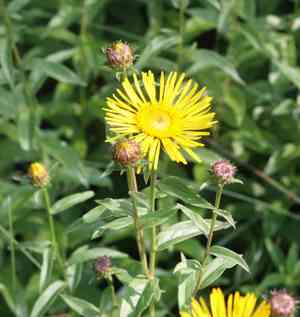
Irish fleabane flourishes most effectively when reproduced by planting its seeds. To achieve peak development, utilize a growing medium that drains efficiently, retaining adequate moisture while permitting surplus water to exit, thereby averting root decay. Position the seeds in a partially shaded spot during their early growth stage to shield the tender young plants from intense solar exposure, fostering more robust root formation. Consistently check the soil's hydration, making sure it stays uniformly moist without becoming saturated.
When Is the Optimal Time to Propagate Irish Fleabane?
Propagation Method
Seeding
Propagation Period
Spring
What Equipment Is Used for Irish Fleabane Propagation?
Seed Trays
Seed trays are vital for initiating irish fleabane from seeds. These containers aid in neatly arranging the seeds and offer ample room for the initial growth stage. Particularly suitable for irish fleabane, their shallow compartments allow for easy monitoring and minimal root disturbance during transplanting.
Sterile Potting Mix
Employing a sterile potting mix guarantees that irish fleabane seeds are not exposed to pathogens that could impede germination. This medium delivers a nutrient-balanced environment conducive to the early developmental phases of seedlings, fostering strong growth.
Misting Bottle
A misting bottle is essential for maintaining the necessary moisture levels for irish fleabane germination. It enables gentle watering that does not disturb the seeds or their root systems. This tool ensures delicate seedlings receive even hydration without becoming waterlogged.
Heat Mat
A heat mat is especially beneficial for irish fleabane as it promotes a consistent and suitable temperature, crucial for seed germination. This device is used to keep the soil at a steady warmth, which helps optimize germination rates and ensure robust, early plant growth.
Grow Lights
Grow lights are useful if propagating irish fleabane indoors or in areas with insufficient sunlight. These lights provide a light spectrum that mimics natural sunlight, encouraging photosynthesis and contributing to healthier, more vigorous seedlings.
Labels and Marker
Labels and a marker are simple yet important tools for organizing different batches of irish fleabane sowings. Labeling assists in tracking growth progress and managing the care of various seedlings. It's crucial for maintaining accurate records in experimental or diverse plantings.
How to Propagate Irish Fleabane?
Propagation Difficulty
Easy
How to Care for Your Newly Propagated Irish Fleabane?
How to Care for Your Newly Propagated Irish Fleabane?
Following germination, continue to provide the young irish fleabane plants with moderate indirect sunlight and maintain slight soil moisture. Gradually acclimatize them to outdoor conditions if they will be moved to a garden. Fertilize sparingly with a balanced liquid fertilizer every 4-6 weeks during the active growth period. Once established, irish fleabane is a low-maintenance plant that appreciates occasional watering during extended dry spells and can thrive in various soil types provided drainage is adequate.
Common Errors to Avoid When Propagating Irish Fleabane
Overwatering
Excessive watering can lead to root rot and fungal infections, especially since irish fleabane prefers well-drained soil. Keeping the substrate too wet compromises root health, affecting overall plant vitality and propagation success.
Deep planting
Planting irish fleabane's cuttings or seeds too deeply can impede germination and root development. This occurs because the cuttings or emerging seedlings struggle to reach the surface for adequate sunlight and air exchange, hindering their growth and survival.
Neglecting humidity
Failing to maintain sufficient humidity around irish fleabane during the rooting phase can cause cuttings to dry out. This dehydration can result in a failure of root formation and the eventual demise of the cuttings.
Ignoring pest management
Overlooking the presence of pests during irish fleabane propagation can lead to infestations that harm young plants and cuttings, impacting their growth and reducing propagation success.
Tips For Propagating Irish Fleabane
Proper cutting selection
Select healthy, disease-free parent plants for cuttings. Ensure that cuttings are taken from robust branches, as this increases the likelihood of successful rooting and vigorous growth.
Use of rooting hormones
Applying a rooting hormone to the cut ends of irish fleabane's cuttings can significantly enhance root development, boosting the chances of successful propagation by promoting faster and more uniform root growth.
Optimal soil composition
Prepare a well-draining soil mix, ideally with a balance of peat, perlite, and sand. This mixture facilitates proper drainage and aeration, critical factors for root development in irish fleabane.
Monitoring and adjusting environmental conditions
Keep the soil consistently moist (but not waterlogged) and provide a stable environment with moderate indirect light. Protect irish fleabane from extreme temperatures to encourage healthy growth and effective rooting.



