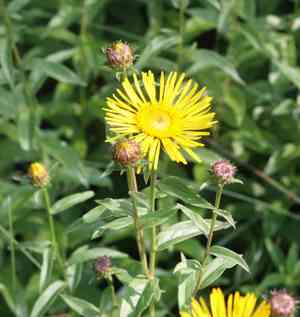
Irish fleabane (Inula salicina)
Also known as: Willow-leaved inula
Irish fleabane is a rare and ancient plant native to Ireland, dating back over 10,000 years. It has become a flagship species, symbolizing conservation efforts and raising environmental awareness in the region. The small remaining population is found on the shores of Lough Derg.
In This Article
Attributes of Irish fleabane
Lifespan
Perennial
Plant Type
Herb
Plant Height
20 cm to 80 cm
Spread
N/A (Herbaceous plant with no woody crown)
Leaf Color
Green
Flower Size
2.5 cm to 4 cm
Flower Color
Yellow
Images of Irish fleabane
Quickly Identify Irish fleabane
1
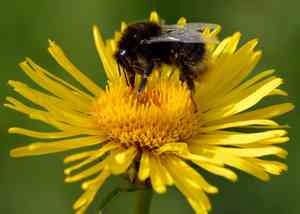
To identify Inula salicina, look for its lanceolate, willow-like leaves that are arranged alternately along the stem. The plant typically has bright yellow composite flowers with numerous rays surrounding a central disc.
Scientific Classification of Irish fleabane
Phylum
Vascular plants
Class
Dicotyledons
Order
Asterales
Family
Daisy
Genus
Inula
Species
Irish fleabane
Planting and Growing of Irish fleabane
Care Difficulty
Easy
Watering Schedule
Every 3 days
Sunlight Requirements
Full sun
Sunshine Duration
4-8 hours
Ideal Temperature
60-75℉
Soil Type
Potting Mix, Peat Mix
Soil pH
6.5-7.5
Fertilizer Type
Balanced
Pruning Season
Spring, Summer
Pruning Area
Branches, Leaves
Pruning Frequency
Once a year
Repotting Season
Spring
Pot Type
Plastic, Ceramic
 How to Water Irish fleabane?
For Inula salicina, you should aim to water the soil until it's thoroughly moist. The principle here is to maintain consistency without waterlogging—ensuring each root gets access to moisture without sitting in a puddle.
What are the symptoms of an underwatered Irish fleabane?
›
What should I do if my Irish fleabane is not getting enough water?
›
What are the symptoms of an overwatered Irish fleabane?
›
How to save an overwatered Irish fleabane?
›
 What Are the Sunlight Requirements for Irish fleabane?
Inula salicina ideally requires 5 to 8 hours of direct sunlight daily. This level promotes optimal growth and flowering, supporting lush foliage and robust health thanks to sufficient photosynthetic processes.
More About Sunlight Requirements Techniques→
What is the ideal sun exposure for Inula salicina?
›
How can I ensure my Inula salicina gets enough light?
›
What benefits does ideal lighting provide to Inula salicina?
›
 What Is the Ideal Temperature Range for Irish fleabane?
The ideal temperature range for Inula salicina is between 60°F to 75°F. This temperature range enables optimal growth and flowering, ensuring robust plant health. At these temperatures, the physiological processes within the plant like photosynthesis and nutrient uptake are optimized, promoting vibrant foliage and strong root development.
 What Soil is Best for Irish fleabane?
Inula salicina thrives in well-drained soil, which helps prevent root rot and supports healthy root growth. This characteristic is crucial for ensuring that water does not pool around the plant's base, providing it with a balanced moisture level that's necessary for optimal growth. A nutrient-rich soil supports Inula salicina's robust development. Enriched with organic matter, such soil supplies essential nutrients, ensuring the plant's lush foliage and vibrant flowers. Regularly amending the soil with compost can maintain the necessary fertility levels. While Inula salicina prefers well-drained soil, it also benefits from moderate moisture retention. This balance ensures that the plant receives sufficient water without succumbing to dryness, promoting consistent growth and flowering throughout its growing season.
 How to Fertilize Irish fleabane?
For Inula salicina, a moderate amount of fertilizer is recommended. When applying liquid fertilizer, dilute it to half strength to avoid any potential root burn. For slow-release fertilizers, scatter approximately 20 grams per square meter around the plant base. Ensure the fertilizer is well integrated with the soil to maximize nutrient uptake.
 How to Prune Irish fleabane?
Begin by removing spent flowers to encourage the plant to produce more blooms. This focused pruning keeps the plant looking tidy and prevents energy from going into seed production, channeling it instead toward new growth. Trim stems to maintain a desirable shape and size. Cut back long stems to a lateral bud or leave them a third shorter to prevent legginess, keeping the plant compact and robust. Inspect the plant for any damaged or diseased stems. Cleanly cut these back to the base or healthy tissue, which promotes overall plant health and deters pest buildup.
More About Pruning Techniques→
 How to Propagate Irish fleabane plant?
1
To sow seeds, start by filling trays with a well-draining potting mix. Sow seeds lightly on the surface, mist with water, and cover with a thin layer of the potting mix. Maintain moisture and place the tray in a warm, bright location until germination.
2
To propagate via cuttings, select healthy, non-flowering stems. Cut 4-6 inch sections with at least two nodes. Remove the lower leaves, dip in rooting hormone, and plant in moist potting mix. Ensure consistent humidity and light exposure.
3
For division, dig up mature clumps in early spring. Gently separate the clump into smaller sections, ensuring each section has roots and shoots. Replant these sections immediately into prepared soil.
 How to Repot Irish fleabane plant?
1
Inula salicina usually shows signs of needing a new pot when its roots start emerging from the drainage holes or the plant appears stunted even with adequate care. This typically occurs every two to three years. Repotting during spring or early summer helps minimize stress on the plant and provides the best conditions for growth.
2
Choosing the right pot for Inula salicina is crucial for its health. The pot should be slightly larger than the current one, allowing enough space for root expansion without being excessively large, which can lead to waterlogged conditions. Opt for a pot with proper drainage holes to ensure excess water can escape, preventing root rot.
3
For Inula salicina, the ideal soil is a well-draining loamy mix. This type of soil mimics its natural habitat, providing excellent drainage while retaining adequate moisture. Incorporating organic matter, such as compost, enhances nutrient availability and encourages vigorous growth, making the plant more resilient.



