How to Propagate False sarsaparilla?
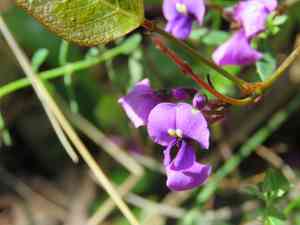
Hardenbergia violacea, a vigorous vine indigenous to Australia, is recognized for its vivid violet blossoms. Reproduction via cuttings is a frequent practice, facilitating more rapid establishment since semi-hardwood sections typically root effectively. For peak outcomes, collect cuttings in late winter or early spring. Employ a rooting stimulant to boost root formation and cultivate in a substrate that drains efficiently. Consistent irrigation and a site with partial shade encourage robust development.
Optimal Period for False Sarsaparilla Propagation
Propagation Method
Cutting
Propagation Period
Spring,Summer
Tools for False Sarsaparilla Propagation
Sharp Pruning Shears
Crucial for taking false sarsaparilla cuttings, sharp pruning shears ensure clean cuts, preventing harm to the parent plant and boosting success rates for new roots. Clean cuts lower infection risk and promote quicker healing, vital for the delicate cutting process.
Rooting Hormone Powder or Gel
This product aids root development in false sarsaparilla cuttings by encouraging root growth at the cut site. Correct application of rooting hormone increases the likelihood of successful propagation, supporting the formation of strong root systems in new plants.
Sterile Potting Mix
A sterile potting mix guarantees that false sarsaparilla cuttings are planted in a pathogen-free environment, essential for their growth and development. It offers the necessary aeration and moisture retention that benefits root growth without the danger of soil-borne diseases affecting young cuttings.
Propagation Tray
These trays are utilized to arrange and maintain false sarsaparilla cuttings in a regulated setting. They facilitate even spacing and sufficient airflow around each cutting, which is crucial for preventing mold growth and ensuring consistent humidity – key elements in successful cutting propagation.
Plastic Dome or Propagation Tent
Covering false sarsaparilla cuttings with a plastic dome or tent creates a humid microclimate that promotes rooting. This tool is especially useful for maintaining steady moisture and temperature, critical factors in the initial stages of cutting development.
How to Propagate False Sarsaparilla?
Propagation Difficulty
Moderately Difficult
Caring for Your Newly Propagated False Sarsaparilla
Caring for Your Newly Propagated False Sarsaparilla
Post-propagation, keep the soil consistently moist but not waterlogged. Gradually acclimate the new false sarsaparilla plant to less humid conditions by removing the plastic cover for increasing durations over several weeks. Once established, place the plant in a location offering full sun to partial shade and provide regular watering during dry spells. Prune annually after flowering to maintain its form and encourage vigorous growth.
Common Errors to Avoid When Propagating False Sarsaparilla
Overwatering cuttings
Excessive watering of false sarsaparilla cuttings can lead to root rot, which reduces the plant's ability to absorb nutrients and water effectively, potentially causing the death of the cuttings.
Using non-sterile tools
Failure to sterilize tools when cutting or handling false sarsaparilla increases the risk of disease transmission to the plant, which can severely impact its growth and propagation success.
Incorrect cutting length
Taking cuttings that are either too short or too long can impede the development of false sarsaparilla. Short cuttings might lack enough nodes for proper root and shoot development, while overly long cuttings might struggle to sustain themselves.
Ignoring node placement
Not including a node in the cutting, or planting cuttings upside down, results in unsuccessful rooting. Nodes are vital as they contain the growth points necessary for root and shoot development.
Tips For Propagating False Sarsaparilla
Proper cutting technique
Ensure cuttings are 4-6 inches long and contain at least one node. The cut should be made just below a node, as this area is where false sarsaparilla will initiate root growth.
Use of rooting hormone
Applying a rooting hormone to the cut end of false sarsaparilla cuttings can significantly enhance rooting success. The hormone stimulates root growth, improving propagation outcomes.
Maintaining right humidity
Keep the humidity high for false sarsaparilla cuttings by covering them with a plastic bag or placing them in a mini greenhouse. This environment helps prevent the cuttings from drying out before they can establish roots.
Well-draining soil mix
Use a well-draining soil mix for planting false sarsaparilla cuttings. A mix of peat and perlite or sand is ideal as it retains adequate moisture while allowing excess water to drain, preventing root rot.
Indirect lighting conditions
Provide indirect light for false sarsaparilla cuttings. Direct sunlight can be too harsh and may dehydrate the cuttings before they establish roots. Indirect light supports steady growth without exposing the plant to extreme conditions.



