How to Propagate Japanese honey locust?
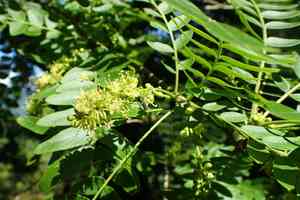
The Japanese honey locust, a leguminous tree, is recognized for its delicate leaf structure and adaptability to diverse soil types. To multiply Japanese honey locust, acquire semi-hardwood cuttings while the plant is actively growing. For best root development, apply rooting stimulant to the severed ends and embed them in a potting blend that drains effectively. Ensure continuous dampness and provide diffused light until the plants are firmly rooted. Vigilance against decay or fungal diseases is essential during the initial growth phase.
Optimal Time for Japanese Honey Locust Propagation
Propagation Method
Cuttings
Propagation Period
Fall,Winter
Tools for Japanese Honey Locust Propagation
Sharp Pruning Shears
These are crucial for obtaining healthy, precise cuttings from japanese honey locust. Sharp blades ensure a clean cut, minimizing harm to the parent plant and boosting the likelihood of successful rooting in the cuttings.
Rooting Hormone Powder
This aids in root formation on japanese honey locust cuttings. Applying a rooting hormone to the cut end of a cutting speeds up root growth, increasing propagation success rates.
Sterile Potting Mix
A sterile potting mix offers a disease-free environment suitable for new root growth. For japanese honey locust, a well-draining, light mixture helps prevent root rot and supports healthy initial development.
Propagation Trays with Dome Lids
These trays maintain a humid and stable environment vital for rooting japanese honey locust cuttings. The dome lids help retain moisture and warmth, creating a mini-greenhouse effect.
Heat Mats
Heat mats promote root growth by keeping soil temperature consistent and optimal. This is especially beneficial for japanese honey locust during colder months or in cooler climates, ensuring cuttings don't get too cold.
Misting Bottle
A misting bottle is used to lightly water cuttings without disturbing the soil or newly forming roots. Regular misting maintains necessary moisture levels for japanese honey locust cuttings to thrive.
Propagating Japanese Honey Locust
Propagation Type
Moderately Difficult
Caring for Newly Propagated Japanese Honey Locust
Caring for Newly Propagated Japanese Honey Locust
Once japanese honey locust cuttings have rooted, gradually acclimate them to less humid conditions by slowly opening the plastic bag over a week. After acclimatization, transfer them to individual pots with standard potting soil. Water regularly, allowing the soil to dry slightly between waterings. Place pots where japanese honey locust can receive full sun to partial shade. As japanese honey locust matures, minimal pruning is needed, mainly to maintain shape and remove damaged or diseased branches.
Common Propagation Errors for Japanese Honey Locust
Improper seed treatment
Japanese honey locust seeds have a tough outer shell, leading to low natural germination rates. Without proper pre-treatment to break or soften the seed coat, germination will be severely hindered, resulting in poor propagation outcomes.
Overwatering
When attempting to root japanese honey locust cuttings, excessive water can cause root rot and fungal diseases. This error often stems from the belief that more water accelerates growth, but it can actually harm the plant's health.
Deep planting
Japanese honey locust seeds or cuttings planted too deeply struggle to emerge or establish. This can lead to wasted seeds and delayed or failed germination and rooting, as emerging shoots cannot reach the surface for photosynthesis.
Tips for Propagating Japanese Honey Locust
Scarification of seeds
To improve germination, mechanically scarify japanese honey locust seeds by gently nicking the seed coat or using sandpaper to weaken it. This process enhances water absorption and encourages germination.
Use of rooting hormone
Applying a rooting hormone to japanese honey locust cuttings can significantly boost the chances of successful root development, providing essential support for the cuttings to establish robust roots.
Maintaining moderate moisture
Keep the soil moist but not waterlogged when propagating japanese honey locust by cuttings or seeds. This balance prevents root rot while providing sufficient hydration for growth and development.



