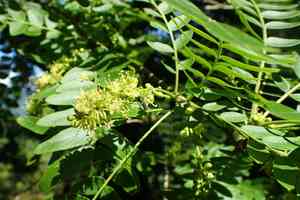
Japanese honey locust (Gleditsia japonica)
Also known as: Japanese honey locust
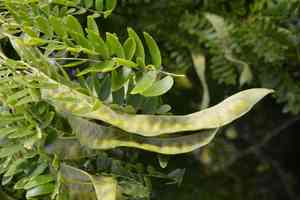
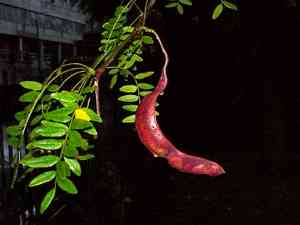
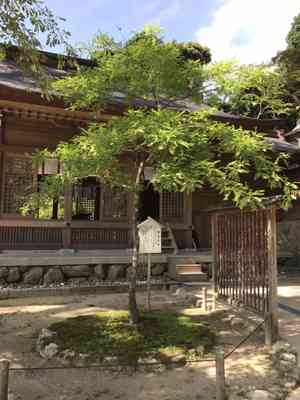
The Japanese honey locust, a deciduous tree native to Japan, is cherished for its graceful, spreading canopy and delicate, bipinnate leaves that cast a gentle, filtered shade. To showcase its full ornamental beauty, including its distinctive, twisted seed pods, this tree flourishes in well-drained, fertile soil with ample sunlight. While it can tolerate pollution and diverse soil conditions, optimal growth and visual appeal are achieved in temperate climates with moderate rainfall and protection from strong winds.
In This Article
Attributes of Japanese honey locust
Lifespan
Perennial
Plant Type
Tree
Plant Height
20 m
Spread
12 m
Leaf Color
Green
Flower Size
5 cm to 20 cm
Flower Color
Yellow Green
Images of Japanese honey locust
Quickly Identify Japanese honey locust
1
Identify Gleditsia japonica by its bipinnate or tripinnate compound leaves, rough bark, and unique, curved thorns on its trunk and branches. It also has small, greenish-yellow flowers that bloom in late spring.
Scientific Classification of Japanese honey locust
Phylum
Vascular plants
Class
Dicotyledons
Order
Legumes, milkworts and allies
Family
Legume
Genus
Honey locusts
Species
Japanese honey locust
Planting and Growing of Japanese honey locust
Care Difficulty
Easy
Watering Schedule
Every 4 days
Sunlight Requirements
Partial sun
Sunshine Duration
6-10 hours
Ideal Temperature
60-75℉
Soil Type
Potting Mix, Peat Mix
Soil pH
6.5-7.5
Fertilizer Type
Balanced
Pruning Season
Spring, Summer
Pruning Area
Branches, Leaves
Pruning Frequency
2 times a year
Repotting Season
Spring
Pot Type
Plastic, Ceramic
 How to Water Japanese honey locust?
Gleditsia japonica requires watering until the soil is evenly moist but not soggy. It's crucial to ensure that water penetrates down to the root zone, approximately 500 ml per watering session is typically sufficient, depending on the size of the plant and the container. Adjust as needed based on environmental conditions.
What are the symptoms of an underwatered Japanese honey locust?
›
What should I do if my Japanese honey locust is not getting enough water?
›
What are the symptoms of an overwatered Japanese honey locust?
›
How to save an overwatered Japanese honey locust?
›
 What Are the Sunlight Requirements for Japanese honey locust?
Partial sun suits Gleditsia japonica by providing a harmonious blend of light exposure. This balance fosters sustainable, healthy growth without the extremes of harsh direct sun or dim surroundings.
Optimal Sun Exposure
›
Seasonal Light Adjustments
›
Achieving Balanced Growth
›
 What Is the Ideal Temperature Range for Japanese honey locust?
The ideal temperature range for Gleditsia japonica, commonly known as the Japanese honey locust, is between 60°F and 75°F. This temperature range is optimal for their growth and ensures that their metabolic processes function efficiently. At these temperatures, the plant can photosynthesize effectively and produce energy robustly, which supports healthy development and flowering.
 What Soil is Best for Japanese honey locust?
Gleditsia japonica thrives in well-drained soils, allowing for adequate air exchange around the roots and preventing waterlogging, which can cause root rot and other diseases. Rich soil provides the essential nutrients that Gleditsia japonica needs for optimal growth, promoting healthy foliage and robust flowering. Fertility amendments like compost can enhance soil richness. The ability of the soil to retain adequate moisture without becoming soggy ensures the plant maintains optimal hydration status, supporting steady growth and resilience against drought.
 How to Fertilize Japanese honey locust?
For Gleditsia japonica, the recommended fertilizer amount should be moderate. Use a balanced 10-10-10 NPK fertilizer, applying approximately 50 grams for young trees and increasing to 100 grams for mature trees. Avoid excessive application to prevent nutrient leaching and possible root burn.
 How to Prune Japanese honey locust?
Start by trimming away all dead, diseased, or damaged branches. These should be removed at the nearest healthy part of the branch. Clearing out these parts first allows you to better assess the overall structure of the tree and the necessary steps to enhance its form and health. Gleditsia japonica can become quite dense if not properly managed. Identify crowded areas within the canopy and selectively remove branches to increase air circulation and light penetration. This step is vital for preventing fungal diseases and promoting vigorous growth throughout the entire tree.
More About Pruning Techniques→
 How to Propagate Japanese honey locust plant?
1
Start by soaking the seeds in lukewarm water for 24 hours to soften the seed coat, which can enhance germination rates. After soaking, plant the seeds approximately 1-2 inches deep in seedling trays filled with a well-draining potting mix.
2
Select healthy stems about 6-8 inches long with at least three nodes for cutting propagation. Use sharp pruning shears to make a clean cut just below a node, removing any leaves from the lower half of the stem.
3
For layering propagation, choose a healthy lower branch of the plant, and gently bend it towards the ground. Bury a portion of the stem in soil, ensuring at least one node is covered, and secure it in place using a small stake or rock.
 How to Repot Japanese honey locust plant?
1
Look for signs like roots emerging from the drainage holes, slowed growth, or a pot that dries out quickly. These indicators suggest it's time for your Gleditsia japonica to be moved into a larger pot. Ideally, repotting should be done in spring or autumn for optimal growth.
2
Select a pot that is 2-3 inches larger in diameter than the current pot. Ensure it has drainage holes to prevent waterlogging, which can lead to root rot. A well-sized pot allows ample space for root expansion, promoting healthy growth.
3
Use loamy soil mixed with sand and organic matter to ensure good drainage and nutrient retention. This type of soil helps prevent water stagnation and provides essential nutrients, benefiting the plant’s overall health.



