How to Propagate Sticky geranium?
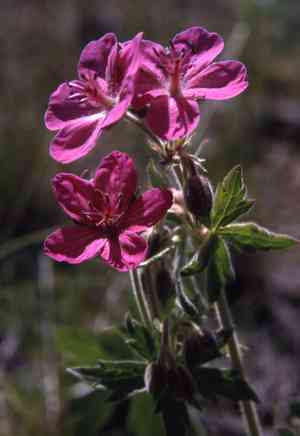
Sticky geranium is most effectively reproduced by planting seeds in the springtime. Reproduction is typically straightforward, with the emergence of seedlings signifying success. No further advice regarding propagation is necessary for this particular plant.
Optimal Time for Sticky Geranium Propagation
Propagation Method
Seeding
Propagation Period
Spring
Tools Required for Sticky Geranium Propagation
Seedling trays or flats
These containers are utilized for initiating seeds in controlled environments. Their shallow compartments allow individual sticky geranium seeds ample space for germination, minimizing disease transmission and simplifying seedling management.
Potting mix
This offers a sterile, well-draining substrate crucial for sticky geranium seed germination, ensuring delicate seedling roots can develop unhindered and receive sufficient nutrients.
Misting bottle
Used for gently hydrating sticky geranium seeds and seedlings. It delivers the precise moisture needed for seed germination without disturbing the soil or causing excessive wetness that could lead to seed rot or damping-off diseases.
Heat mat
As temperature regulation is vital during germination, a heat mat helps maintain a consistent soil temperature, promoting faster and more uniform germination of sticky geranium seeds.
Grow lights
If natural light is insufficient, grow lights can supply the necessary light spectrum to support healthy growth of sticky geranium seedlings post-germination.
Ventilation fan
Enhances air circulation, reducing the risk of fungal diseases for sticky geranium seedlings and ensuring a stable environment by mitigating hot or cold spots near the growing area.
Steps to Propagate Sticky Geranium
Propagation Method
Seeding
Difficulty Level
Simple
Caring for Your Newly Propagated Sticky Geranium
Caring for Your Newly Propagated Sticky Geranium
Maintain consistent moisture levels without overwatering, apply mulch to conserve water and suppress weeds, and deadhead spent flowers to encourage further blooms. Sticky geranium prefers moderate conditions and does not require heavy feeding; fertilize sparingly if needed. Divide every 3-4 years to maintain vigor.
Common Errors to Avoid When Propagating Sticky Geranium
Overwatering
Excessive watering during propagation can lead to root rot and fungal infections, impeding healthy root development and ultimately jeopardizing sticky geranium's survival.
Deep planting
Planting cuttings too deeply can suffocate the developing roots of sticky geranium, hindering adequate gas exchange and potentially causing decay.
Neglecting humidity
Insufficient humidity can cause sticky geranium cuttings to dry out before root establishment, leading to unsuccessful propagation.
Using old or infested soil
Soil that is not fresh or contains pests and pathogens can severely hinder the health and growth of sticky geranium by introducing diseases or competition.
Ignoring node placement
Failing to include at least one node below the soil surface for cuttings can result in a lack of root initiation, as roots typically emerge from nodes.
Advice for Propagating Sticky Geranium
Proper aeration
Utilize a well-draining soil mix to ensure sticky geranium roots receive adequate oxygen, promoting robust root growth.
Cutting selection
Choose healthy, non-flowering stems for cuttings to ensure the plant's energy is directed towards root and foliage development.
Humidity control
Maintain a humid environment around sticky geranium cuttings without over-saturating the soil to prevent desiccation and encourage rooting.
Use of rooting hormone
Applying a rooting hormone can stimulate faster root development and increase the likelihood of successful propagation for sticky geranium.
Adequate lighting
Provide bright, indirect light to sticky geranium cuttings to promote photosynthesis without causing heat stress, ensuring balanced growth during the rooting phase.



