How to Propagate Needle-leaved broom?
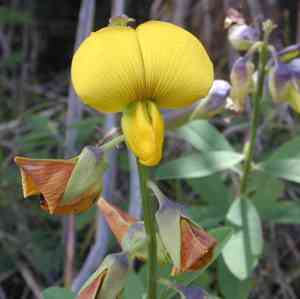
The resilient and adaptable leguminous shrub, needle-leaved broom, is best propagated by gathering its seeds once the pods have desiccated on the plant. Meticulously remove the seeds, then lightly abrade their outer layer to improve sprouting success prior to planting. Distribute the seeds in a growing medium that drains effectively, ensuring they are not buried excessively; a thin layer of soil is adequate. Steady hydration and warmth will facilitate their emergence. After they have taken root, the young plants should be moved to separate containers and cultivated until they possess sufficient strength for relocation to a permanent outdoor site.
Optimal Propagation Period for Needle-leaved Broom?
Propagation Method
Cutting
Propagation Period
Spring,Summer
Essential Tools for Needle-leaved Broom Propagation?
Sharp Pruning Shears
These are crucial for making clean, precise cuts from needle-leaved broom without crushing or harming the plant's tissues. A clean cut significantly boosts the chances of successful rooting by minimizing damage and potential infection sites. Sharp pruning shears ensure healthy, viable cuttings, promoting optimal growth during the rooting process.
Rooting Hormone
Applying rooting hormone to the cut end of needle-leaved broom's cuttings helps stimulate root growth more reliably and quickly. This product typically contains auxins that enhance root cell development, crucial for successful establishment post-cutting. It's especially effective for woody plants like needle-leaved broom, supporting quicker adaptation and growth in a new environment.
Sterilizing Solution
This is used for cleaning pruning shears before and after taking cuttings from needle-leaved broom. Sterilization prevents the spread of diseases between plants. For needle-leaved broom, ensuring tools are sterile is critical to avoid contaminating cuttings with pathogens that could compromise their growth.
Propagation Tray
A tray with a clear lid offers an ideal environment for needle-leaved broom cuttings to root. The tray allows for uniform moisture levels, and the lid helps maintain high humidity, which benefits root development in cuttings. Adequate space in the tray also allows for healthy growth without overcrowding, ensuring each cutting develops properly.
Perlite or Vermiculite
These aeration materials improve drainage and airflow around needle-leaved broom cuttings, which is vital for preventing root rot and other moisture-related issues. They help create an ideal rooting medium when mixed with soil or peat, supporting healthier and stronger root growth during the propagation phase.
How to Propagate Needle-leaved Broom?
Propagation Type
Moderately Difficult
How to Care for Your Newly Propagated Needle-leaved Broom?
How to Care for Your Newly Propagated Needle-leaved Broom?
Once needle-leaved broom cuttings have established roots, gradually acclimate them to less humid conditions by slightly opening the plastic cover daily for about a week. After root development, transplant them into larger pots or their final growing location in well-draining soil. Needle-leaved broom prefers full sun and tolerates drought, so water sparingly once established and ensure it is not in overly fertile or wet soil to prevent leggy growth or root rot.
Common Mistakes to Avoid When Propagating Needle-leaved Broom
Overwatering
Excessive watering can lead to root rot in needle-leaved broom, which is particularly vulnerable due to its preference for well-drained soil. Too much moisture prevents proper air circulation around the roots, hindering the plant's ability to absorb nutrients effectively.
Using old seeds
Employing aged seeds for propagation can result in poor germination rates. Needle-leaved broom's seeds have a limited viable period, and using seeds past this time can significantly reduce propagation success.
Deep planting
Planting seeds too deeply can prevent them from germinating since needle-leaved broom requires light to germinate effectively. Deep planting can therefore hinder access to sufficient light, impeding the growth of new plants.
Tips For Propagating Needle-leaved Broom
Light soil mix
Utilize a light and well-draining soil mix for needle-leaved broom. This ensures the soil retains adequate moisture without becoming waterlogged, which is crucial for the health of needle-leaved broom's roots and overall growth.
Surface sowing
Surface sowing seeds is advisable for needle-leaved broom due to its need for light to aid germination. This involves lightly pressing the seeds into the soil surface without covering them, allowing them to receive ample light.
Regular misting
Since needle-leaved broom seeds require constant moisture to germinate effectively but should not be deeply buried or heavily watered, regular misting is an ideal solution. It keeps the soil sufficiently moist without saturating it, promoting optimal seed germination.



