How to Propagate Greater snowdrop?
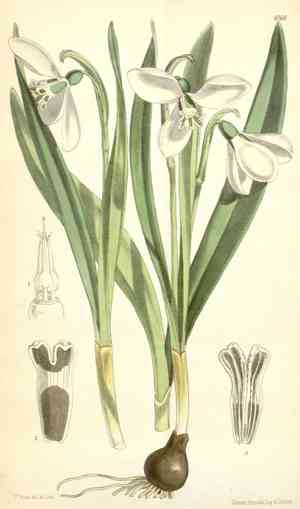
Greater snowdrop can be successfully multiplied by employing its naturally occurring bulbs. For vigorous development, cultivators ought to gently detach these bulbs from established specimens once their leaves have withered. Placing them in soil that drains well and is fortified with organic material will foster ideal development. Meticulous handling during the division and replanting process is vital for preserving the well-being and wholeness of the bulbs.
Optimal Time for Greater Snowdrop Propagation
Propagation Method
Utilize The Tubers
Propagation Period
Spring
Tools Required for Greater Snowdrop Propagation
Garden trowel
A robust garden trowel is vital for carefully excavating greater snowdrop tubers without harm. Its compact size and pointed blade enable precise extraction, crucial for avoiding cuts. This gentle handling preserves tuber health, essential for successful replanting and development.
Sharp scissors or pruners
Sharp scissors or pruners are needed to divide greater snowdrop tubers if propagation by division is chosen. Clean, precise cuts are key to prevent infection and ensure each tuber section has enough tissue to grow into a healthy new plant. Using sharp, sanitized tools lowers disease transmission risk.
Plant labels and a permanent marker
Using plant labels and a permanent marker to identify divided tubers helps track the growth and health of various greater snowdrop clones. Labeling is crucial for recording details like division date and tuber characteristics, aiding effective monitoring and care during propagation.
Potting mix
A well-draining potting mix suitable for bulbous plants is essential when replanting greater snowdrop tubers. The mix must provide sufficient aeration and drainage to prevent rot, matching greater snowdrop's moisture and texture needs. An appropriate growing medium supports strong root growth, directly impacting plant health and development.
Watering can with a gentle sprinkle head
A watering can with a gentle sprinkle head ensures newly planted greater snowdrop tubers receive water evenly and softly, mimicking light rain. This tool prevents soil compaction around tubers and minimizes dislodging them from their planting depth, vital for optimal root and shoot development.
Caring for Your Newly Propagated Greater Snowdrop
Caring for Your Newly Propagated Greater Snowdrop
After successful propagation, continue to monitor soil moisture, keeping it consistently damp but not waterlogged. Provide greater snowdrop with partial to full shade, as direct sun can be too intense. During the growing season, supplement with a balanced liquid fertilizer monthly to support healthy growth. Protecting greater snowdrop from extreme temperatures and pests will help ensure strong, vibrant plants. Once established, greater snowdrop needs minimal intervention, thriving in cool, shaded environments.
Common Errors to Avoid When Propagating Greater Snowdrop
Over-watering
Excessive watering of greater snowdrop can lead to bulb rot, a frequent problem that impairs the bulb's capacity to store nutrients and produce new growth. Too much soil moisture creates an anaerobic environment, fostering fungal infections.
Deep planting
Planting greater snowdrop bulbs too deeply might impede their ability to emerge through the soil surface. Given that greater snowdrop bulbs are relatively small, deep planting can result in weakened growth and reduced chances of sprouting.
Ignoring clump separation
Failing to divide overcrowded greater snowdrop clumps may lead to stunted growth and fewer blooms. Crowded conditions can restrict access to nutrients and moisture, which are vital for healthy growth and flowering.
Using poor draining soil
Employing heavy or poorly draining soils can cause waterlogging, which is harmful to greater snowdrop bulbs. Poor drainage results in increased moisture around the roots, creating conditions favorable for bulb rot.
Advice for Propagating Greater Snowdrop
Proper spacing
Ensure greater snowdrop bulbs are spaced adequately to allow ample room for growth and nutrient uptake. Correct spacing helps prevent resource competition and promotes healthier, more vigorous plants.
Light soil mix
Using a light, well-draining soil mix helps prevent water retention around greater snowdrop bulbs, reducing rot risk. A mixture including compost or leaf mold can provide necessary drainage and nutrients.
Moderate watering
Water greater snowdrop moderately to maintain moist, but not waterlogged, soil conditions. Adequate moisture is crucial, especially during active growth, but overwatering can cause root and bulb diseases.
Gentle handling during transplanting
Handle greater snowdrop bulbs gently during transplanting to prevent damage. Damaged bulbs are more prone to diseases and may fail to sprout. Ensure minimal root disturbance to facilitate easier acclimatization and growth.



