How to Propagate Bell heather?
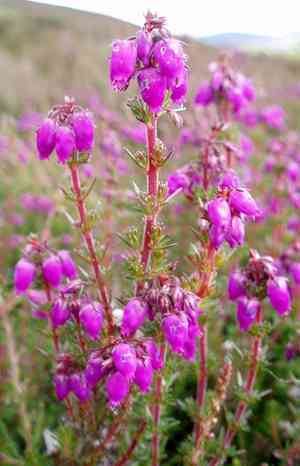
Bell heather flourishes when reproduced via cuttings. To achieve successful root formation, collect semi-hardwood cuttings during the late summer period. Employ a rooting stimulant to boost the effectiveness of rooting and place them in a soil blend that drains efficiently. Guarantee that the cuttings are maintained in a moist atmosphere, which is crucial for preventing desiccation prior to root establishment.
Optimal Time for Bell Heather Propagation
Propagation Method
Cutting
Propagation Period
Spring,Summer
Tools for Bell Heather Propagation
Sharp pruning shears
These are crucial for obtaining clean, precise cuts from bell heather, minimizing harm to the parent plant and boosting the likelihood of successful rooting. Dull blades can crush stems, hindering root growth.
Rooting hormone powder
This product boosts the chances of successful rooting by encouraging root development in bell heather cuttings. It's especially helpful as bell heather can sometimes be tricky to propagate and benefits from agents that enhance root formation.
Sterilized potting mix
A light, sterile potting medium ensures good drainage and air circulation, vital for bell heather's root growth. It prevents fungal or bacterial diseases, to which cuttings are particularly susceptible during the rooting phase.
Propagation tray with dome
These trays offer a regulated environment for bell heather cuttings. The dome helps maintain consistent humidity and temperature, key factors for stimulating new growth and preventing dehydration.
Heat mat
Placing the propagation tray on a heat mat can significantly improve bell heather's rooting success. It keeps the soil at an ideal temperature, promoting faster and stronger root growth, especially in cooler climates.
Bell Heather Propagation Difficulty
Propagation Type
Moderately Difficult
Caring for Newly Propagated Bell Heather
How to Care for Your Newly Propagated Bell Heather?
Once bell heather cuttings have rooted, gradually introduce them to less humid conditions by removing the plastic cover. Water regularly, allowing the topsoil to dry slightly between waterings. Bell heather thrives in full sun, so ensure ample light. Fertilize with a balanced, slow-release product suitable for acid-loving plants twice during the growing season. Protect young bell heather plants from extreme cold with mulch or frost protection in winter.
Common Errors in Bell Heather Propagation
Overwatering
Excessive water can hinder root development in bell heather, leading to conditions favorable for root rot. This error often arises from the belief that all heathers need constantly moist soil, which isn't true for bell heather.
Using the wrong soil mix
Employing a general-purpose soil mix can cause issues as bell heather requires well-draining, acidic soil. Incorrect soil types can impede proper root formation and nutrient absorption.
Insufficient light during root development
Inadequate light can weaken bell heather, as it typically flourishes in full sun. Low light conditions during the rooting phase can result in elongated, weak shoots, compromising the plant's overall vigor.
Bell Heather Propagation Tips
Use of rooting hormone
Applying a rooting hormone to bell heather cuttings can significantly boost root development. This encourages healthier, more robust root systems, which are vital for successful propagation.
Maintaining optimal humidity
Creating a humidity-controlled environment (e.g., using a plastic cover) helps prevent cuttings from drying out. This is crucial for bell heather, which loses moisture rapidly, potentially affecting root formation.
Choosing the correct cutting type
Semi-ripe cuttings, typically taken in late summer, are often more successful for propagating bell heather. These cuttings have the right balance of mature wood and new growth, ideal for rooting.



