How to Propagate Rough jointfir?
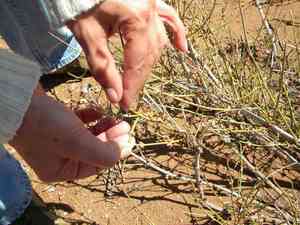
Rough jointfir flourishes when reproduced via cuttings. For successful root formation, employ a sharp, sterilized implement to acquire robust stems, roughly 6-8 inches in length, from an established specimen. Remove the bottom leaves and immerse the severed tip in rooting compound to stimulate root growth. Insert the cutting into a porous potting blend and maintain consistent moisture and diffused illumination until fresh shoots signify successful rooting.
Optimal Period for Rough Jointfir Propagation
Propagation Type
Cutting
Propagation Season
Spring,Summer
Equipment for Rough Jointfir Propagation
Sharp pruning shears
Crucial for making clean cuts on rough jointfir stem sections. Precise cuts help prevent disease spread and tissue damage, positively impacting root initiation and growth.
Rooting hormone powder
Promotes root development when applied to the cut end of rough jointfir stem cuttings. This significantly boosts success rates by stimulating root formation, especially vital for woody plants like rough jointfir where rooting can be challenging.
Sterile potting mix
Offers a pathogen-free environment essential for delicate rough jointfir cuttings to avoid contamination and ensure successful root development. A well-draining and aerated substrate is preferred for initial growth.
Propagation tray
Used to arrange and maintain rough jointfir cuttings in a controlled setting. Trays help sustain proper moisture and temperature, key elements in the rooting process.
Plastic dome or cover
Creates a humid microclimate around rough jointfir cuttings, vital for preventing desiccation and encouraging successful rooting. The enclosed space retains moisture and heat, mimicking a greenhouse effect.
Heating mat
Provides warmth to the base of the propagation tray, which can enhance rooting efficiency in rough jointfir, particularly in cooler conditions. Consistent warmth at the root zone is known to accelerate root development.
How to Propagate Rough Jointfir?
Propagation Type
Moderately Difficult
Caring for Your Newly Propagated Rough Jointfir
Caring for Your Newly Propagated Rough Jointfir?
Post-propagation, rough jointfir requires minimal attention. Position the plant in full sun to partial shade and water sparingly, allowing the soil to dry between watering. Rough jointfir is drought-tolerant; thus, avoid excessive watering. Fertilization is unnecessary as rough jointfir thrives in poor soils. Monitor for pests, though rough jointfir is not commonly affected. As rough jointfir matures, it can withstand harsher conditions including poor, rocky soil, and full sun exposure.
Common Errors to Avoid When Propagating Rough Jointfir
Overwatering
Excessive watering can lead to root rot in rough jointfir, which prefers dry, well-drained soils. Too much moisture can hinder root development and increase susceptibility to fungal diseases.
Improper cutting techniques
Using dull or unclean cutting tools can harm rough jointfir's plant tissues, making it difficult for cuttings to root successfully. Such damage can also introduce pathogens that compromise plant health.
Ignoring soil composition
Using an unsuitable soil mixture can impede the rooting and growth of rough jointfir. Soil that retains too much water or lacks adequate nutrients can hinder overall propagation success.
Tips For Propagating Rough Jointfir
Use sharp and sterile tools
When taking cuttings from rough jointfir, always use sharp and clean tools to minimize damage and prevent disease transmission, ensuring healthier cuttings and improved rooting chances.
Prepare appropriate soil mix
Use a well-draining sandy soil mix enriched with organic matter to promote healthy root growth and improve drainage, as rough jointfir prefers less water-retentive soils.
Maintain optimal moisture levels
While avoiding overwatering, ensure the soil remains lightly moist, which is critical to encourage rooting in rough jointfir without causing waterlogging or root diseases.



