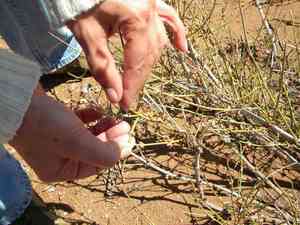
Rough jointfir (Ephedra aspera)
Also known as: Rough Joint-fir, Rough Ephedra
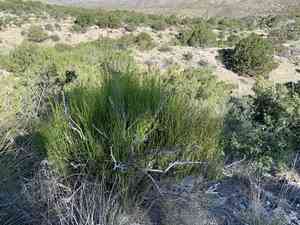
The plant you're referring to is likely the Rough Jointfir (Ephedra aspera). This shrub is indigenous to the southwestern United States and northern Mexico. As a gymnosperm, it reproduces via spores contained in cones rather than flowers. It is characterized by its tiny leaves and yellow-gold twigs.
In This Article
Attributes of Rough jointfir
Lifespan
Perennial
Plant Type
Shrub
Plant Height
91 cm to 1.2 m
Spread
90 cm to 1.2 m
Leaf Color
Green to yellow-green
Flower Size
2.5 cm
Flower Color
Yellow Green
Images of Rough jointfir
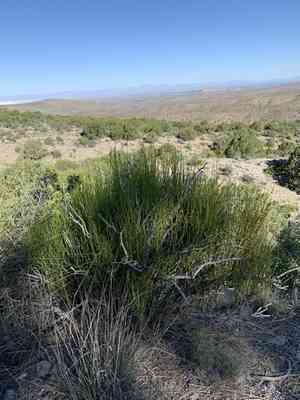
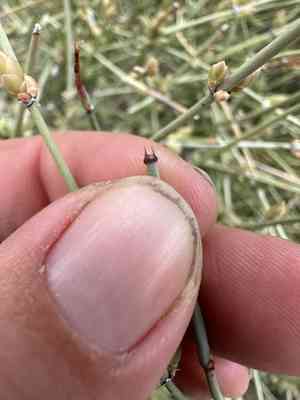
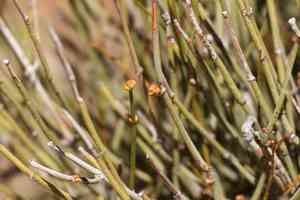
Quickly Identify Rough jointfir
1
To identify Ephedra aspera, look for a shrub with jointed, green to yellow-green stems. The leaves are typically reduced to small scales. The plant produces small, grouped flowers and elongated, cone-like structures. Its rough texture and jointed appearance are key identifying features.
Scientific Classification of Rough jointfir
Phylum
Vascular plants
Class
Gnetophytes
Order
Gnetales
Family
Mormon-tea
Genus
Joint-pines
Species
Rough jointfir
Planting and Growing of Rough jointfir
Care Difficulty
Easy
Watering Schedule
Every 2 days
Sunlight Requirements
Full sun
Sunshine Duration
6-10 hours
Ideal Temperature
60-80℉
Soil Type
Potting Mix, Peat Mix
Soil pH
7-8.5
Fertilizer Type
Balanced
Pruning Season
Spring, Summer
Pruning Area
Branches, Leaves
Pruning Frequency
2 times a year
Repotting Season
Spring
Pot Type
Plastic, Ceramic
 How to Water Rough jointfir?
When watering Ephedra aspera, aim for about 250 ml per session. The principle here is to ensure the soil is thoroughly moist but not waterlogged. Check that the top inch of soil is dry before you water again to prevent root rot.
What are the symptoms of an underwatered Rough jointfir?
›
What should I do if my Rough jointfir is not getting enough water?
›
What are the symptoms of an overwatered Rough jointfir?
›
How to save an overwatered Rough jointfir?
›
 What Are the Sunlight Requirements for Rough jointfir?
This plant prefers a light range spanning full to partial sun, ideally receiving 6-8 hours of sun daily. Such conditions bolster its photosynthetic efficiency and metabolic functions, which contribute significantly to its growth and evolutionary success.
Optimal Sunlight Exposure for Ephedra aspera
›
Solutions for Ensuring Ideal Sunlight
›
Benefits of Ideal Sunlight Conditions
›
 What Is the Ideal Temperature Range for Rough jointfir?
The ideal temperature range for growing Ephedra aspera is between 60°F to 80°F. This range allows the plant to maintain optimal metabolic and physiological processes, supporting healthy growth and development in a controlled environment.
 What Soil is Best for Rough jointfir?
Ephedra aspera thrives in well-drained soil which prevents waterlogging and root rot. This drainage capability ensures the roots can access oxygen, facilitating healthy growth and preventing fungal diseases. Enriched soil with essential nutrients supports the vigorous growth of Ephedra aspera. Nutrient-rich soil provides the necessary components for the plant's metabolic activities, resulting in robust stems and foliage. Ephedra aspera benefits from a moderately fertile substrate that supplies adequate nutrition without promoting excessive vegetative growth, which maintains its natural hardy and bushy structure.
 How to Fertilize Rough jointfir?
The fertilization amount for Ephedra aspera should be moderate, ensuring nutrients are adequately provided without overwhelming the plant. Normally, use about half the recommended dose on the fertilizer label to prevent nutrient buildup.
 How to Prune Rough jointfir?
Begin by identifying branches that cross or rub against each other, as well as any dead or diseased wood. Focus on areas where growth is densest, cutting back to a lateral branch or bud to allow more sunlight and airflow. Make cuts at a 45-degree angle just above a leaf node or bud to encourage healthy regrowth. Ensure that your cuts are clean and precise to minimize stress and damage to the plant. Focus on thinning out the densest parts of the plant to improve its overall structure. Remove excess shoots and branches to create an open framework that allows sufficient light penetration and airflow.
More About Pruning Techniques→
 How to Propagate Rough jointfir plant?
1
Begin by filling the seed tray with a well-draining seed-starting mix. Level the surface and gently firm it down. Moisten the mixture using a watering can or spray bottle before sowing the seeds.
2
Evenly distribute the seeds over the prepared seed bed. Lightly cover them with a thin layer of the seed-starting mix. Ensure that the seeds are not buried too deep to facilitate proper germination.
3
Place the seed tray in a location with indirect sunlight and a stable temperature around 20°C (68°F). Use a heat mat if necessary to maintain warmth, and cover the tray with a plastic dome to increase humidity.
 How to Repot Rough jointfir plant?
1
Ephedra aspera needs repotting when roots begin to emerge from the drainage holes or its growth becomes stunted despite optimal care. Spring and summer are ideal as the plant is in its active growth phase, which allows quicker recovery.
2
Choose a pot that's slightly larger than its current one with good drainage. Terracotta pots are beneficial as they offer breathability, helping to prevent root rot by allowing excess moisture to evaporate.
3
Opt for a well-draining gravel mix that replicates its native arid habitats. Such soil prevents waterlogging and provides necessary aeration, crucial for maintaining healthy roots and reducing the likelihood of disease.
Toxicity
Ingestion
WARNING
The judgment on toxicity and danger is for reference only. We DO NOT GUARANTEE any accuracy of such judgment. Therefore, you SHALL NOT rely on such judgment. It is IMPORTANT TO SEEK PROFESSIONAL ADVICE in advance when necessary.
Learn More About Rough jointfir Diseases
Anthracnose
Bacterial Leaf Spot
Bacterial Soft Rot
Bacterial Wilt
Crown Gall
Cyst Nematode
Damping-off
Drought Stress
Fusarium Wilt
Gray Mold
Leaf Spot
Mosaic
Nutrient Deficiency
Nutrient Toxicity
Powdery Mildew
Root Rot
Root-knot Nematode
Rusts
Sooty Mold
Spider Mites
Temperature Stress
Thrips Damage
White Mold
Chemical Injury



