How to Propagate Spoon-leaved sundew?
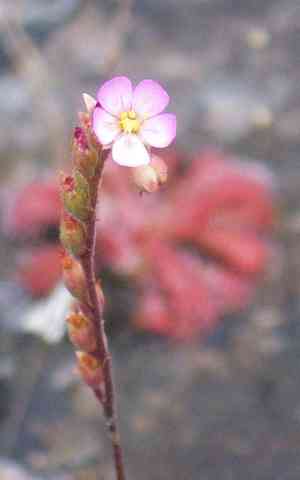
Spoon-leaved sundew can be successfully multiplied by dividing established specimens. Gently detach the individual rosettes, making sure each separated portion retains a few roots. Place these divisions into a blend of peat and sand, providing elevated humidity and warmth to stimulate development. Periodically spray the substrate to keep it damp yet not oversaturated, thereby cultivating an ideal setting for root formation. This technique enables cultivators to rapidly expand their assortment while retaining the genetic characteristics of the parent plant.
Optimal Time for Spoon-leaved Sundew Propagation
Propagation Method
Separation
Propagation Period
Spring,Autumn
Tools Required for Spoon-leaved Sundew Propagation
Sharp pruning shears or scalpel
These instruments are crucial for making clean cuts through the root mass of spoon-leaved sundew during the division process. A sharp tool ensures a precise incision, minimizing plant tissue damage, which is vital for reducing stress and preventing post-propagation diseases.
Sterilizing agent (e.g., isopropyl alcohol or bleach solution)
Before employing any cutting implement on spoon-leaved sundew, it is essential to sanitize the blades. This prevents the introduction of harmful pathogens that could damage the delicate tissues of spoon-leaved sundew, ensuring the plant remains healthy and free from infection during and after division.
Watering can with a fine spray or misting bottle
Following division, spoon-leaved sundew will require high humidity and proper hydration to recover and develop new roots effectively. A misting bottle or a watering can with a fine spray provides gentle moisture, replicating spoon-leaved sundew's natural damp environment.
Plastic pots with drainage holes
After separation, each segment of spoon-leaved sundew will need repotting. Using small plastic containers with adequate drainage helps manage soil moisture, which is critical for the root health of spoon-leaved sundew, preventing issues like root rot, while enabling stable growth conditions.
Perlite or sand-based potting mix
Perlite or sand-based potting substrates are recommended for spoon-leaved sundew as they ensure excellent drainage and air circulation around the roots, which is key for the health and aeration of the plant's root system after propagation.
How to Propagate Spoon-leaved Sundew?
Propagation Type
Simple
Caring for Your Newly Propagated Spoon-leaved Sundew
Caring for Your Newly Propagated Spoon-leaved Sundew
Post-propagation, maintain elevated humidity and moisture levels for spoon-leaved sundew by keeping the substrate consistently damp with distilled water or rainwater. Avoid tap water due to its mineral content. Provide bright, indirect illumination and steer clear of direct, intense sunlight to prevent leaf scorching. Gradually acclimatize spoon-leaved sundew to lower humidity over several weeks to strengthen the plants. Monitor for signs of growth and adjust care as necessary to ensure robust development.
Common Errors to Avoid When Propagating Spoon-leaved Sundew
Overwatering
Excessive moisture can lead to root decay and fungal infections, which are detrimental to spoon-leaved sundew's well-being.
Poor Medium Choice
Using substrate that is too rich in nutrients or lacks proper drainage can hinder spoon-leaved sundew's growth, as the species thrives in poor, acidic, and moist conditions.
Inadequate Light
Spoon-leaved sundew needs ample bright light to sustain healthy growth. Insufficient illumination can result in weak plants that may not propagate successfully.
Contaminated Tools
Employing unsterilized tools can introduce pathogens, affecting the delicate cuttings or leaves during propagation.
Ignoring Humidity
Spoon-leaved sundew requires high humidity to flourish. Neglecting this need can lead to desiccation of propagules and poor root development.
Tips For Propagating Spoon-leaved Sundew
Leaf Cuttings Method
Gently remove a leaf cutting and place it on the surface of an appropriate propagation medium, such as sphagnum moss, ensuring high humidity and indirect light for successful rooting.
Choose Proper Medium
Utilize a low-nutrient substrate like a mix of peat and sand or perlite, which mimics spoon-leaved sundew's natural growing conditions and supports root development.
Maintain Moisture
Keep the propagation medium consistently damp, but not waterlogged, to aid in the rooting process without causing decay.
Provide Adequate Lighting
Ensure spoon-leaved sundew receives plenty of indirect sunlight or artificial light to promote healthy growth during propagation.
Sterilize Equipment
Always use sterilized tools when taking cuttings to prevent the spread of disease and ensure the best chance of successful propagation.



