How to Propagate Greater pond-sedge?
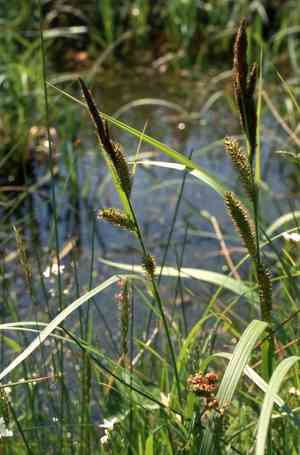
Carex riparia is frequently multiplied through separation, a technique highly suitable for this resilient perennial. By splitting the thick clusters produced by its creeping rootstock, cultivators can successfully reproduce Carex riparia. It is important to carefully separate the root ball, ensuring each segment retains some of the root system. Each separated portion must possess sufficient leaves and root formations to guarantee successful integration upon replanting. For peak development, these divisions ought to be positioned with enough distance to accommodate their spread.
What Is the Best Time To Propagate Greater Pond-sedge?
Propagation Type
Separation
Propagation Season
Spring,Autumn
What Tools Are Used in Greater Pond-sedge Propagation?
Sharp Garden Knife or Spade
Crucial for dividing, a sharp garden knife or spade is vital for cleanly and effectively cutting through the root mass of greater pond-sedge. This tool minimizes root damage, which is essential for the establishment and growth of the divided sections. A clean cut reduces stress on greater pond-sedge and lowers the risk of root diseases.
Watering Can or Hose with a Gentle Spray Setting
Post-division, it's crucial to ensure greater pond-sedge receives sufficient water to help it establish roots in its new spot. A watering can or hose with a gentle spray is advised for soft, even water distribution. This prevents soil erosion around new divisions and helps maintain moisture without disturbing roots.
Garden Fork
Used to loosen soil around greater pond-sedge before division. This tool aids in gently lifting the plant from the ground with minimal root system disruption. The fork's tines are perfect for aerating soil and making root access and division easier and less damaging.
Rooting Hormone (Optional)
While not mandatory, rooting hormone can be beneficial for boosting root growth in divided greater pond-sedge sections. It promotes faster establishment and healthier initial growth, leading to stronger plants. Apply rooting hormone according to product instructions, focusing on the cut root areas.
Mulch
Applying mulch around newly planted greater pond-sedge divisions helps retain soil moisture, which is vital for recently propagated plants. Additionally, mulch can regulate soil temperature and suppress weeds, creating a more favorable environment for greater pond-sedge's growth.
How to Propagate Greater Pond-sedge?
Propagation Type
Simple
How to Care for Your Newly Propagated Greater Pond-sedge?
How to Care for Your Newly Propagated Greater Pond-sedge?
Keep greater pond-sedge's soil consistently moist but avoid overwatering. Apply mulch around the base to retain moisture and control weeds. Greater pond-sedge thrives in full sun to partial shade and benefits from an annual application of balanced, slow-release fertilizer. Monitor for pests or diseases and address them promptly. Trim dead or old foliage in spring to encourage new, healthy growth.
Common Mistakes to Avoid When Propagating Greater Pond-sedge
Overwatering
Excessive soil saturation can cause root rot, as greater pond-sedge prefers well-drained conditions despite enjoying moisture.
Use of Poor Quality Water
Water with high salt content or pollutants can harm greater pond-sedge's growth, as they are sensitive to water purity.
Excessive Fertilization
Although greater pond-sedge needs nutrients, too much fertilizer can lead to growth problems and nutrient burn.
Ignoring Rhizome Health
Propagation success largely depends on healthy rhizomes. Neglecting their condition can result in new plant establishment failure.
Neglecting Humidity
Greater pond-sedge requires consistent humidity for proper growth; fluctuating or low humidity can impede root development and plant vigor.
Tips For Propagating Greater Pond-sedge
Soil Selection
Choose soil that drains well yet holds sufficient moisture, mimicking greater pond-sedge's natural environment.
Water Quality
Use clean, preferably rainwater for irrigation to prevent chemical damage to the delicate roots.
Fertilization Balance
Apply a balanced, slow-release fertilizer sparingly to provide essential nutrients without overwhelming the greater pond-sedge.
Rhizome Division
Carefully divide rhizomes during propagation, ensuring each section has at least one growth point for successful plant establishment.
Maintain Humidity
Keep humidity levels constant around the propagation site to support greater pond-sedge's root and shoot development.



