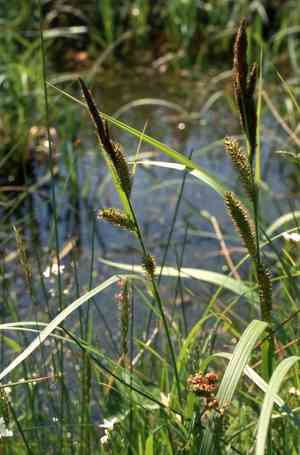
Greater pond-sedge (Carex riparia)
Also known as: Streambank sedge
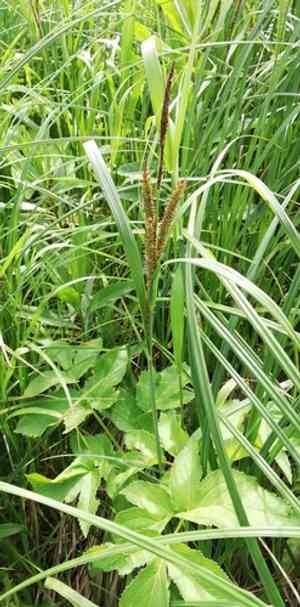
Greater pond-sedge (Carex riparia) features long, arching leaves that can reach up to 1.6 meters in length and are 6-20 mm wide. These leaves are glaucous and taper to a sharp point. The stems are robust, standing 61 to 130 cm tall, and have a distinctly rough, triangular cross-section. This species bears 1-5 female spikes and 3-6 male spikes, with the female spikes being nearly cylindrical and often overlapping. Female spikes measure 3-10 cm, sometimes with male flowers at the tip, while male spikes are 2-6 cm long. The fruits are utricles, 5-8 mm in length, with an inflated ovoid shape.
In This Article
Attributes of Greater pond-sedge
Lifespan
Perennial, Annual
Plant Type
Grass
Plant Height
1.2 m
Spread
1.5 m
Leaf Color
Green Silver Gray
Flower Size
2 cm to 6 cm
Flower Color
Brown
Images of Greater pond-sedge
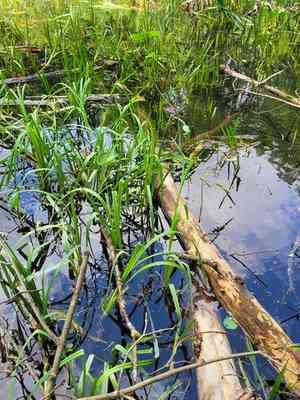
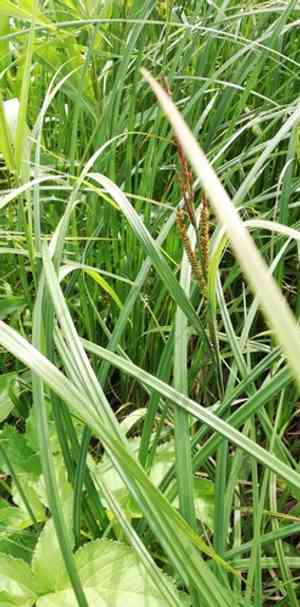
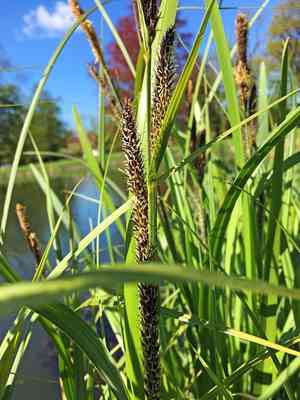
Quickly Identify Greater pond-sedge
1
Carex riparia can be identified by its robust, triangular stems, which are rough to the touch, and its elongated, green leaves that have a rough texture. The plant produces cylindrical spikes of flowers in early summer.
Scientific Classification of Greater pond-sedge
Phylum
Vascular plants
Class
Monocotyledons
Order
Poales
Family
Sedge
Genus
True sedges
Species
Greater pond-sedge
Planting and Growing of Greater pond-sedge
Care Difficulty
Easy
Watering Schedule
Every 4 days
Sunlight Requirements
Partial sun
Sunshine Duration
4-8 hours
Ideal Temperature
60-75℉
Soil Type
Potting Mix, Peat Mix
Soil pH
6.5-7.5
Fertilizer Type
Balanced
Pruning Season
Spring, Summer
Pruning Area
Branches, Leaves
Pruning Frequency
2 times a year
Repotting Season
Spring
Pot Type
Plastic, Terracotta
 How to Water Greater pond-sedge?
When watering Carex riparia, it's crucial to ensure that the soil is consistently moist but not waterlogged. This plant thrives in damp conditions, reminiscent of its natural marshy habitats. Therefore, an application of about 300ml of water each time should suffice, ensuring that the soil remains evenly moist.
What are the symptoms of an underwatered Greater pond-sedge?
›
What should I do if my Greater pond-sedge is not getting enough water?
›
What are the symptoms of an overwatered Greater pond-sedge?
›
How to save an overwatered Greater pond-sedge?
›
 What Are the Sunlight Requirements for Greater pond-sedge?
Carex riparia ideally grows in areas with partial sun, ensuring robust and healthy growth. Adequate light promotes lush foliage and supports the plant's natural growth cycle, keeping it visually appealing and ecologically stable.
More About Sunlight Requirements Techniques→
What is the best lighting condition?
›
How to ensure ideal lighting?
›
What are the benefits of ideal lighting?
›
 What Is the Ideal Temperature Range for Greater pond-sedge?
For optimal health and growth, Carex riparia thrives best in temperatures that range from 60 to 75°F. Within this range, the plant can effectively photosynthesize and manage its water uptake, leading to robust growth and the production of vibrant foliage.
 What Soil is Best for Greater pond-sedge?
Carex riparia thrives in soil that retains moisture well, which supports its vigorous growth and lush foliage. Consistent moisture availability helps the plant maintain its vibrant green color and boosts its overall health. A soil rich in organic matter provides essential nutrients for Carex riparia, supporting strong root development and foliage growth. This richness in nutrients helps the plant achieve its full aesthetic potential. Even though Carex riparia prefers moist conditions, well-drained soil prevents waterlogging, reducing the risk of root rot. This balance in drainage ensures the plant remains healthy and robust.
 How to Fertilize Greater pond-sedge?
For Carex riparia, apply a balanced liquid fertilizer diluted to half strength. Use approximately 10 ml of solution per liter of water, ensuring the soil is evenly moist but not waterlogged. For slow-release fertilizers, apply about 50 grams evenly around the base in spring.
 How to Prune Greater pond-sedge?
Start by using clean, sharp shears to trim back any dead or damaged leaves at the base of the plant. Make sure to cut at an angle to promote healthy regrowth. For shaping, trim the outer edges of the plant to maintain its natural arching form. To foster denser growth, prune Carex riparia after the main flowering period. Cut back about a third of the oldest stems at the base, which will encourage new shoots to emerge and invigorate the overall plant structure.
More About Pruning Techniques→
 How to Propagate Greater pond-sedge plant?
1
Prepare a well-draining soil mix suitable for both seeds and divided clumps. Enrich it with organic matter to enhance nutrient availability and improve soil structure.
2
Sow seeds evenly in seedling trays. Cover them lightly with soil, ensuring they are not buried too deep, which could hinder germination. Maintain consistent moisture to support seedling growth.
3
For division, carefully dig around the mature plant, lift, and gently divide the clump into smaller sections. Plant each section in prepared soil, ensuring roots are well-covered.
 How to Repot Greater pond-sedge plant?
1
Carex riparia shows a need for repotting when roots start emerging from the drainage holes or when the plant becomes root-bound, meaning its roots form a dense, matted network. The best practice is to repot during active growth periods to reduce transplant shock.
2
Select a pot that is one size larger than the current one. The material should provide good drainage, such as terracotta or plastic pots with ample drainage holes. A well-chosen pot will prevent waterlogging and root rot, ensuring healthy plant growth.
3
Opt for a mix of loamy soil with organic matter to ensure good drainage yet retain enough moisture. Proper soil choice improves aeration for the roots and provides essential nutrients, encouraging robust growth and avoiding stagnation.
Learn More About Greater pond-sedge Diseases
Anthracnose
Bacterial Leaf Spot
Bacterial Soft Rot
Bacterial Wilt
Chemical Injury
Damping-off
Downy Mildew
Drought Stress
Fusarium Wilt
Gray Mold
Leaf Spot
Mosaic
Nutrient Deficiency
Nutrient Toxicity
Powdery Mildew
Root Rot
Root-knot Nematode
Rusts
Sooty Mold
Spider Mites
Temperature Stress
Thrips Damage
White Mold



