How to Propagate Pale Giant Hyssop?
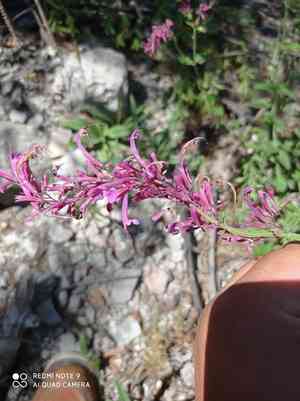
Agastache pallida, or Pale Giant Hyssop, flourishes when reproduced by seeding. To achieve successful sprouting, confirm that the seeds are scattered on the surface of a porous growing medium, as they need illumination for proper germination. It is essential to keep the soil damp without oversaturating it. Careful handling during relocation prevents harm to the fragile root systems, aiding in their successful integration into the garden.
When Is the Optimal Time to Propagate Pale Giant Hyssop?
Propagation Method
Seeding
Propagation Period
Spring
What Equipment Is Utilized for Pale Giant Hyssop Propagation?
Seed trays
Seed trays are crucial for planting pale Giant Hyssop seeds. They offer regulated environmental conditions, allowing seeds to sprout more effectively. The small compartments aid in uniform seed distribution and provide ample space for initial root growth. Furthermore, seed trays assist in managing moisture levels, which are vital for pale Giant Hyssop germination.
Potting mix
A premium potting mix is vital for the successful germination of pale Giant Hyssop seeds. The mix should drain well yet retain sufficient moisture to support seed sprouting. A blend specifically formulated for seed starting often includes vermiculite or perlite, enhancing aeration and moisture retention, which benefits the delicate pale Giant Hyssop seeds.
Spray bottle
A spray bottle is employed to gently water pale Giant Hyssop seeds without disturbing their position in the soil. A fine mist ensures even moisture distribution, essential for seed germination, without causing soil erosion or seed displacement. This tool guarantees that the seeds remain moist, a critical condition for successful germination.
Grow lights
Grow lights are advantageous, especially when sowing pale Giant Hyssop indoors or in low-light conditions. They provide a consistent light source, crucial for healthy seedling development. Grow lights help mimic natural sunlight, promoting stronger and healthier growth, which is vital during the early stages of pale Giant Hyssop seedling development.
Heating mats
Heating mats are used to maintain an ideal soil temperature, significantly boosting the germination rate and speed for pale Giant Hyssop seeds. As temperature plays a key role in germination, heating mats can be particularly useful in cooler climates or during seasons when ambient temperatures might be too low for effective seed germination.
Plant labels
Plant labels are important for identifying different species being propagated, especially in environments where multiple plants are cultivated. For pale Giant Hyssop, labels help track growth progress and germination success, and are essential for subsequent care and transplanting activities.
How to Propagate Pale Giant Hyssop?
Propagation Difficulty
Simple
How to Care for Your Newly Propagated Pale Giant Hyssop?
How to Care for Your Newly Propagated Pale Giant Hyssop?
Post-propagation, ensure pale Giant Hyssop receives full to partial sunlight and is situated in well-drained soil. Water young plants regularly but avoid overwatering; pale Giant Hyssop is somewhat drought-tolerant once established. During the active growth phase, apply a balanced fertilizer monthly to support robust development. To encourage bushier growth and more blooms, pinch back stem tips in early summer. Winter care is minimal, but in colder regions, a layer of mulch can help protect the roots.
Common Errors to Avoid When Propagating Pale Giant Hyssop
Excessive watering during root formation
Overwatering can lead to root rot in pale Giant Hyssop, hindering root development in cuttings or new plants. Too much moisture discourages the formation of strong root systems, making the plant vulnerable to diseases.
Planting in poorly-draining soil
Using soil that lacks proper drainage can cause water to accumulate around pale Giant Hyssop roots, leading to issues similar to overwatering, such as root rot and fungal infections. Adequate drainage is crucial for root health.
Cutting stem cuttings too short
If stem cuttings used for propagation are excessively short, they may not contain enough nodes (points where leaves attach), which are essential for root and shoot development in pale Giant Hyssop.
Neglecting humidity for cuttings
Failing to provide a humid environment for pale Giant Hyssop cuttings can result in dehydration and the inability of the cuttings to root. Humidity helps maintain moisture in the leaves until roots form.
Advice for Propagating Pale Giant Hyssop
Utilize sharp, clean cutting tools
Ensuring cutting tools are sharp and clean helps prevent disease transmission and promotes clean cuts that heal faster, aiding in healthier root development for pale Giant Hyssop.
Select healthy parent plants
Choose vigorous and disease-free parent plants for propagation. Healthy parent stock ensures genetic robustness and higher success rates in pale Giant Hyssop propagation.
Maintain moderate humidity
To ensure successful rooting, maintain a moderately humid environment around pale Giant Hyssop cuttings. This can be achieved by using a humidity dome or regularly misting the plants.
Well-draining potting mix
Use a well-draining potting mix to provide essential aeration to the roots. This prevents water retention around pale Giant Hyssop roots, mitigating the risk of root rot.



