Enhancing Your Garden Design with the Franchet's cotoneaster Plant: A Landscaping Guide
1
Franchet's cotoneaster is a adaptable shrub, perfect for adding form and aesthetic appeal to landscapes.
2
Selecting appropriate companion plants allows Franchet's cotoneaster to blend effortlessly into any garden layout.
3
Preserving Franchet's cotoneaster's look year-round guarantees your garden remains appealing in all seasons.
Introducing Franchet's Cotoneaster for Landscape Design
Discovering the distinct attributes of Franchet's cotoneaster that make it suitable for garden settings.
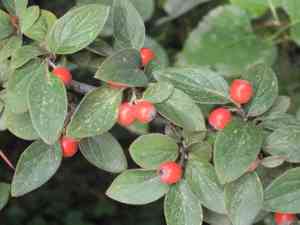
Franchet's cotoneaster distinguishes itself in garden environments through its resilience, adaptability, and visual appeal. This shrub thrives across diverse soil types and climates, making it a dependable option for gardeners. Its spreading branches create an expansive yet controlled growth pattern, offering a beautiful, layered appearance. The small, glossy leaves contribute a touch of sophistication, while the tiny, spherical berries introduce bursts of color across different seasons. This combination of characteristics positions Franchet's cotoneaster as an attractive and practical choice for enhancing any garden.
A brief overview of Franchet's cotoneaster's visual charm.
The visual charm of Franchet's cotoneaster stems from its enduring beauty and versatility. During spring and summer, it showcases abundant green foliage, forming a dense, appealing backdrop. As seasons progress, it transforms, displaying red or orange berries that infuse vibrant color into your garden. This continuous cycle of visual interest makes Franchet's cotoneaster an excellent selection for gardeners aiming to maintain aesthetic appeal throughout the entire year.
Incorporating Franchet's Cotoneaster into Your Garden Layout
Optimal placement strategies for Franchet's cotoneaster in your garden to maximize visual impact.
When positioning Franchet's cotoneaster in your garden, consider using it as a central feature in borders or forming natural hedges. Its dense growth habit makes it ideal for defining boundaries while adding layers and depth to the landscape. For peak visual effect, plant Franchet's cotoneaster where it can receive ample sunlight, which will encourage the production of its vibrant berries and lush foliage. Additionally, providing adequate space around it will emphasize its sprawling nature and prevent overcrowding.
Complementary plants that enhance Franchet's cotoneaster in landscape schemes.
To complement Franchet's cotoneaster in your garden, select companion plants that offer contrasting textures and colors. Consider pairing Franchet's cotoneaster with ornamental grasses like Miscanthus, which provide a soft, flowing contrast to Franchet's cotoneaster's more structured form. Furthermore, flowering perennials such as coneflowers or lavender introduce vivid hues and varied shapes, increasing the visual complexity. The combination of these plants will result in a dynamic and aesthetically pleasing garden design.
Franchet's Cotoneaster's Contribution to Seasonal Landscape Changes
Discussing how Franchet's cotoneaster evolves through the seasons and its offerings in each period.
Franchet's cotoneaster presents distinct appeals throughout the year. In spring, its new leaves bring a fresh, green vitality to the garden. During summer, the shrub fully develops its foliage, providing dense greenery and a haven for small wildlife. In autumn, the berries ripen, offering striking red and orange tones that stand out against the fading leaves. In winter, the berries persist, adding color to the often monochromatic winter scenery. This seasonal adaptability makes Franchet's cotoneaster a continuous source of beauty and fascination.
Effective methods to preserve the year-round attractiveness of Franchet's cotoneaster.
To maintain Franchet's cotoneaster's beauty throughout the year, consistent pruning and care are crucial. Trim branches after berries have dropped or faded to promote healthy growth and maintain a neat shape. Apply mulch around the base to retain moisture and inhibit weed growth. During dry periods, ensure it receives sufficient water, and regularly check for pests or diseases. By adhering to these care practices, you can ensure Franchet's cotoneaster remains an appealing element in your garden all year long.
Innovative Applications of Franchet's Cotoneaster in Extensive Landscape Projects
Creative approaches to incorporating Franchet's cotoneaster in large-scale public and private developments.
Franchet's cotoneaster can be utilized creatively in larger landscape projects by integrating it into public parks or expansive garden designs. Planting Franchet's cotoneaster along pathways or boundaries can establish natural borders that guide visitors and enhance aesthetic pleasure. In private estates, Franchet's cotoneaster can serve as a privacy screen or be shaped into formal hedges to delineate different garden areas. Its versatility makes it suitable for various design intentions, from structured elegance to naturalistic charm.
Examples or case studies of successful large-scale landscaping projects featuring Franchet's cotoneaster.
Several extensive projects have successfully incorporated Franchet's cotoneaster to enrich their landscapes. For instance, a city park might use Franchet's cotoneaster along walkways, providing a lush green space that attracts birds and pollinators. In a corporate environment, Franchet's cotoneaster could be employed to create tranquil garden areas for employees to enjoy during breaks. These instances demonstrate Franchet's cotoneaster's adaptability and value in enhancing both the visual appeal and practical function of large-scale landscapes.



