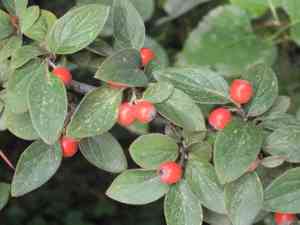
Franchet's cotoneaster(Cotoneaster franchetii)

Franchet's cotoneaster (Cotoneaster franchetii)

Also known as: Grey cotoneaster

Franchet's cotoneaster (*Cotoneaster franchetii*) is an evergreen shrub originally from southeastern China. It is frequently grown as an ornamental plant and has established itself in regions of the British Isles and the Pacific Northwest of the United States. The shrub features white or pink blossoms that attract bees, and its red-orange berries are a food source for birds.

Attributes of Franchet's cotoneaster

Lifespan
Perennial
Plant Type
Shrub
Plant Height
3 m
Spread
2.5 m to 4 m
Leaf Color
Green Silver
Flower Size
6 mm to 7 mm
Flower Color
White Pink

ForwardPlant - Identify plants with a snap

Identify and diagnose plants, get toxicity alerts, and explore safety guides for all types of fungi.

Try for Free

Images of Franchet's cotoneaster

Franchet's cotoneaster(Cotoneaster franchetii)

Quickly Identify Franchet's cotoneaster

1
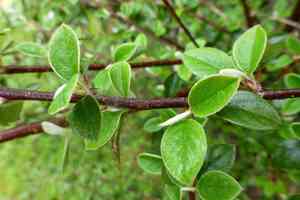
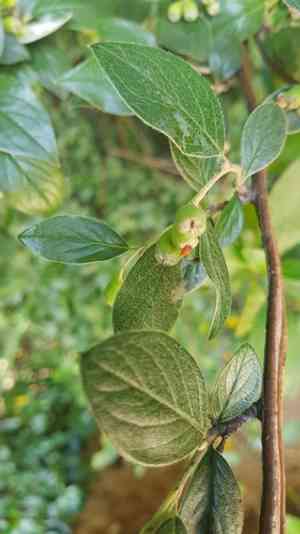
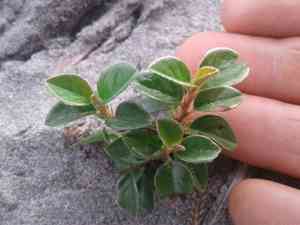
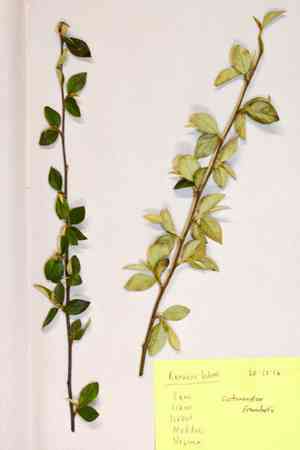
This plant can be identified by its small, oblong leaves which are dark green on the top and pale on the underside. The leaves typically have a slight gloss. During the flowering season, look for its small, white to pale pink flowers arranged in clusters. In the fruiting season, these flowers are followed by small, bright red or orange berries.

Scientific Classification of Franchet's cotoneaster

Phylum
Vascular plants
Class
Dicotyledons
Order
Rosales
Family
Rose
Genus
Cotoneaster
Species
Franchet's cotoneaster

Planting and Growing of Franchet's cotoneaster

Care Difficulty
Easy
Watering Schedule
Every 3 days
Sunlight Requirements
Full sun
Sunshine Duration
6-10 hours
Ideal Temperature
50-75℉
Soil Type
Potting Mix, Peat Mix
Soil pH
6.5-7.5
Fertilizer Type
Balanced
Pruning Season
Spring, Summer
Pruning Area
Branches, Leaves
Pruning Frequency
2 times a year
Repotting Season
Spring
Pot Type
Plastic, Ceramic

water icon How to Water Franchet's cotoneaster?

For Cotoneaster franchetii, it's crucial to ensure the soil is moist but not waterlogged. Each watering session should provide approximately 500 ml of water, allowing the soil to absorb it evenly without forming puddles. Water until the topsoil feels damp to the touch, avoiding excessive soaking that could harm the roots.
What are the symptoms of an underwatered Franchet's cotoneaster?
What should I do if my Franchet's cotoneaster is not getting enough water?
What are the symptoms of an overwatered Franchet's cotoneaster?
How to save an overwatered Franchet's cotoneaster?
More About Watering Techniques

sunlight icon What Are the Sunlight Requirements for Franchet's cotoneaster?

Sunlight Requirements: Full sun, Partial sun
Duration of light: 4 to 6 hours
Cotoneaster franchetii benefits from full sun to partial sun, which aids in strong growth, bright foliage, and enhanced flowering, contributing to its visual interest and health.
Question: How much sunlight is ideal for Cotoneaster franchetii?
Question: What should you do if the plant gets too much sun?
Question: How should Cotoneaster franchetii be treated in low light conditions?
More About Sunlight Requirements Techniques

temperature icon What Is the Ideal Temperature Range for Franchet's cotoneaster?

Ideal Temperature: 50 ~ 75℉
The ideal temperature range for growing Cotoneaster franchetii is between 50°F and 75°F. This range ensures optimal growth conditions by balancing photosynthesis and respiration, promoting a robust and healthy plant structure.

soil icon What Soil is Best for Franchet's cotoneaster?

Soil type: Loam, Sandy loam, Calcareous soil
Soil PH: 6.5 ~ 7.5
Cotoneaster franchetii thrives in well-drained soil that prevents waterlogging and root rot, ensuring healthy growth and vibrant foliage. Ensure the planting site has good drainage properties to maintain optimum moisture levels. Rich in nutrients, loamy soil provides Cotoneaster franchetii with essential minerals needed for robust growth, aiding in the plant's ability to produce luscious foliage and abundant berries. This plant appreciates a moderate level of fertility, which allows it to flourish without over-saturation of nutrients. Proper fertility ensures balanced growth and prevents the excessive development of non-essential tissues. More About Soil

fertilize icon How to Fertilize Franchet's cotoneaster?

Fertilizer type: Balanced
Cotoneaster franchetii thrives with balanced fertilization, but it's crucial not to overdo it. Generally, use a diluted liquid fertilizer with an N-P-K ratio around 10-10-10 during the growing season. Apply 50 to 100 ml of diluted fertilizer per plant, ensuring even distribution in the soil for optimal nutrient absorption. More About Fertilizing Techniques

prune icon How to Prune Franchet's cotoneaster?

Pruning Time: Spring, Autumn
Look for any dead, diseased, or damaged branches and remove them first. Cut back to healthy wood to promote healing and new growth. To maintain a tidy shape, selectively trim back branches, focusing on those crossing or growing inward. This will help in maintaining air circulation and light penetration. After flowers fade in spring, perform some light pruning to encourage the next set of flowers and fruit for autumn interest.

propagate icon How to Propagate Franchet's cotoneaster plant?

Propagate Time: Spring,Early summer
1
Harvest seeds from the mature Cotoneaster franchetii fruits, typically in autumn, and clean them thoroughly to remove any pulp. This prevents mold growth and ensures higher germination rates.
2
Select non-flowering stems in spring or early summer for cuttings. Cut about 10-15 cm of healthy shoots and remove the lower leaves to expose nodes for root development.
3
Mix the seeds with sand for even distribution and sow them in seed trays filled with a well-draining substrate. Water gently to settle the seeds into the soil.
More About Propagating Techniques

repot icon How to Repot Franchet's cotoneaster plant?

Repotting frequency: Every 2-3 years
1
Cotoneaster franchetii shows signs of needing repotting when its roots outgrow the current container, peeking out through drainage holes, or when soil drainage deteriorates substantially. Another sign is stunted growth despite adequate care. Spring or early summer is ideal for repotting, allowing the plant to stabilize in its new environment during the growing season.
2
Choose a pot slightly larger than the current one, with ample drainage holes to prevent waterlogging. The material of the pot should suit your area's climate—clay pots for better breathability in humid areas, plastic for moisture retention in drier environments. An appropriate pot ensures better aeration and prevents root rot, fostering healthier growth.
3
Select a well-draining potting mix containing materials like sand, perlite, or peat moss. This type of soil prevents compactness, allowing water to move freely through it, thus reducing the risk of root rot. It also facilitates nutrient uptake, promoting healthy root and shoot development.

ForwardPlant - Identify plants with a snap

Find the best spots for them to optimize their health, simply using your phone.

Try for Free

Toxicity of Franchet's cotoneaster

Is Franchet's cotoneaster toxic to humans?

Franchet's cotoneaster presents a mild risk of toxicity to humans when ingested. The complete plant encompasses cyanogenic glycosides, which can be detrimental if consumed. Upon ingestion, these compounds may release cyanide within the body, resulting in symptoms like nausea, vomiting, and abdominal discomfort. In more severe instances, ingestion could lead to respiratory issues and an elevated heart rate. Given that all parts of franchet's cotoneaster are toxic, precautions should be taken to avoid accidental ingestion, particularly by children and pets who could be attracted to its berries.

Is Franchet's cotoneaster toxic to cat?

Franchet's cotoneaster possesses a mild level of toxicity for cats, which may become alarming if consumption occurs. Cats could inadvertently ingest portions of franchet's cotoneaster, resulting in possible health complications. Because the entire plant contains harmful substances, particularly cyanogenic glycosides, all parts pose a poisoning risk for felines. Following ingestion, a cat may exhibit signs of physical discomfort or illness, indicating the necessity for prompt veterinary care. It is essential for cat owners to identify these symptoms and seek treatment at a veterinary facility immediately to secure optimal care for their pet.

Is Franchet's cotoneaster toxic to dog?

Franchet's cotoneaster presents a minor toxicity hazard for dogs. Canines might unintentionally ingest various parts of this plant, which could result in possible poisoning. Every part of the plant is toxic, and consumption may lead to symptoms such as stomach upset, breathing difficulties, or fatigue. The toxic effects stem from the presence of cyanogenic glycosides within franchet's cotoneaster. If a dog exhibits signs of poisoning after consuming franchet's cotoneaster, it is crucial to obtain immediate veterinary assistance to ensure appropriate treatment and recovery.

Identify toxic plants for your safety

Learn which plants are harmful to you and your pets, and make informed choices for a safer home!

Try for Free
WARNING
The judgment on toxicity and danger is for reference only. We DO NOT GUARANTEE any accuracy of such judgment. Therefore, you SHALL NOT rely on such judgment. It is IMPORTANT TO SEEK PROFESSIONAL ADVICE in advance when necessary.
More About Toxic Techniques