The Palmer's penstemon Plant Advantage: Maximizing Home and Office Appeal and Wellness
1
Palmer's penstemon exhibits strong resistance to dry conditions, perfect for parched environments.
2
Its blossoms draw in beneficial insects such as bees and hummingbirds.
3
This plant aids in securing the ground and preventing soil loss.
What Makes Palmer's Penstemon Unique?
Distinctive Characteristics and Adaptations
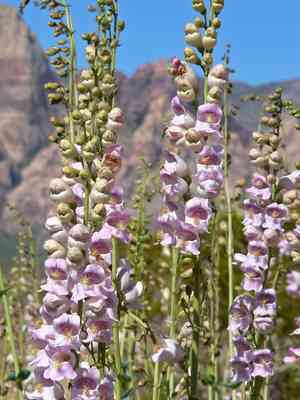
Palmer's penstemon is celebrated for its striking tubular blossoms, appearing in hues from soft pink to lavender. These blooms are not merely beautiful but also engineered to draw in pollinators, significantly boosting local biodiversity. Furthermore, its lance-shaped foliage and sturdy stems enable it to endure windy and sandy environments, making it an exemplary plant for xeriscaping.
Growth Conditions and Requirements
Palmer's penstemon flourishes in well-drained soil and full sunlight. It exhibits remarkable tolerance for subpar soil conditions, including those with low fertility and high salinity. These traits render it an excellent choice for regions prone to drought or soil erosion. By cultivating Palmer's penstemon, gardeners can lessen their dependence on water and chemical fertilizers, fostering more sustainable gardening practices.
Ecological Advantages of Palmer's Penstemon
Supporting Pollinator Populations
A primary ecological benefit of Palmer's penstemon is its role in sustaining pollinator populations. Bees, hummingbirds, and butterflies are particularly drawn to its vibrant flowers, which offer a crucial food source. By aiding these pollinators, Palmer's penstemon helps maintain healthy and balanced ecosystems, as these creatures are essential for pollinating a wide array of plants.
Soil Stabilization and Erosion Control
Palmer's penstemon possesses a deep root system that aids in binding the soil, thereby reducing the risk of erosion. This is especially advantageous in areas with loose, sandy soils or on inclines where erosion is a significant concern. Planting Palmer's penstemon can thus serve as a natural and appealing solution to soil erosion issues, safeguarding landscapes and minimizing sediment runoff into waterways.
Integrating Palmer's Penstemon into Your Garden
Designing with Palmer's Penstemon
Incorporating Palmer's penstemon into your garden design can offer both aesthetic and practical advantages. Its tall flower stalks make it an excellent option for the rear of flower beds or as a focal point in rock gardens. Pairing Palmer's penstemon with other drought-tolerant plants like yarrow, lavender, and sage can create a visually pleasing and low-maintenance garden space.
Care and Upkeep Advice
Caring for Palmer's penstemon is relatively simple due to its resilient nature. Watering should be infrequent but thorough to encourage deep root development. Prune spent flower stalks to promote continued blooming and to maintain a neat appearance. Additionally, mulching around the plant's base can help retain moisture and suppress weeds, though it's often not essential given Palmer's penstemon's minimal water needs.
Common Issues and Solutions
Pests and Diseases
Palmer's penstemon is generally resistant to most pests and diseases, but occasional problems may arise. Aphids and spider mites are potential pests that can be managed using natural predators or insecticidal soap. Fungal diseases like powdery mildew can occur in overly humid conditions; ensuring good air circulation and avoiding overhead watering can alleviate these issues.
Addressing Poor Soil Conditions
While Palmer's penstemon adapts well to poor soils, excessively compacted or waterlogged soils can present difficulties. Improving soil drainage with organic matter such as compost can enhance soil structure and permeability. If soil compaction is a problem, consider planting Palmer's penstemon in raised beds or on slopes where drainage is naturally superior.



