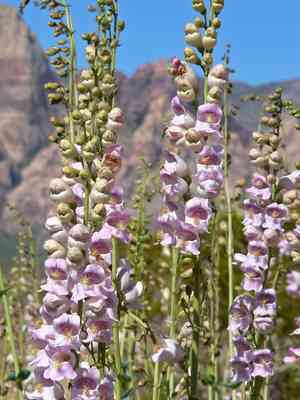
Palmer's penstemon (Penstemon palmeri)
Also known as: Scented Pentsemon, Balloon Flower, Scented penstemon
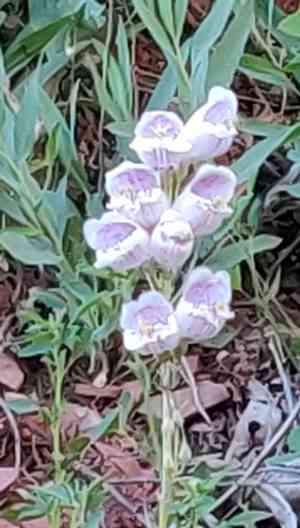
Palmer's penstemon is recognized for its tubular, pale pink to white flowers, which are among the few penstemons that are fragrant. Native to the desert mountains of the southwestern United States, this perennial can grow upright to a height of around 2 meters. It reseeds readily, making it useful for establishing in challenging environments.
In This Article
Attributes of Palmer's penstemon
Lifespan
Perennial
Plant Type
Herb, Shrub
Plant Height
61 cm to 1.5 m
Spread
15 cm to 30 cm
Leaf Color
Green Blue Gray Bronze
Flower Size
2.5 cm
Flower Color
Pink Purple White
Images of Palmer's penstemon
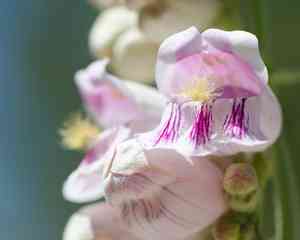
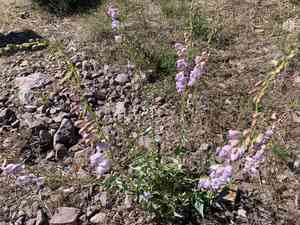
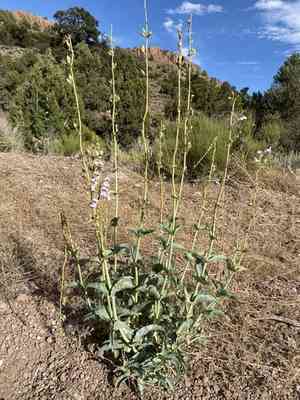
Quickly Identify Palmer's penstemon
1
Penstemon palmeri can be identified by its tall flower spikes adorned with large, tubular flowers that are usually pink to lavender in color. The flowers are typically fragrant, and the leaves are lance-shaped, gray-green, and slightly toothed. The stems are often reddish-purple.
Scientific Classification of Palmer's penstemon
Phylum
Vascular plants
Class
Dicotyledons
Order
Lamiales
Family
Plantain
Genus
Penstemon
Species
Palmer's penstemon
Planting and Growing of Palmer's penstemon
Care Difficulty
Easy
Watering Schedule
Every 4 days
Sunlight Requirements
Full sun
Sunshine Duration
4-8 hours
Ideal Temperature
60-75℉
Soil Type
Potting Mix, Peat Mix
Soil pH
6.5-7.5
Fertilizer Type
Balanced
Pruning Season
Spring, Summer
Pruning Area
Branches, Leaves
Pruning Frequency
2 times a year
Repotting Season
Spring
Pot Type
Plastic, Ceramic
 How to Water Palmer's penstemon?
Penstemon palmeri, or Palmer's penstemon, thrives best when the soil is moderately moist. Aim to water about 500 ml each time, ensuring the soil is damp but not waterlogged. The key is to maintain even moisture without oversaturating the roots, which prefer a balance between dryness and moisture. Water deeply to reach the roots, promoting healthy growth and resilience in dry conditions.
What are the symptoms of an underwatered Palmer's penstemon?
›
What should I do if my Palmer's penstemon is not getting enough water?
›
What are the symptoms of an overwatered Palmer's penstemon?
›
How to save an overwatered Palmer's penstemon?
›
 What Are the Sunlight Requirements for Palmer's penstemon?
Achieving full sun to partial sun ensures optimal growth. Full sun enhances blooming and overall strength, while partial sun protects against heat stress.
More About Sunlight Requirements Techniques→
How much sunlight is ideal?
›
How to ensure the plant receives ideal illumination?
›
What are the benefits of ideal lighting?
›
 What Is the Ideal Temperature Range for Palmer's penstemon?
Penstemon palmeri thrives best between 60°F and 75°F. This temperature range ensures optimal growth and flowering. It mimics the natural environmental conditions of its native habitat, enabling the plant to photosynthesize efficiently and maintain healthy metabolic processes.
 What Soil is Best for Palmer's penstemon?
Penstemon palmeri thrives in well-drained soil conditions to prevent root rot and ensure proper nutrient uptake, which is crucial for its vigorous growth and increased flowering efficiency. While not overly demanding, Penstemon palmeri benefits from a soil with moderate nutrient content. This ensures balanced growth without excessive use of fertilizers, which supports sustainable cultivation. Preferring soils that are not overly rich in organic matter, Penstemon palmeri does well in lean conditions, reducing the risk of fungal infections and promoting a more natural growth habitat.
 How to Fertilize Palmer's penstemon?
Penstemon palmeri, also known as Palmer's penstemon, benefits from a balanced fertilization approach. Use a liquid fertilizer diluted to half strength, applying approximately 1 liter per plant to ensure proper nutrient distribution without overwhelming the roots.
 How to Prune Palmer's penstemon?
Begin pruning in spring when new growth appears, and continue through summer. Trim back spent blooms to encourage continual flowering and remove any dead or damaged stems to maintain plant health throughout its growing season. Start by removing any dead flower spikes down to the base of the plant. This stimulates new flowering branches. Trim any leggy or weak stems to maintain a strong, upright shape. Regularly check for pests or diseases during pruning and address any issues promptly.
More About Pruning Techniques→
 How to Propagate Palmer's penstemon plant?
1
Sow Penstemon palmeri seeds in a seed tray with well-draining soil. Cover the seeds lightly with soil and water gently. Place the tray in a location with indirect sunlight. Maintain soil moisture but avoid waterlogging.
2
Take 4-6 inch stem cuttings from a healthy Penstemon palmeri plant using clean pruning shears. Remove the lower leaves and dip the cut end in rooting hormone to encourage root development.
3
Insert the treated cuttings into a pot with a sterile growing medium. Provide humidity by covering them with a plastic bag and place them in a warm area with indirect light. Check moisture levels regularly.
 How to Repot Palmer's penstemon plant?
1
You should consider repotting Penstemon palmeri when you notice the roots starting to circle the pot. Another sign is if the plant growth has dramatically slowed down, indicating it’s becoming root-bound. Also, if water is draining too quickly from the pot, it may be time for a fresh start with new soil.
2
Select a pot that offers several drainage holes at the bottom to prevent waterlogging. The pot should be one size larger than the current one to allow ample room for root expansion, promoting healthier growth. The material of the pot, whether terracotta or plastic, should align with your watering habits to assist in moisture management.
3
Opt for a well-draining, sandy mix that mimics the natural desert-like conditions Penstemon palmeri thrives in. Such soil prevents over-saturation of roots and reduces the risk of root rot, ensuring healthy aeration around the root structure.
Learn More About Palmer's penstemon Diseases
Anthracnose
Bacterial Leaf Spot
Bacterial Wilt
Crown Gall
Cyst Nematode
Damping-off
Downy Mildew
Drought Stress
Fusarium Wilt
Gray Mold
Leaf Curl
Leaf Spot
Mosaic
Nutrient Deficiency
Nutrient Toxicity
Powdery Mildew
Root Rot
Root-knot Nematode
Rusts
Sooty Mold
Spider Mites
Temperature Stress
Thrips Damage
White Mold



