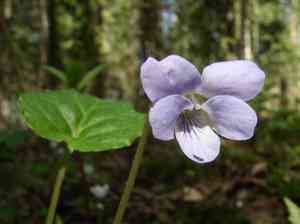
Selkirk's violet(Viola selkirkii)

Selkirk's violet (Viola selkirkii)

Also known as: Great-spurred violet, Northern bog violet

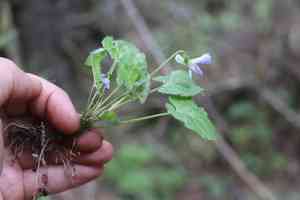
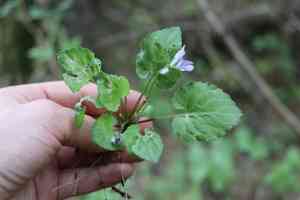
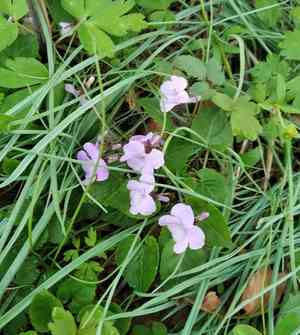
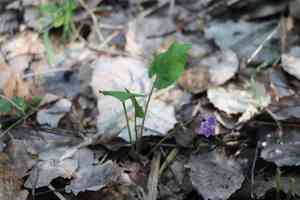
Selkirk's violet (Viola selkirkii) is a delicate perennial known for its heart-shaped leaves with a fine-toothed edge and smooth texture. Blooming from spring to early summer, it showcases light blue to violet flowers with a distinctive white center and darker veins.

**Key Features:**
1. **Leaves:** Heart-shaped with pointed tips and finely toothed edges.
2. **Flowers:** Light blue to violet, featuring a white throat with darker veins.
3. **Spur:** Prominent spur approximately 6 mm long, distinguishing it from similar species.

**Growing Conditions:**
- **Habitat:** Prefers cool, damp woodlands and stream banks.
- **Soil:** Requires rich, well-drained soil high in organic matter.
- **Light:** Grows best in partial to full shade.
- **Water:** Needs consistent moisture, especially during growth periods.

Selkirk's violet is suited for shaded garden areas and naturalized woodland settings, providing a charming touch with minimal care under the right conditions.

Attributes of Selkirk's violet

Lifespan
Perennial
Plant Type
Herb
Plant Height
5 cm to 15 cm
Spread
N/A
Leaf Color
Green
Flower Size
1.5 cm
Flower Color
Purple

ForwardPlant - Identify plants with a snap

Identify and diagnose plants, get toxicity alerts, and explore safety guides for all types of fungi.

Try for Free

Images of Selkirk's violet

Selkirk's violet(Viola selkirkii)

Quickly Identify Selkirk's violet

1
This species can be identified by its heart-shaped leaves with finely serrated edges, slender stems, and bluish-purple flowers with a prominent spur at the back.

Scientific Classification of Selkirk's violet

Phylum
Vascular plants
Class
Dicotyledons
Order
Malpighiales
Family
Violet
Genus
Violets
Species
Selkirk's violet

Planting and Growing of Selkirk's violet

Care Difficulty
Easy
Watering Schedule
Every 2 days
Sunlight Requirements
Partial sun
Sunshine Duration
8-12 hours
Ideal Temperature
55-65℉
Soil Type
Potting Mix, Peat Mix
Soil pH
6-7.5
Fertilizer Type
Balanced
Pruning Season
Spring, Summer
Pruning Area
Branches, Leaves
Pruning Frequency
2 times a year
Repotting Season
Spring
Pot Type
Plastic, Terracotta

water icon How to Water Selkirk's violet?

Viola selkirkii prefers a delicate balance when it comes to watering. Aim to soak the soil lightly to a depth of around 150 milliliters. Overwatering can be detrimental, so ensure the soil is moist but not soggy. The key is to allow the soil to dry out slightly between waterings to prevent root rot.
What are the symptoms of an underwatered Selkirk's violet? ›
What should I do if my Selkirk's violet is not getting enough water? ›
What are the symptoms of an overwatered Selkirk's violet? ›
How to save an overwatered Selkirk's violet? ›

sunlight icon What Are the Sunlight Requirements for Selkirk's violet?

Sunlight Requirements: Partial sun, Full shade
Duration of light: 2 to 4 hours
Viola selkirkii thrives best in environments that mimic partial sun to full shade conditions. Ensuring shaded sunlight exposure helps maintain its foliage vibrance and bloom potential without risking sun damage.
What is the ideal light exposure for Viola selkirkii? ›
How can I adjust light conditions for Viola selkirkii? ›
What benefits does ideal lighting provide to Viola selkirkii? ›
More About Sunlight Requirements Techniques→

temperature icon What Is the Ideal Temperature Range for Selkirk's violet?

Ideal Temperature: 55 ~ 65℉
The ideal temperature range for growing Viola selkirkii lies between 55°F to 65°F. This range supports optimal physiological processes and promotes healthy growth. Within this range, the plant can efficiently carry out photosynthesis and maintain cellular functions, avoiding heat stress or chilling injuries.

soil icon What Soil is Best for Selkirk's violet?

Soil type: Loam
Soil PH: 6 ~ 7.5
Viola selkirkii thrives in soil that retains moisture yet drains well. This balance reduces water stress, providing a consistent supply of water and nutrients, vital for vibrant blossoms. Rich, organic soil boosts soil fertility, benefiting Viola selkirkii with essential nutrients for growth and flower development. It improves soil structure and microbial life, promoting healthy plant growth. Well-aerated soil ensures enough oxygen reaches the roots, crucial for maximizing Viola selkirkii's metabolic functions. It prevents root rot and supports robust plant health.

fertilize icon How to Fertilize Selkirk's violet?

Fertilizer type: Balanced
For Viola selkirkii, the application of fertilizer should be modest; a diluted liquid fertilizer at half the recommended strength is usually sufficient. Using too much fertilizer can lead to nutrient burn, which damages the roots and can stress the plant.

prune icon How to Prune Selkirk's violet?

Pruning Time: Spring, Summer
Begin pruning by removing any dead, diseased, or damaged leaves and stems. This initial sweep helps improve the plant's overall health and can prevent issues such as mold and pest infestations from spreading throughout the plant. In areas where the plant is growing too densely, selectively remove some of the stems to allow light and air to penetrate the canopy. This thinning process not only improves ventilation and reduces disease risk but also encourages more robust growth as resources are more efficiently utilized. When making cuts, aim for a 45-degree angle above a leaf node. This technique encourages healthy regrowth, allowing water to run off smoothly and reducing the risk of water stagnation, which can lead to rot. To avert potential disease transmission, safely discard pruned plant material. Compost healthy trimmings if suitable, but always dispose of diseased or infested matter away from your garden. More About Pruning Techniques→

propagate icon How to Propagate Selkirk's violet plant?

Propagate Time: Spring, Early spring
1
Fill seed trays with well-aerated potting soil. Moisten the soil lightly to ensure it's evenly damp but not waterlogged, which provides a conducive environment for seed germination.
2
Scatter Viola selkirkii seeds evenly on the prepared soil surface, ensuring they have sufficient space to grow. Cover them lightly with a thin layer of soil, approximately twice the seed thickness.
3
Place the seed trays in a bright, indirectly lit location and maintain a consistent temperature around 65-75°F (18-24°C). Ensure the soil remains evenly moist to aid germination.
More About Propagating Techniques→

repot icon How to Repot Selkirk's violet plant?

Repotting frequency: Every 1-2 years
1
The ideal time to repot Viola selkirkii is when you notice roots growing out of the drainage holes or when the plant's growth seems stunted. If the soil is compacted or waterlogged, it’s also a sign to refresh the potting medium. These conditions often indicate that your plant has outgrown its current home and needs new soil and perhaps a larger pot to thrive.
2
Choose a pot that's one size larger than the current one and has adequate drainage holes. Terracotta pots are excellent because they allow air exchange through the walls and help keep the soil from getting too damp. The right pot helps control moisture levels and reduces the risk of root rot, ensuring healthier growth.
3
Select a soil mix that is light and rich in organic materials while ensuring good drainage. A combination of peat-based potting mix and a handful of perlite or sand works great. This type of soil retains necessary moisture yet drains well, preventing water from sitting around the roots, thus minimizing the risk of fungal infections.

ForwardPlant - Identify plants with a snap

Find the best spots for them to optimize their health, simply using your phone.

Try for Free