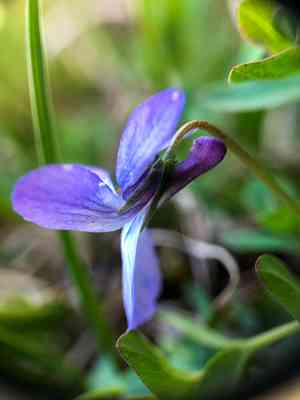
Early blue violet (Viola adunca)
Also known as: Kirk's violet
The early blue violet (Viola adunca) features purple veins on its petals, which serve as nectar guides for bees. Bees, capable of seeing in the ultraviolet spectrum, use these veins to locate the nectar more efficiently, aiding in the plant's pollination. Additionally, this plant disperses its seeds through pods that burst when ripe, scattering the seeds in various directions.
In This Article
Attributes of Early blue violet
Lifespan
Perennial, Annual, Biennial
Plant Type
Herb
Plant Height
1.8 cm to 35 cm
Spread
60 cm
Leaf Color
Green
Flower Size
1.3 cm
Flower Color
Purple White Blue Lavender
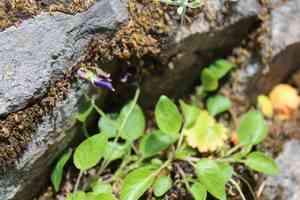
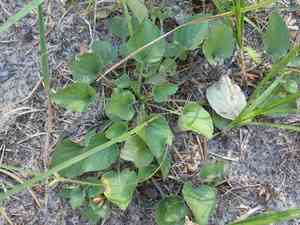
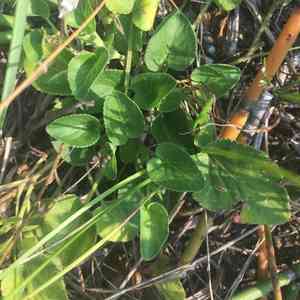
Images of Early blue violet
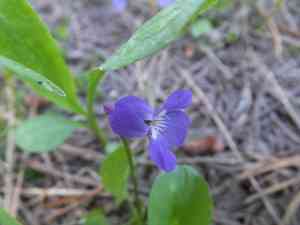
Quickly Identify Early blue violet
1
To identify Viola adunca, look for its distinctive heart-shaped leaves and small, fragrant, purple-blue flowers with a hooked spur on the back of the flower. The plant tends to grow in clusters in open forests, meadows, and along streams.
Scientific Classification of Early blue violet
Phylum
Vascular plants
Class
Dicotyledons
Order
Malpighiales
Family
Violet
Genus
Violets
Species
Early blue violet
Planting and Growing of Early blue violet
Care Difficulty
Easy
Watering Schedule
Every 4 days
Sunlight Requirements
Partial sun
Sunshine Duration
6-10 hours
Ideal Temperature
55-70℉
Soil Type
Potting Mix, Peat Mix
Soil pH
6.5-7.5
Fertilizer Type
Balanced
Pruning Season
Spring, Summer
Pruning Area
Branches, Leaves
Pruning Frequency
2 times a year
Repotting Season
Spring
Pot Type
Plastic, Ceramic
 How to Water Early blue violet?
For Viola adunca, water until the soil is moist but not soggy. The goal should be to ensure the root zone receives adequate water without oversaturating it. This typically means around 250 milliliters per session.
What are the symptoms of an underwatered Early blue violet?
›
What should I do if my Early blue violet is not getting enough water?
›
What are the symptoms of an overwatered Early blue violet?
›
How to save an overwatered Early blue violet?
›
 What Are the Sunlight Requirements for Early blue violet?
Partial sun is most suitable, as it provides a balance of light and shade, promoting healthy growth without the risk of overheating or insufficient light exposure.
More About Sunlight Requirements Techniques→
What is the best time for sunlight exposure?
›
How can I achieve ideal lighting conditions?
›
What benefits does ideal lighting offer?
›
 What Is the Ideal Temperature Range for Early blue violet?
The ideal temperature range for growing Viola adunca is between 55°F and 70°F. This range supports optimal growth and flowering by ensuring that the plant does not experience thermal stress. It allows for proper metabolic rates and healthy physiological processes, which contribute to vibrant blossoms and robust foliage.
 What Soil is Best for Early blue violet?
Viola adunca thrives best in well-draining soil, which prevents waterlogging around the roots, reducing the risk of rot. This environment supports healthy root development by providing essential nutrients without water saturation. Providing a nutrient-rich substrate is crucial for Viola adunca, aiding in robust growth and colorful blooms. Organic matter like compost enhances soil fertility, ensuring the plant receives vital minerals for sustained health. Moderate moisture retention is key for Viola adunca, allowing it to access water without suffering from drought or excessive wetness. This balance encourages steady growth and a resilient structure, perfect for adapting to seasonal changes.
 How to Fertilize Early blue violet?
For Viola adunca, using a balanced water-soluble fertilizer diluted to half strength is ideal. Approximately half a teaspoon per gallon of water is effective. This ensures the plant receives essential nutrients without risk of over-fertilization.
 How to Prune Early blue violet?
Identify dead or diseased stems and cut them back to the base or to the nearest healthy node. Thin out overcrowded areas to allow air circulation. Trim spent flowers and foliage to encourage the plant to direct energy towards new blooms and leaves.
More About Pruning Techniques→
 How to Propagate Early blue violet plant?
1
Collect seeds from mature Viola adunca plants and sow them shallowly in seed trays filled with a well-draining potting mix. Water the seeds lightly and place the trays in a bright, warm location. Seedlings should emerge in two to four weeks.
2
In early spring or late summer, carefully dig up mature Viola adunca clumps. Use a clean, sharp knife to divide the root ball into smaller sections, ensuring that each section has healthy roots and shoots. Replant immediately at the same depth they were growing previously.
3
Once seedlings have developed a few true leaves, they can be transplanted into larger pots or directly into the garden. Harden off seedlings by gradually introducing them to outdoor conditions before planting. Keep them well-watered and shaded initially until they establish.
 How to Repot Early blue violet plant?
1
Viola adunca shows signs it needs repotting when roots start emerging from drainage holes or growth becomes stagnant despite proper care. Spring or early summer is ideal as it coincides with active growth, minimizing repotting shock.
2
Choose a pot that is one size larger than the current one with drainage holes to prevent waterlogging. A slightly larger pot encourages root growth while ensuring the plant isn't overwhelmed by excess soil volume.
3
Opt for a well-draining loamy soil mix, enriched with organic matter. Such soil provides essential nutrients and maintains a balance between moisture retention and drainage, which is crucial for the plant's health.
Learn More About Early blue violet Diseases
Anthracnose
Bacterial Leaf Spot
Bacterial Wilt
Crown Gall
Cyst Nematode
Damping-off
Downy Mildew
Drought Stress
Fusarium Wilt
Gray Mold
Leaf Curl
Leaf Spot
Mosaic
Nutrient Deficiency
Nutrient Toxicity
Powdery Mildew
Root Rot
Root-knot Nematode
Rusts
Sooty Mold
Spider Mites
Temperature Stress
Thrips Damage
White Mold



