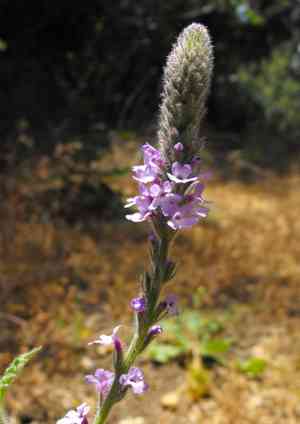
Western vervain (Verbena lasiostachys)
Also known as: Rough western vervain
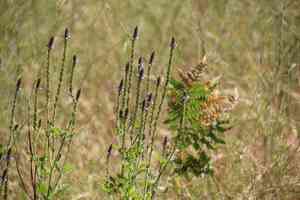
Western vervain (Verbena lasiostachys) is a perennial herb indigenous to the western coast of North America. It features hairy stems that can reach a height of up to 80 cm, topped with tubular flower clusters. This plant thrives in disturbed soils and is frequently regarded as a weed due to its rapid growth.
In This Article
Attributes of Western vervain
Lifespan
Perennial
Plant Type
Herb
Plant Height
50 cm to 1 m
Spread
50 cm to 1 m
Leaf Color
Green
Flower Size
6 mm
Flower Color
Purple
Images of Western vervain
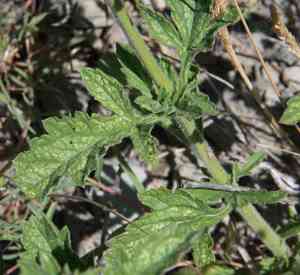
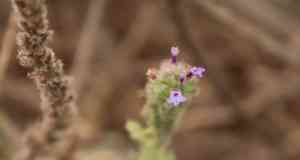
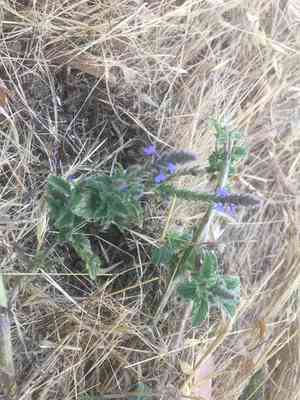
Quickly Identify Western vervain
1
To identify Verbena lasiostachys, look for its opposite leaves with a rough texture and its long, narrow spikes of small purple or blue flowers. The stems are often hairy and square in cross-section.
Scientific Classification of Western vervain
Phylum
Vascular plants
Class
Dicotyledons
Order
Lamiales
Family
Verbena
Genus
Vervains
Species
Western vervain
Planting and Growing of Western vervain
Care Difficulty
Easy
Watering Schedule
Every 4 days
Sunlight Requirements
Full sun
Sunshine Duration
6-10 hours
Ideal Temperature
65-75℉
Soil Type
Potting Mix, Peat Mix
Soil pH
6-7.5
Fertilizer Type
Balanced
Pruning Season
Spring, Summer
Pruning Area
Branches, Leaves
Pruning Frequency
2 times a year
Repotting Season
Spring
Pot Type
Plastic, Ceramic
 How to Water Western vervain?
For Verbena lasiostachys, it is essential to water thoroughly, ensuring that the soil is moist but not waterlogged. Generally, 500 ml of water per session is sufficient. The key is to water until you notice a slight runoff, signaling that the moisture has reached the root zone adequately.
What are the symptoms of an underwatered Western vervain?
›
What should I do if my Western vervain is not getting enough water?
›
What are the symptoms of an overwatered Western vervain?
›
How to save an overwatered Western vervain?
›
 What Are the Sunlight Requirements for Western vervain?
Full to partial sun is the ideal range. Verbena lasiostachys benefits from this light exposure by enhancing bloom production and sustaining lush, green foliage.
More About Sunlight Requirements Techniques→
What is the ideal light condition?
›
How do I ensure optimal lighting?
›
What benefits does ideal lighting provide?
›
 What Is the Ideal Temperature Range for Western vervain?
The ideal temperature range for Verbena lasiostachys is between 65°F and 75°F. This range provides the optimal conditions for the plant's photosynthesis and growth processes, enhancing its overall health and flowering potential.
 What Soil is Best for Western vervain?
Verbena lasiostachys thrives in well-drained soils which prevent root rot by allowing excess water to escape. This feature ensures the plant's roots receive adequate air, promoting healthy plant growth and vibrant blooms. This plant prefers soils of moderate fertility. Richly fertile soils can lead to excessive foliage growth with fewer flowers. By maintaining moderate fertility, you optimize the plant’s blooming potential, achieving beautiful clusters of tiny flowers. A pH level between 6.0 and 7.5 is ideal for Verbena lasiostachys, promoting nutrient availability and uptake, thus enhancing its growth. This range ensures essential nutrients like nitrogen, phosphorus, and potassium are accessible to the plant.
 How to Fertilize Western vervain?
Verbena lasiostachys generally requires a balanced approach to fertilization. For liquid fertilizers, apply at a rate of 10 milliliters per liter of water. For slow-release fertilizers, follow the manufacturer's instructions, typically around 20 grams per square meter.
 How to Prune Western vervain?
Begin by removing any dead or damaged stems, cutting at a 45-degree angle to allow water runoff, which reduces rot. Next, thin out crowded sections to improve air circulation and light penetration, promoting healthier growth. Finally, trim back leggy stems to just above a pair of leaves to foster bushier development. For an aesthetically pleasing appearance, regularly shape the plant by pruning giving it a rounded form. When shaping, ensure to balance the plant by cutting evenly around the desired shape, keeping symmetry while promoting a neat look. This practice encourages uniform growth and an attractive display.
More About Pruning Techniques→
 How to Propagate Western vervain plant?
1
For seed propagation, collect seeds from mature Verbena lasiostachys plants when seed heads are dry. Ensure seeds are fully ripened for optimal germination rates.
2
Select healthy stems and cut a section around 4-6 inches long. Remove the lower leaves and dip the cut end in rooting hormone to encourage root development.
3
During the dormant season, carefully dig up established clumps and gently separate them into smaller sections, ensuring each section has roots and shoots for successful replanting.
 How to Repot Western vervain plant?
1
Repot Verbena lasiostachys when you notice roots growing out of the drainage holes, or if the growth has significantly slowed down. This usually means the plant has outgrown its current pot and needs more space for roots to spread. Ideally, repotting is best done during active growth periods in spring or autumn.
2
Select a pot that is one size larger than the current one and ensures it has adequate drainage holes to prevent waterlogging. A slightly larger pot allows root expansion, boosts growth, and decreases the risk of fungal infections due to excess moisture.
3
Opt for a well-draining potting mix to prevent root rot. The blend should be rich in organic matter to provide nutrients and allow efficient water movement. A good mix balances moisture retention and drainage, fostering a healthy root environment.
Learn More About Western vervain Diseases
Anthracnose
Bacterial Leaf Spot
Bacterial Soft Rot
Bacterial Wilt
Black Spot
Chemical Injury
Crown Gall
Damping-off
Downy Mildew
Drought Stress
Fusarium Wilt
Gray Mold
Leaf Curl
Leaf Spot
Mosaic
Nutrient Deficiency
Nutrient Toxicity
Powdery Mildew
Root Rot
Root-knot Nematode
Rusts
Sooty Mold
Spider Mites
Temperature Stress
Thrips Damage
White Mold



