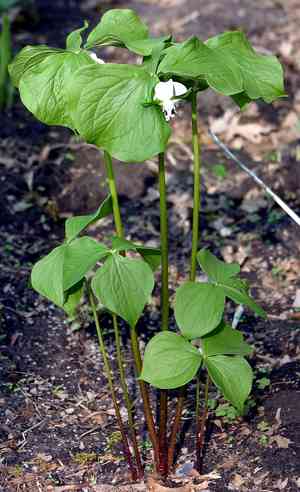
Nodding trillium (Trillium cernuum)
Also known as: Nodding wakerobin
*Nodding Trillium* (*Trillium cernuum*) is a perennial wildflower belonging to the lily family. This plant features pale lavender to pink flowers that appear in spring and eventually form dark red seed capsules. Its characteristic is the downward-facing flowers, hence the name "nodding trillium." Ideal growing conditions include light to dappled shade under a tree canopy. It thrives in moist, well-drained soil and typically goes dormant by mid-summer.
In This Article
Attributes of Nodding trillium
Lifespan
Perennial
Plant Type
Herb
Plant Height
20 cm to 51 cm
Spread
15 cm to 30 cm
Leaf Color
Green Red
Flower Size
2.5 cm to 5 cm
Flower Color
White Pink Red
Images of Nodding trillium
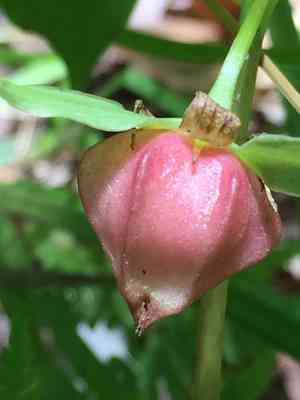
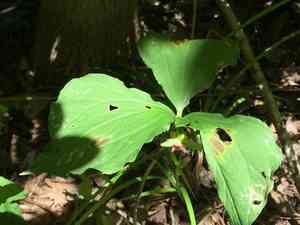
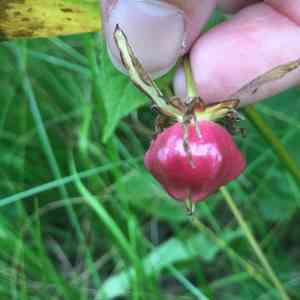
Quickly Identify Nodding trillium
1
Tri-petaled flowers with downward-bent stalks and pink-purple anthers.
2
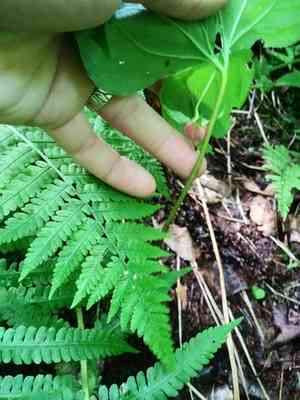
Elliptical leaves with smooth, wavy edges in whorls of three.
3
Rich reddish berries with six sections and textured surface.
4
Smooth, green to greenish-purple stem, unbranched and slender.
5
Distinct scent from whitish to pale pink blossoms in late spring.
Scientific Classification of Nodding trillium
Phylum
Vascular plants
Class
Monocotyledons
Order
Liliales
Family
Bunchflower
Genus
Birthroots
Species
Nodding trillium
Planting and Growing of Nodding trillium
Care Difficulty
Hard
Watering Schedule
Every 4 days
Sunlight Requirements
Partial sun
Sunshine Duration
4-8 hours
Ideal Temperature
50-68℉
Soil Type
Potting Mix, Peat Mix
Soil pH
5-7
Fertilizer Type
Balanced
Pruning Season
Spring, Summer
Pruning Area
Branches, Leaves
Pruning Frequency
2 times a year
Repotting Season
Spring
Pot Type
Plastic, Terracotta
 How to Water Nodding trillium?
For Trillium cernuum, ensure the soil is evenly moist but not waterlogged. Around 250 milliliters per session is sufficient. During dry spells, frequency may need to increase, but always allow the topsoil to dry slightly between waterings to avoid root rot.
What are the symptoms of an underwatered Nodding trillium?
›
What should I do if my Nodding trillium is not getting enough water?
›
What are the symptoms of an overwatered Nodding trillium?
›
How to save an overwatered Nodding trillium?
›
 What Are the Sunlight Requirements for Nodding trillium?
Trillium cernuum ideally grows in partial sun to full shade, providing it with dappled sunlight akin to its natural forest environment. This balance helps the plant maintain vigorous growth, rich foliage, and vibrant blooms without stress.
More About Sunlight Requirements Techniques→
How much sunlight does my Trillium cernuum need?
›
What is the best spot for my Trillium cernuum?
›
How can I adjust light conditions for Trillium cernuum?
›
 What Is the Ideal Temperature Range for Nodding trillium?
The ideal temperature range for Trillium cernuum is between 50°F to 68°F. This range ensures optimal growth and flowering, mimicking their natural habitat conditions. Maintaining these temperatures helps the plant sustain its metabolic processes efficiently.
 What Soil is Best for Nodding trillium?
Trillium cernuum thrives in soil that retains moisture without becoming waterlogged. This requirement ensures the plant receives consistent hydration, crucial for its growth and flowering. The plant favors soil rich in organic matter, which provides essential nutrients that support its delicate root system and lush foliage. While the plant requires moisture, well-draining soil prevents root rot. Ensuring good drainage is key to maintaining healthy roots and overall plant vibrant.
 How to Fertilize Nodding trillium?
When fertilizing Trillium cernuum, be mindful to use a balanced fertilizer formulated for flowering plants, applying at a rate of about 1/4 teaspoon per plant for liquid fertilizers. For slow-release options, follow the package guidelines but generally, a small handful per plant is sufficient.
 How to Prune Nodding trillium?
Begin by carefully inspecting your Trillium cernuum. Look for any dead or yellowing leaves and damaged or broken stems. These are the parts you will need to prune away to promote healthy growth. Using sharp, sterile scissors or pruners, cut back any dead stems and leaves at the base of the plant. Make clean cuts close to the main stem to prevent any unsightly stubs. After pruning, keep an eye on new growth. Ensure the plant is receiving adequate water and sunlight, but not overexposed. Proper post-pruning care is vital for young Trillium cernuum to flourish.
More About Pruning Techniques→
 How to Propagate Nodding trillium plant?
1
Start by filling your seed tray with seed-starting mix. Plant the seeds just below the surface, lightly covering them. Keep the tray in a cold frame or refrigerator for 8 to 12 weeks to simulate winter conditions necessary for germination.
2
Carefully dig around the plant to lift it from the soil. Use a sharp spade to divide the root clumps, ensuring each section has a portion of the roots and shoots. Replant each division promptly to avoid stress.
3
Once the seeds are sown, or divisions are planted, water them well. Apply a layer of mulch to retain moisture and protect young plants from weeds and temperature fluctuations.
 How to Repot Nodding trillium plant?
1
Repot Trillium cernuum when you notice diminished growth or overcrowding. Also, when the plant begins to break its dormancy in early spring, it indicates a need for refreshment to invigorate its root system.
2
Select a pot that is 1-2 inches larger in diameter than the current one. Ensure the pot has sufficient drainage holes. A slightly larger pot provides room for growth without risking root rot.
3
Opt for a loamy, well-draining soil mix. The soil should retain moisture while allowing excess water to escape easily. This balance is crucial to prevent waterlogged conditions that could harm the roots.
Toxicity
Ingestion
WARNING
The judgment on toxicity and danger is for reference only. We DO NOT GUARANTEE any accuracy of such judgment. Therefore, you SHALL NOT rely on such judgment. It is IMPORTANT TO SEEK PROFESSIONAL ADVICE in advance when necessary.
Learn More About Nodding trillium Diseases
Anthracnose
Bacterial Leaf Spot
Bacterial Soft Rot
Bacterial Wilt
Chemical Injury
Damping-off
Downy Mildew
Drought Stress
Fusarium Wilt
Gray Mold
Leaf Curl
Leaf Spot
Mosaic
Nutrient Deficiency
Nutrient Toxicity
Powdery Mildew
Root Rot
Root-knot Nematode
Rusts
Sooty Mold
Spider Mites
Temperature Stress
Thrips Damage
White Mold



