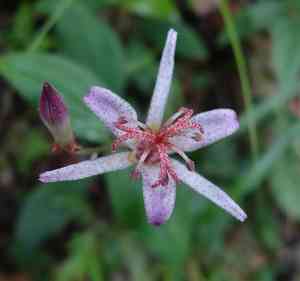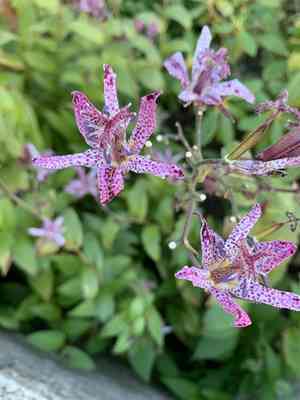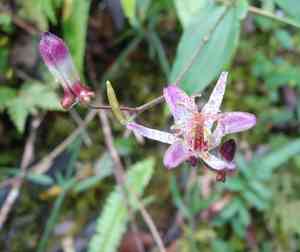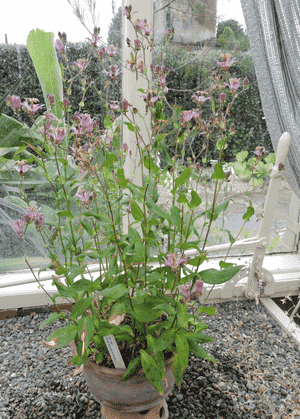
Toad lily(Tricyrtis formosana)

Toad lily (Tricyrtis formosana)

Also known as: Toad Lily, Taiwanese Toad Lily

Toad lily (Tricyrtis formosana) is a perennial plant indigenous to Taiwan. It thrives in partial shade and rich, moist soil, and can withstand the fluctuations in winter temperatures. The plant's stalks may sometimes branch out, though this is not always the case.

Attributes of Toad lily

Lifespan
Perennial, Annual
Plant Type
Herb
Plant Height
61 cm to 91 cm
Spread
30 cm
Leaf Color
Green Yellow
Flower Size
2.5 cm to 8 cm
Flower Color
White Purple Pink Red

ForwardPlant - Identify plants with a snap

Identify and diagnose plants, get toxicity alerts, and explore safety guides for all types of fungi.

Try for Free

Images of Toad lily

Toad lily(Tricyrtis formosana)

Quickly Identify Toad lily

1
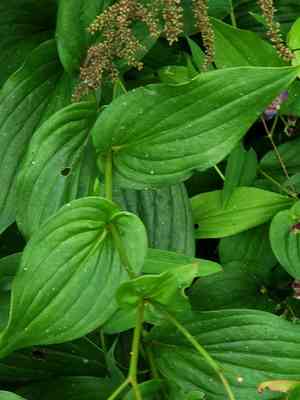
Glossy spear-shaped leaves, variegated or solid green, up to 6 inches (15 cm) long.
2
Small orchid-like flowers, 1 inch (2.5 cm) with white tepals, purple spots, and yellow center.
3
Distinctive cylinder-shaped capsule fruit with tiny, flat, papery seeds transitioning to brownish hue.
4
Shiny lanceolate to obovate leaves, variegated or non-variegated, with fine transparent hairs.
5
Slender stem, 24 to 40 inches (60 to 100 cm) with fine hairs, occasional purple tint.

Scientific Classification of Toad lily

Phylum
Vascular plants
Class
Monocotyledons
Order
Lilies, supplejacks and allies
Family
Lily
Genus
Toad lilies
Species
Toad lily

Planting and Growing of Toad lily

Care Difficulty
Moderate
Watering Schedule
Every 8 days
Sunlight Requirements
Partial sun
Sunshine Duration
4-6 hours
Ideal Temperature
60-75℉
Soil Type
Potting Mix, Peat Mix
Soil pH
6.5-7.5
Fertilizer Type
Balanced
Pruning Season
Spring, Summer
Pruning Area
Branches, Leaves
Pruning Frequency
2 times a year
Repotting Season
Spring
Pot Type
Plastic, Ceramic

water icon How to Water Toad lily?

Tricyrtis formosana, known as the toad lily, requires a moderate watering approach. Generally, water the plant with about 500 milliliters until the soil is evenly moist but not waterlogged. This ensures that the roots receive enough moisture without becoming saturated, which can prevent root rot.
What are the symptoms of an underwatered Toad lily?
What should I do if my Toad lily is not getting enough water?
What are the symptoms of an overwatered Toad lily?
How to save an overwatered Toad lily?

sunlight icon What Are the Sunlight Requirements for Toad lily?

Sunlight Requirements: Partial sun, Full shade
Duration of light: 2 to 4 hours daily
Tricyrtis formosana prefers partial sun to full shade with filtered sunlight. Ideal light promotes lush greenery, vibrant blooms, and sustainable growth, enhancing its resilience and longevity.
What is the best lighting condition?
How can you achieve ideal lighting?
Benefits of ideal lighting?
More About Sunlight Requirements Techniques

temperature icon What Is the Ideal Temperature Range for Toad lily?

Ideal Temperature: 60 ~ 75℉
Tricyrtis formosana thrives in temperatures ranging from 60°F to 75°F. This range allows the plant to maintain its metabolic processes optimally, leading to vigorous growth and healthy blooms. Maintaining these temperatures prevents stress and ensures robust development.

soil icon What Soil is Best for Toad lily?

Soil type: Loam, Sandy loam, Acidic soil
Soil PH: 6.5 ~ 7.5
Tricyrtis formosana thrives best in well-draining soil that retains moisture but does not become waterlogged. Adequate drainage ensures the plant's roots receive the oxygen needed for optimal health and growth, preventing root rot and other water-related issues. This plant benefits from a nutrient-rich soil, abundant in organic matter. Rich soil provides essential nutrients that support vigorous growth and robust flowering, enhancing the plant's overall vibrancy and resilience. Tricyrtis formosana requires soil that stays consistently moist, yet not overly wet. Maintaining the right moisture level supports healthy root development and ensures the plant remains hydrated, especially during warmer months or dry periods.

fertilize icon How to Fertilize Toad lily?

Fertilizer type: Balanced
For Tricyrtis formosana, the amount of fertilizer used should be moderate. When using liquid fertilizer, dilute the solution to half-strength to avoid burning the roots, and apply about 1 liter per square meter each time. For slow-release granular fertilizers, use around 100 grams per square meter, evenly spreading them over the soil surface and lightly mixing them into the top soil layer.

prune icon How to Prune Toad lily?

Pruning Time: Spring, Summer, Autumn
Begin by removing any dead or damaged stems. These should be cut back to the base of the plant. This encourages new, healthy growth and prevents diseases from taking hold. Once the flowers have faded, trim them to keep the plant looking tidy and to redirect the energy towards growing new blooms. Trim just above the node where a new shoot is likely to emerge. Carefully trim outer stems to maintain the desired shape and size of your Tricyrtis formosana. This not only improves appearance but also promotes healthy growth by allowing light to penetrate the foliage evenly. More About Pruning Techniques

propagate icon How to Propagate Toad lily plant?

Propagate Time: Spring, Early Spring
1
First, fill your seed tray with a well-draining potting mix. Sow the Tricyrtis formosana seeds on the surface and lightly cover them with soil. Keep the soil consistently moist until germination occurs.
2
During early spring, when the plant is still dormant, dig up an established Tricyrtis formosana. Use a sharp knife to divide the rhizome into sections, ensuring each has roots and shoots.
3
Replant the divided sections immediately into a prepared garden bed or pots with good quality soil. Water them thoroughly and maintain moisture until new growth is visible.
More About Propagating Techniques

repot icon How to Repot Toad lily plant?

Repotting frequency: every 2-3 years
1
Tricyrtis formosana shows a need for repotting when roots begin emerging from the drainage holes or growth noticeably slows, indicating root-bound conditions. Early signs also include soil drying too rapidly. Optimal timing for repotting is early spring, right before active growth starts, or in autumn, ensuring minimal stress during transplanting.
2
Select a pot slightly larger than the current one, ideally 1-2 inches broader in diameter. Adequate drainage holes are crucial to prevent root rot. A clay pot can be a good choice as it prevents overwatering by allowing excess moisture to evaporate more efficiently, promoting a healthier root environment.
3
Opt for a well-draining, rich soil mix to provide nutrients and prevent waterlogging. Combining garden soil with peat and perlite ensures aeration and nutrient retention. This balance is beneficial for Tricyrtis formosana as it thrives in conditions that allow the roots to breathe while retaining adequate moisture.

ForwardPlant - Identify plants with a snap

Find the best spots for them to optimize their health, simply using your phone.

Try for Free

Toxicity of Toad lily

Is Toad lily toxic to humans?

Toad lily presents a low-level risk of toxicity to humans, particularly through ingestion and contact with its sap. Every part of the toad lily is regarded as toxic if ingested, which may result in negative health effects. Moreover, the sap from toad lily can trigger allergic reactions upon skin exposure. Those who inadvertently consume portions of the toad lily may experience gastrointestinal distress, while individuals who come into contact with the sap could develop allergic skin reactions. It is vital for people to exercise caution and to prevent accidental ingestion of toad lily, as well as avoid direct skin contact with the sap, in order to avert these mild yet uncomfortable symptoms.

Is Toad lily toxic to cat?

The toad lily is considered to have a moderate toxicity level for cats, with potential poisoning occurring through the ingestion of any part of the plant or by mere contact with its sap. Such exposure can trigger various signs of physical discomfort, prompting cat owners to vigilantly observe their pets for any unusual behaviors or symptoms that may suggest distress. In instances of suspected poisoning, it is crucial for cat owners to seek prompt veterinary care to guarantee the health and well-being of their feline companions. The sap from the toad lily can also lead to allergic reactions, so it is essential to avoid direct contact to prevent these undesirable effects.

Is Toad lily toxic to dog?

Toad lily presents a moderate toxicity threat to dogs. Interaction with this plant can happen via ingestion or by coming into contact with its allergenic sap. Dogs that consume any part of the toad lily or encounter its sap may show signs of poisoning. The entire plant is deemed poisonous and has the potential to cause negative health consequences in dogs. Should a dog be poisoned by toad lily, it is essential for pet owners to obtain prompt veterinary assistance to secure the best possible recovery for their furry companion.

Identify toxic plants for your safety

Learn which plants are harmful to you and your pets, and make informed choices for a safer home!

Try for Free
WARNING
The judgment on toxicity and danger is for reference only. We DO NOT GUARANTEE any accuracy of such judgment. Therefore, you SHALL NOT rely on such judgment. It is IMPORTANT TO SEEK PROFESSIONAL ADVICE in advance when necessary.
More About Toxic Techniques