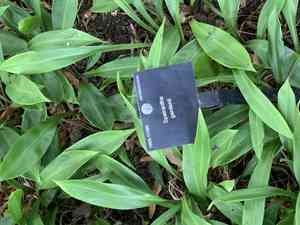
False lily of the valley (Speirantha gardenii)
Also known as: False lily of the valley
False lily of the valley, while resembling the true lily of the valley, is actually found in the forested regions of North America and parts of Asia, including China, at elevations up to around 914 meters. Its small, white flowers are reminiscent of children's toy jacks, forming delicate clusters on the stems.
In This Article
Attributes of False lily of the valley
Lifespan
Perennial
Plant Type
Herb
Plant Height
30 cm
Spread
50 cm
Leaf Color
Green
Flower Size
2.5 cm
Flower Color
White
Quickly Identify False lily of the valley
1
Speirantha gardenii can be identified by its broad, elliptical leaves which are glossy and dark green. The flowers are small, white, and appear in racemes. The plant typically forms dense clumps and spreads via rhizomes.
Scientific Classification of False lily of the valley
Phylum
Vascular plants
Class
Monocotyledons
Order
Asparagus and allies
Family
Asparagus
Genus
Speirantha
Species
False lily of the valley
Planting and Growing of False lily of the valley
Care Difficulty
Easy
Watering Schedule
Every 2 days
Sunlight Requirements
Partial sun
Sunshine Duration
4-6 hours
Ideal Temperature
60-75℉
Soil Type
Potting Mix, Peat Mix
Soil pH
6-7.5
Fertilizer Type
Balanced
Pruning Season
Spring, Summer
Pruning Area
Branches, Leaves
Pruning Frequency
2 times a year
Repotting Season
Spring
Pot Type
Ceramic, Plastic
 How to Water False lily of the valley?
For Speirantha gardenii, the watering amount should be approximately 200 milliliters each time. Ensure the soil is moist but not waterlogged. It's crucial to allow the top layer of the soil to dry slightly before watering again to maintain an optimal moisture balance.
What are the symptoms of an underwatered False lily of the valley?
›
What should I do if my False lily of the valley is not getting enough water?
›
What are the symptoms of an overwatered False lily of the valley?
›
How to save an overwatered False lily of the valley?
›
 What Are the Sunlight Requirements for False lily of the valley?
Speirantha gardenii flourishes in partial sun or full shade scenarios, ideally receiving 3 to 5 hours of soft sunlight daily. This balance promotes healthy foliar development, lush color, and sustained growth, optimizing its photosynthetic productivity.
More About Sunlight Requirements Techniques→
How much light does Speirantha gardenii need?
›
Where should I place Speirantha gardenii for optimal light?
›
What are the benefits of providing ideal lighting to Speirantha gardenii?
›
 What Is the Ideal Temperature Range for False lily of the valley?
Speirantha gardenii thrives best within a temperature range of 60 to 75°F. This range provides the necessary warmth for photosynthesis and metabolization processes, without causing heat stress. It is essential to maintain these temperatures consistently to ensure the plant's health and vigorous growth.
 What Soil is Best for False lily of the valley?
Speirantha gardenii thrives in well-drained soil that allows excess water to escape easily. This prevents root rot and keeps the roots healthy, ensuring the plant maintains its vibrant appearance. A nutrient-rich loam soil benefits the Speirantha gardenii by providing essential minerals that foster faster growth and robust blooming. Regularly adding organic compost can enhance soil fertility. While the soil should be well-drained, it also needs to retain some moisture. Sandy loam can hold a suitable amount of humidity, helping the plant access water for its daily needs.
 How to Fertilize False lily of the valley?
For Speirantha gardenii, it's essential to ensure the right balance of nutrients. Use a balanced liquid fertilizer diluted to half strength, applying approximately 100-150 ml per plant every month during the growing season. Avoid over-fertilizing as this can harm the plant.
 How to Prune False lily of the valley?
Begin by examining the plant and identifying any leaves or stems that appear brown, yellow, or mushy. Removing these parts ensures that the plant preserves energy for healthy growth. After the flowering season, cut back spent blossoms. This not only tidy up the plant's appearance but also encourages the emergence of new flowers in the next growing season. Gently trim to maintain the desired shape and size. Aim for a natural look that supports air circulation and light penetration to the inner leaves, enhancing the plant's vigor and beauty.
More About Pruning Techniques→
 How to Propagate False lily of the valley plant?
1
Begin by thoroughly watering the plant a day before you plan to divide it. This ensures that the root system is hydrated and makes the soil easier to work with.
2
Carefully remove the plant from its pot, and gently shake off excess soil. Using a sharp knife, divide the root ball into sections, ensuring each has a healthy amount of roots and shoots.
3
Replant each section into a suitable container with fresh potting soil. Water them well and place in a location with indirect sunlight to reduce transplant shock.
 How to Repot False lily of the valley plant?
1
Speirantha gardenii needs repotting when roots outgrow the current pot or the soil quality degrades. Look for roots peeking from drainage holes or water pooling on top of the soil. Spring or autumn are ideal, allowing the plant to settle into new soil with moderate temperatures and steady humidity.
2
Select a pot 1-2 inches wider in diameter than the current one. This extra space allows root growth without being overwhelming, which can lead to overwatering issues. Ensure the pot has drainage holes to prevent root rot, a common challenge with overly wet soil conditions.
3
Choose a light, well-draining potting mix rich in organic matter. A mixture of peat, perlite, and compost works well, providing nutrients and aeration. This soil type ensures roots receive enough nutrients and air circulation, which promotes healthy growth and prevents stagnation.
Learn More About False lily of the valley Diseases
Anthracnose
Bacterial Leaf Spot
Bacterial Soft Rot
Bacterial Wilt
Black Spot
Chemical Injury
Crown Gall
Cyst Nematode
Damping-off
Downy Mildew
Drought Stress
Fusarium Wilt
Gray Mold
Leaf Curl
Leaf Spot
Mosaic
Nutrient Deficiency
Nutrient Toxicity
Powdery Mildew
Root Rot
Root-knot Nematode
Rusts
Sooty Mold
Spider Mites
Temperature Stress
Thrips Damage
White Mold



