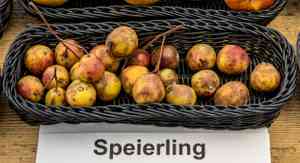
True service tree (Sorbus domestica)
Also known as: Corme, Ceque
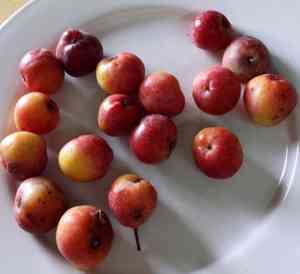
The true service tree, also known as Sorbus domestica, is a rare species native to Europe and northern Africa with a lifespan of up to 400 years. It can reach heights of approximately 20 meters. Its dense and fine-grained wood is prized for high-quality woodworking applications, including furniture and tool handles. The fruit from this tree is commonly used in the production of alcoholic beverages like cider and perry, as well as in jams and jellies. When slightly over-ripened, the fruit can also be eaten fresh.
Attributes of True service tree
Images of True service tree
Quickly Identify True service tree
Scientific Classification of True service tree
Planting and Growing of True service tree
 How to Water True service tree?
 What Are the Sunlight Requirements for True service tree?
 What Is the Ideal Temperature Range for True service tree?
 What Soil is Best for True service tree?
 How to Fertilize True service tree?
 How to Prune True service tree?
 How to Propagate True service tree plant?
 How to Repot True service tree plant?
Toxicity of True service tree
Is True service tree toxic to humans?
The true service tree exhibits a low level of toxicity to humans, mainly due to the consumption of its seeds. These seeds harbor hydrogen cyanide, a compound notorious for its potential to induce poisoning. Upon ingestion, the seeds may result in symptoms including breathing difficulties, dizziness, headaches, and, in severe instances, convulsions and loss of consciousness. It is vital for people to recognize the dangers linked to eating the seeds of the true service tree, even though other parts of the plant might be safe to consume. Accidental consumption of the seeds, especially by children or pets, should be strictly avoided to prevent the emergence of these harmful health effects.
Is True service tree toxic to cat?
The true service tree is mildly toxic to cats, particularly when its seeds are accidentally consumed. Such ingestion can lead to the production of hydrogen cyanide, posing a threat to feline health. Cats that come into contact with the toxic components may show symptoms of physical discomfort or illness. It is essential for cat owners to keep an eye on their pets and restrict access to this plant. If a cat ingests any part of the true service tree, seeking immediate veterinary care is crucial to address any potential health issues swiftly.
Is True service tree toxic to dog?
The true service tree is recognized to possess a mild toxicity level for dogs. Canines may face poisoning from this plant primarily through accidental ingestion of its various parts. The seeds of the true service tree contain toxic compounds that can lead to adverse effects when consumed. If a dog eats the seeds, it might display symptoms such as gastrointestinal disturbances or more serious reactions depending on the quantity ingested. It is essential for dog owners to be cognizant of these potential hazards and to safeguard their pets from accessing the seeds of the true service tree. Should a dog consume any part of this plant, particularly the seeds, it is imperative to seek prompt veterinary assistance to ensure appropriate treatment and management of potential symptoms.



