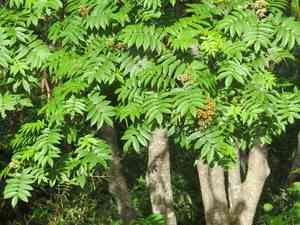
Japanese rowan (Sorbus commixta)
Also known as: Japanese Rowan, Dodong
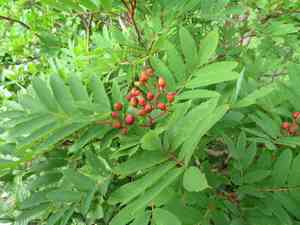
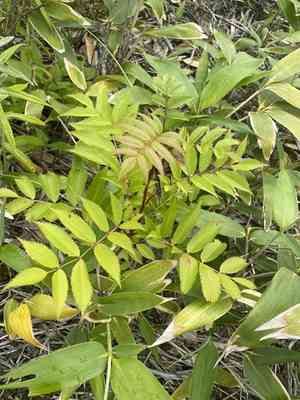
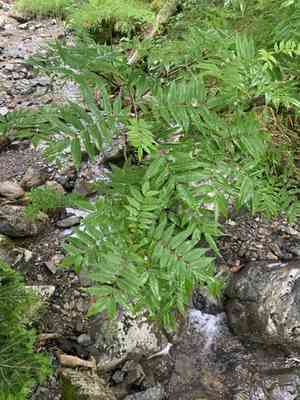
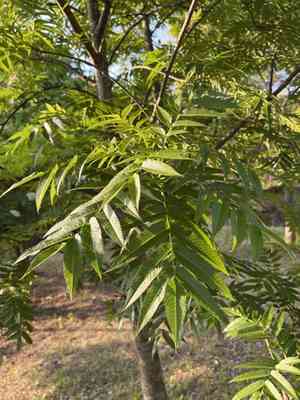
This small to medium-sized deciduous tree typically reaches heights of 7 to 10 meters. Its pinnate leaves measure 20 to 30 centimeters in length and consist of 11 to 17 leaflets, each featuring an acuminate tip and serrated edges. The tree produces flowers that are 6 to 10 millimeters wide, with five white petals and about 20 yellowish-white stamens. The fruit is a striking orange to red pome, approximately 7 to 8 millimeters in diameter, and it ripens in the autumn.
In This Article
Attributes of Japanese rowan
Lifespan
Perennial
Plant Type
Tree
Plant Height
6 m to 9 m
Spread
6 m to 9 m
Leaf Color
Yellow Red Purple Green Orange
Flower Size
2.5 cm
Flower Color
White Cream
Images of Japanese rowan
Quickly Identify Japanese rowan
1
Deciduous tree up to 33 feet (10 meters) tall with brownish to silvery-grey bark.
2
Autumn leaves transition from deep purple to red hues, measuring 8 to 12 inches (20 to 30 cm).
3
White flowers in dense corymbs with 5 delicate petals and 20 yellowish-white stamens.
4
Fruit cluster with small orange to red pomes, each 0.3 to 0.4 inches (8-10 mm) wide.
5
Distinct bluish underside on 11-15 leaflets in pinnate arrangement, adding to unique foliage.
Scientific Classification of Japanese rowan
Phylum
Vascular plants
Class
Dicotyledons
Order
Rosales
Family
Rose
Genus
Sorbus
Species
Japanese rowan
Planting and Growing of Japanese rowan
Care Difficulty
Moderate
Watering Schedule
Every 4 days
Sunlight Requirements
Full sun
Sunshine Duration
6-8 hours
Ideal Temperature
50-75℉
Soil Type
Potting Mix, Peat Mix
Soil pH
5.5-7.5
Fertilizer Type
Balanced
Pruning Season
Spring, Summer
Pruning Area
Branches, Leaves
Pruning Frequency
2 times a year
Repotting Season
Spring
Pot Type
Plastic, Ceramic
 How to Water Japanese rowan?
The amount of water Sorbus commixta requires should saturate the soil without leaving it waterlogged. Use approximately 500 milliliters each time, observing that the topsoil feels moist but not drenched. This helps in ensuring the roots receive enough moisture without the risk of root rot.
What are the symptoms of an underwatered Japanese rowan?
›
What should I do if my Japanese rowan is not getting enough water?
›
What are the symptoms of an overwatered Japanese rowan?
›
How to save an overwatered Japanese rowan?
›
 What Are the Sunlight Requirements for Japanese rowan?
Sorbus commixta ideally thrives in areas with partial to full sun exposure, benefiting from balanced photosynthesis that bolsters growth and aesthetic appearance.
What is the best type of light for Sorbus commixta?
›
How can Sorbus commixta achieve ideal sunlight exposure?
›
What benefits does ideal light exposure provide Sorbus commixta?
›
 What Is the Ideal Temperature Range for Japanese rowan?
The ideal temperature range for Sorbus commixta should be between 50°F and 75°F. This ensures optimal growth and health for the plant, as these temperatures closely mimic its natural habitat conditions. Maintaining this temperature range will help the plant to thrive and produce healthy foliage.
 What Soil is Best for Japanese rowan?
Sorbus commixta thrives in well-draining soil to prevent root rot, ensuring the roots get enough oxygen and moisture control. This enhances overall growth and foliage health. The tree prefers soil rich in organic matter but not overly fertile, which balances growth and promotes resilience. Nutrient-rich loam provides the necessary elements without excess. Moisture-retentive loam ensures the tree receives consistent hydration. This is vital for maintaining healthy leaf production and supporting the plant's flowering cycle.
 How to Fertilize Japanese rowan?
For Sorbus commixta, use a balanced 10-10-10 NPK for liquid fertilizers at a dose of approximately 1 tablespoon per gallon of water. Adjust based on the plant's condition and soil tests.
 How to Prune Japanese rowan?
Start by evaluating the health of branches. Identify and remove any dead, diseased, or damaged branches first. This helps redirect energy towards healthy growth and prevents potential spread of diseases. After removing unwanted branches, focus on thinning the tree to allow light and air to penetrate the canopy. Maintain a balanced shape by selectively removing branches that overcrowd or cross each other. Pruning cuts should be made just above a growth node to encourage new shoots. Once pruning is complete, water the tree thoroughly to support recovery. Apply a balanced fertilizer if necessary to boost growth. Monitor for signs of stress or disease throughout the growing season to address any issues promptly.
More About Pruning Techniques→
 How to Propagate Japanese rowan plant?
1
Collect ripe seeds from the plant in autumn. Ensure they are fully mature, indicated by a change in color or texture, for viable seed propagation.
2
Select healthy branches for cuttings, making clean cuts below a node. Remove lower leaves to reduce moisture loss and promote rooting.
3
Sow seeds in trays filled with moist soil. Cover lightly and keep in a warm, bright location to maintain soil temperature for germination.
 How to Repot Japanese rowan plant?
1
Sorbus commixta signaling for repotting can be observed when its roots start peeking out from the drainage holes or when you see a noticeable decline in growth rate despite proper care. Spring and Autumn are ideal times as the moderate weather helps minimize transplant shock and offers a conducive environment for root establishment.
2
When selecting a pot for Sorbus commixta, opt for one that is only slightly larger than the current one. This prevents excess water retention which might suffocate roots. Ensure it has sufficient drainage holes to allow excess water to escape, promoting healthy root growth and minimizing root rot risks.
3
Select a well-draining, rich, and loamy soil mix that retains enough moisture for the roots while ensuring excess water drains away efficiently. Such soil types provide the perfect balance of aeration and moisture, crucial for the healthy development of Sorbus commixta.



